

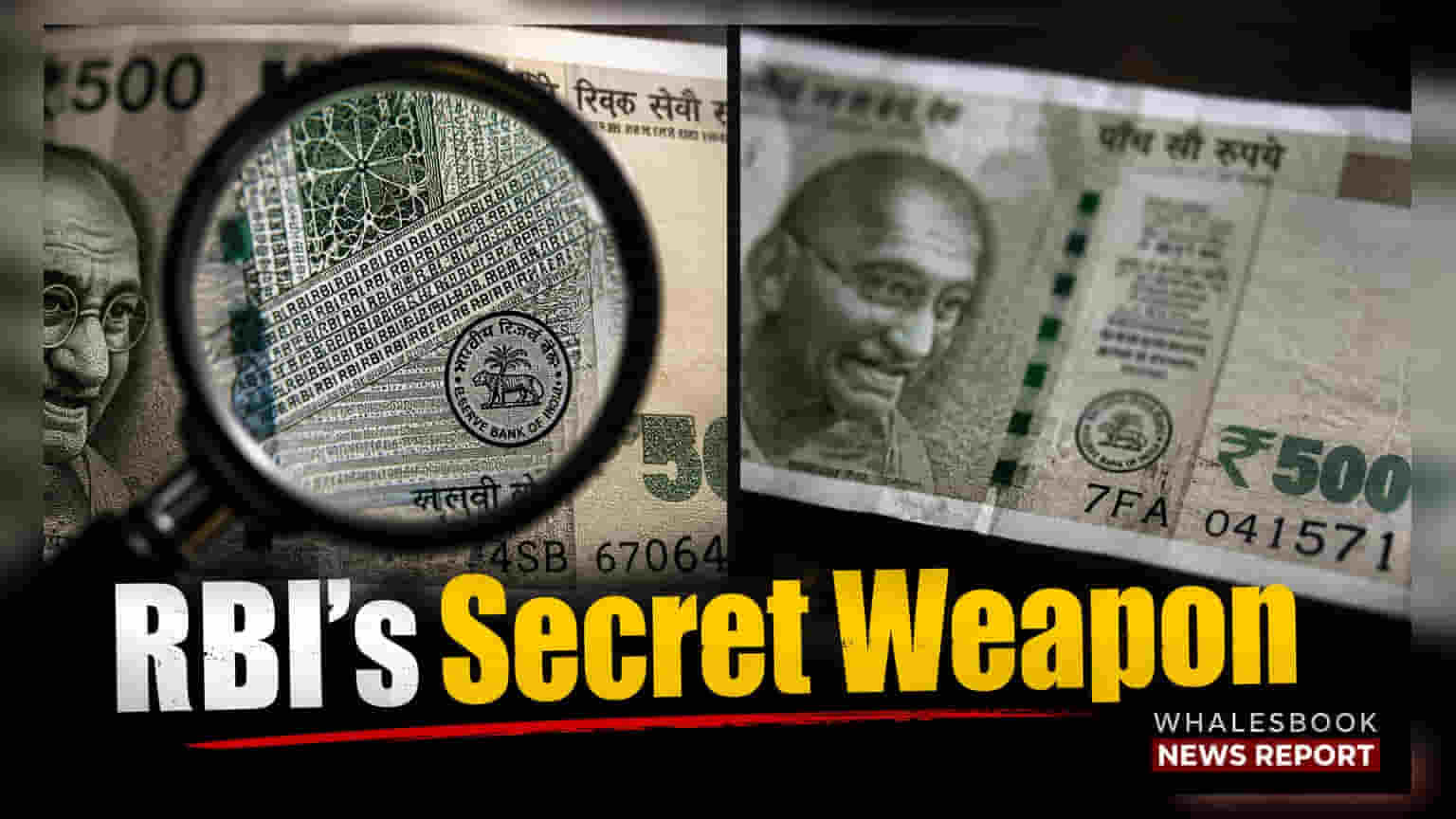
The Reserve Bank of India uses micro-lettering, a security feature visible only under magnification, to verify the authenticity of currency notes. These tiny inscriptions, including 'RBI' and 'Bharat,' are designed to prevent the creation of counterfeit notes. Understanding these security layers helps citizens protect themselves and maintains the overall integrity of the Indian financial system.
What Happened
The Reserve Bank of India (RBI) utilizes micro-lettering as a primary defense mechanism to protect the integrity of the Indian Rupee. These are extremely small, engraved texts that are almost invisible to the naked eye. Found on all denominations of the Mahatma Gandhi series—ranging from ₹10 to ₹500—this feature includes words like 'RBI,' 'Bharat' in Devanagari script, and the numerical value of the note. Because of their tiny size, these inscriptions are exceptionally difficult for counterfeiters to replicate accurately, making them a key tool in spotting Fake Indian Currency Notes (FICN).
Strategic Design and Placement
These micro-letters are not randomly placed but are integrated into the design of the banknotes. For instance, on the current series, they appear in close proximity to the portrait of Mahatma Gandhi. A viewer looking closely at the area near the right spectacle frame can often find 'Bharat' in Devanagari script. The left side of the portrait typically houses the denomination and 'RBI' in similar micro-text. By placing these features near the portrait, the RBI ensures that the most prominent part of the note also carries these high-security markers, forcing anyone attempting to copy the currency to replicate intricate, high-precision details.
The Wider Security Framework
Micro-lettering does not work in isolation. The RBI employs a multi-layered security approach, meaning the authenticity of a note is judged by a combination of several features rather than just one. These include the watermark, which is visible when the note is held against light; the security thread that runs through the note; and latent images that only appear when held at eye level. Additionally, intaglio printing—a technique where ink is raised above the surface of the paper—and optically variable ink, which changes color based on the viewing angle, provide further layers of protection. Each of these features serves as a barrier, making the cost and technical difficulty of producing high-quality fakes prohibitively high for most counterfeiters.
Why Currency Integrity Matters
The existence of these security features is fundamental to the stability of the Indian economy. When public trust in physical currency is high, transactions move smoothly, and the financial system functions efficiently. Conversely, the proliferation of fake notes can lead to economic losses for individuals and businesses, ultimately eroding confidence in the national currency. For the economy, maintaining a clean note policy—where soiled or fake notes are systematically removed from circulation—is a priority for the central bank to ensure that the currency remains a reliable store of value.
What Citizens Should Track
While technology advances, the most effective way for citizens and businesses to stay protected remains basic awareness. The RBI frequently publishes guides on how to identify genuine currency notes. Investors and common users can verify the authenticity of a note by checking these well-known features: the watermark, the security thread, and the color-shifting ink. When a note looks suspicious, or if the micro-lettering appears blurred or absent under a simple magnifying glass, it is a sign that the note may require further verification at a bank branch. The RBI continues to update these security standards periodically to counter new threats from sophisticated printing techniques.