

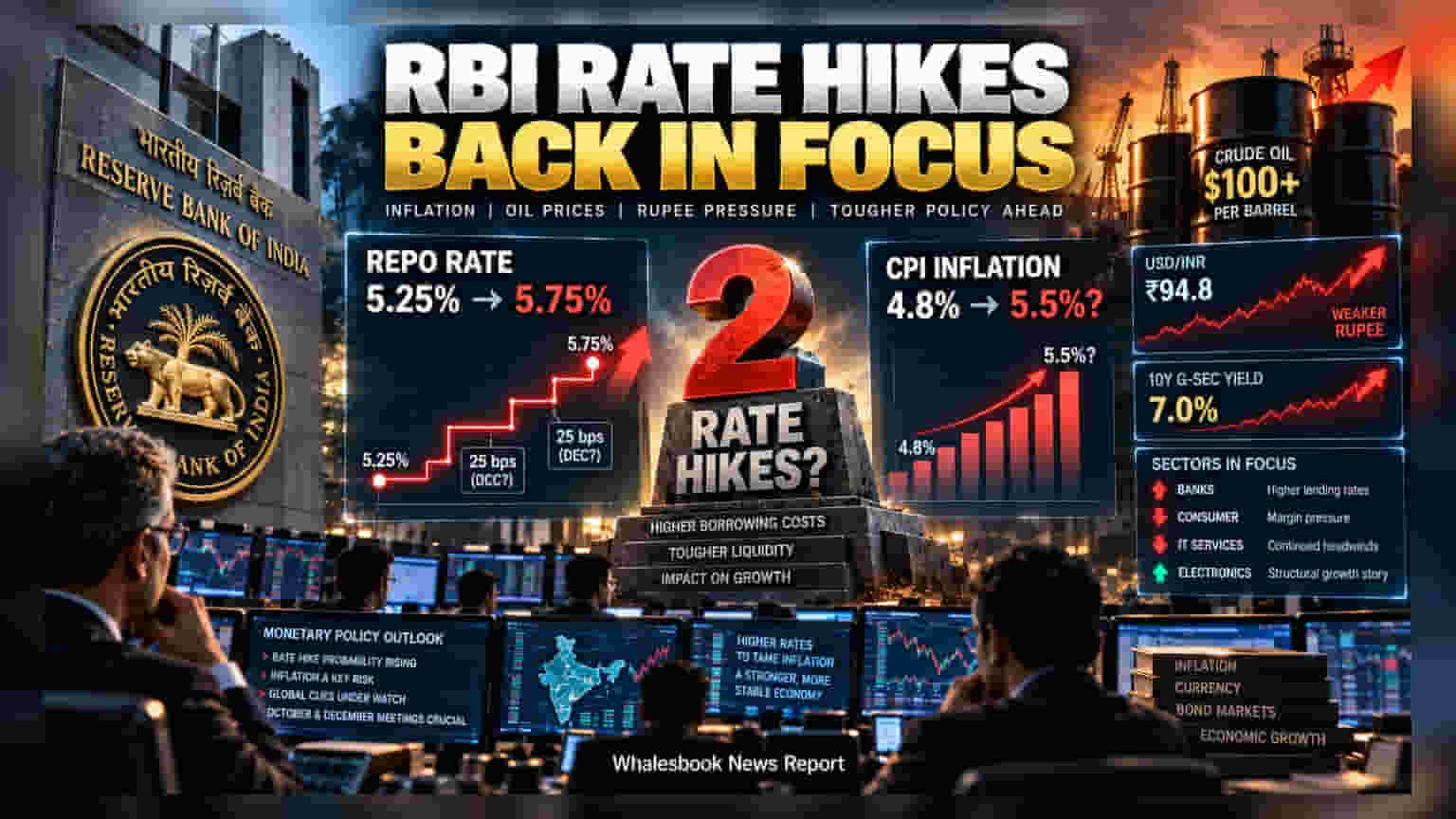
The Reserve Bank of India could raise the repo rate twice by year-end to combat persistent inflation. Rising crude oil costs and food prices are pressuring the economy, which may lead to higher borrowing costs for consumers and businesses. Investors are focusing on how these potential policy shifts could impact sectors like IT services and electronics manufacturing.
The Reserve Bank of India (RBI) could potentially increase the repo rate twice before the end of the year to combat persistent inflation. Analysts suggest that if consumer price inflation, currently at 4.8%, climbs toward 5.5% as forecasted, the central bank may implement two 25-basis-point hikes during its upcoming October and December meetings. This potential policy shift comes as broader price pressures—ranging from high energy costs to food inflation—continue to challenge the economic outlook.
Rising crude oil prices remain a significant concern for the economy. If international oil prices sustain a level above $100 a barrel, India faces multiple challenges, including a wider current-account deficit, pressure on government finances, and reduced purchasing power for households. For the average investor, these macro pressures often lead to higher borrowing costs, meaning personal loans, home loans, and corporate debt could become more expensive.
While the economy shows resilience, the impact on corporate earnings is a critical factor. Sustained higher costs generally pressure profit margins, and investors are looking at how different sectors might respond. For instance, the information technology services sector remains under scrutiny. Despite the growing interest in artificial intelligence, legacy IT services are facing pricing pressure and slower revenue growth, which may keep investors cautious regarding this segment.
In contrast, the electronics manufacturing sector presents a different narrative. The focus has shifted from simple assembly to deeper local value addition. With domestic manufacturing now covering a large portion of mobile phone assembly, the industry is moving toward producing more complex components like camera modules, batteries, and printed circuit boards. This structural shift, supported by domestic initiatives, suggests that the local manufacturing ecosystem may offer growth potential beyond the final assembly stage.
Looking ahead, the market is keeping a close watch on the US Federal Reserve’s stance, as global interest rates and labor market data continue to influence India’s policy decisions. The primary factors for investors to track in the coming months include the RBI’s official policy announcements, monthly inflation data, and any changes in global crude oil prices. These developments will play a crucial role in shaping the interest rate cycle and the performance of growth-sensitive sectors for the remainder of the fiscal year.