

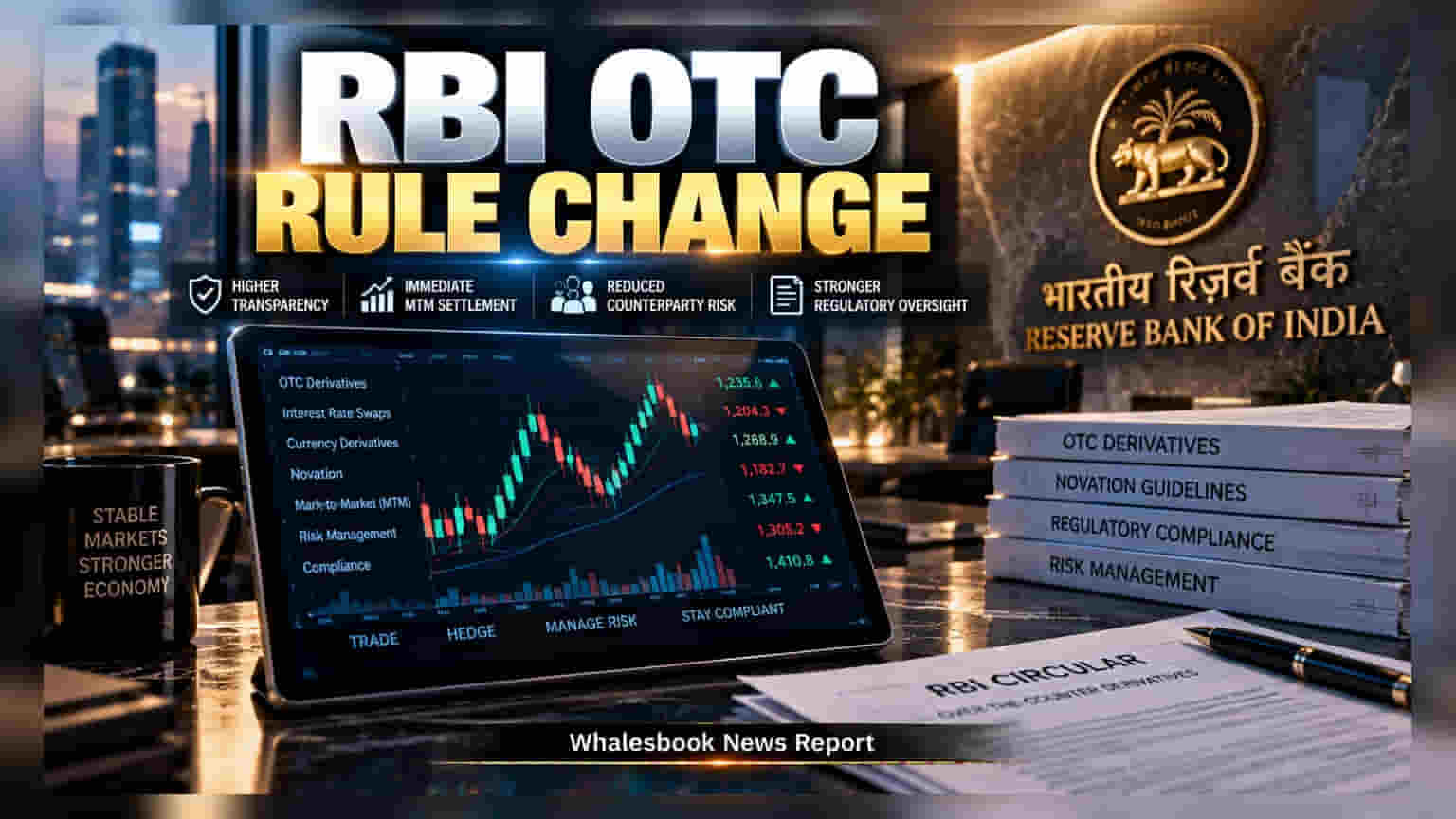
The Reserve Bank of India now requires an upfront exchange of Mark-to-Market (MTM) values when transferring over-the-counter (OTC) derivative contracts. This rule increases transparency by ensuring that any profit or loss in a contract is settled immediately during a transfer. The mandate aims to strengthen risk management in financial markets, with specific rules for market makers and exemptions for certain corporate events.
The Reserve Bank of India (RBI) has introduced stricter guidelines for the novation of over-the-counter (OTC) derivative contracts. Novation is the process where a contract is transferred from one party to another, effectively replacing the original participant with a new one. Under the new directive, any such transfer must now include an immediate, upfront exchange of the contract’s Mark-to-Market (MTM) value.
This rule requires that parties involved in the transfer settle the current financial value of the contract before the novation is completed. For investors and financial institutions, this measure is designed to reduce counterparty risk—the danger that one party in a transaction might default. By mandating the settlement of the contract's value at the time of transfer, the regulator ensures that financial risks are not hidden or deferred during the shifting of obligations. This applies to both existing contracts and those entered into in the future.
To ensure high levels of oversight, the RBI has clarified that these transfers cannot happen between just any two parties. At least one of the entities involved in the transaction must be an authorized market maker or a central counterparty. This restriction effectively blocks private, off-market transfers between two non-market-maker users, such as those that might occur between a company and its internal treasury department. By keeping these activities within regulated channels, the central bank maintains better visibility into the financial system.
The RBI has also set clear boundaries regarding central counterparties, which act as intermediaries to clear and settle trades. While standard settlements handled by central counterparties are exempt from this immediate transfer requirement, any subsequent novation involving a contract already held by such an entity must strictly follow the new procedural guidelines.
For corporate activity, the central bank has decided to retain the legacy framework from December 2013. This means that transfers arising from corporate events like mergers or demergers will continue to be governed by those established norms, preventing regulatory overlap or confusion during organizational changes.
The primary focus of this policy is to ensure that the OTC derivative market remains stable and transparent. By formalizing the valuation and settlement process, the regulator is mitigating systemic risks that could otherwise arise from complex, opaque derivative transfers. Participants in the financial sector, including banks and large corporations that utilize these instruments for hedging, will need to update their internal compliance and documentation processes to align with these requirements.