

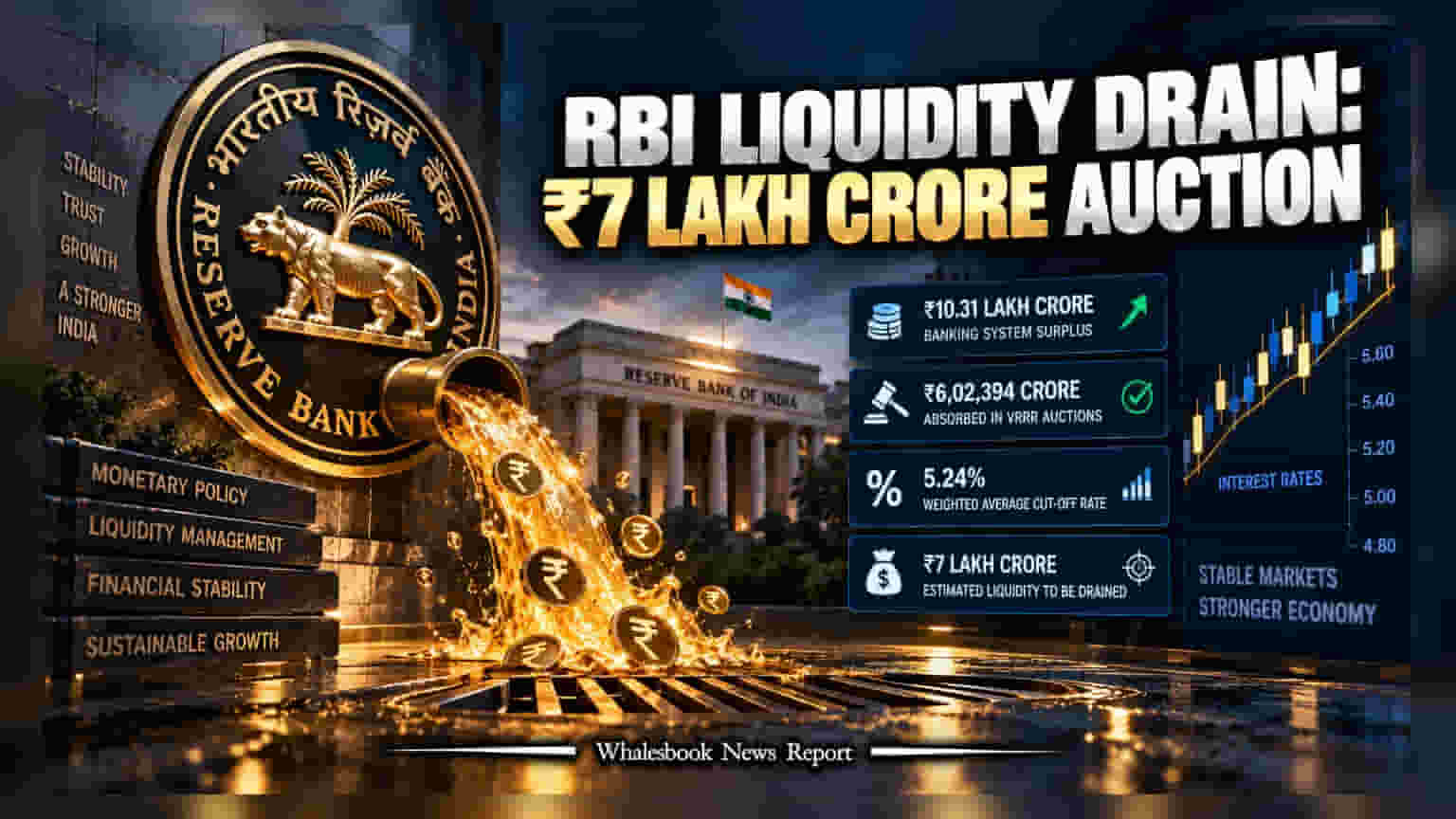
The Reserve Bank of India is using multiple short-term variable rate reverse repo auctions to absorb excess banking system liquidity, which crossed ₹10.31 lakh crore. This ongoing effort aims to prevent short-term interest rates from falling too sharply and helps maintain monetary policy goals.
The Reserve Bank of India (RBI) is actively managing a significant surplus of cash in the banking system, which reached over ₹10.31 lakh crore as of September 3, 2026. To prevent this excess liquidity from pushing short-term interest rates below the central bank's policy corridor, the RBI has intensified its liquidity absorption efforts. Rather than announcing a single long-term tender, the regulator is utilizing a series of short-term variable rate reverse repo (VRRR) auctions to drain the surplus.
The current liquidity flush is largely linked to the central bank's foreign currency mobilization strategy, particularly inflows related to Foreign Currency Non-Resident (FCNR) deposits. As these funds enter the banking system, the supply of rupee liquidity has surged, creating a challenge for the regulator to keep interest rates stable and curb potential inflationary pressures.
On September 4, the RBI demonstrated its approach by conducting two separate 3-day VRRR auctions. Through these, the central bank successfully absorbed ₹6,02,394 crore. These auctions were conducted at a weighted average cut-off rate of 5.24 percent. The choice of shorter-tenor instruments reflects a strategic preference, as commercial banks currently show a stronger appetite for parking funds for shorter periods rather than locking them into long-term durations.
For the financial system, the persistence of such high surplus liquidity is a key factor. If not managed effectively, excess cash in the system can lead to volatility in money markets and cause interest rates to diverge from the RBI’s policy targets. While market analysts have suggested that the total liquidity needing absorption could reach up to ₹7 lakh crore, the central bank is focused on continuous, tactical interventions rather than a one-time drain.
Investors and market participants should monitor future VRRR auction results to gauge the central bank's success in aligning system liquidity with its policy objectives. The key indicator to watch will be the level of participation from banks in these auctions and whether these measures effectively stabilize short-term interest rates in the coming weeks.