

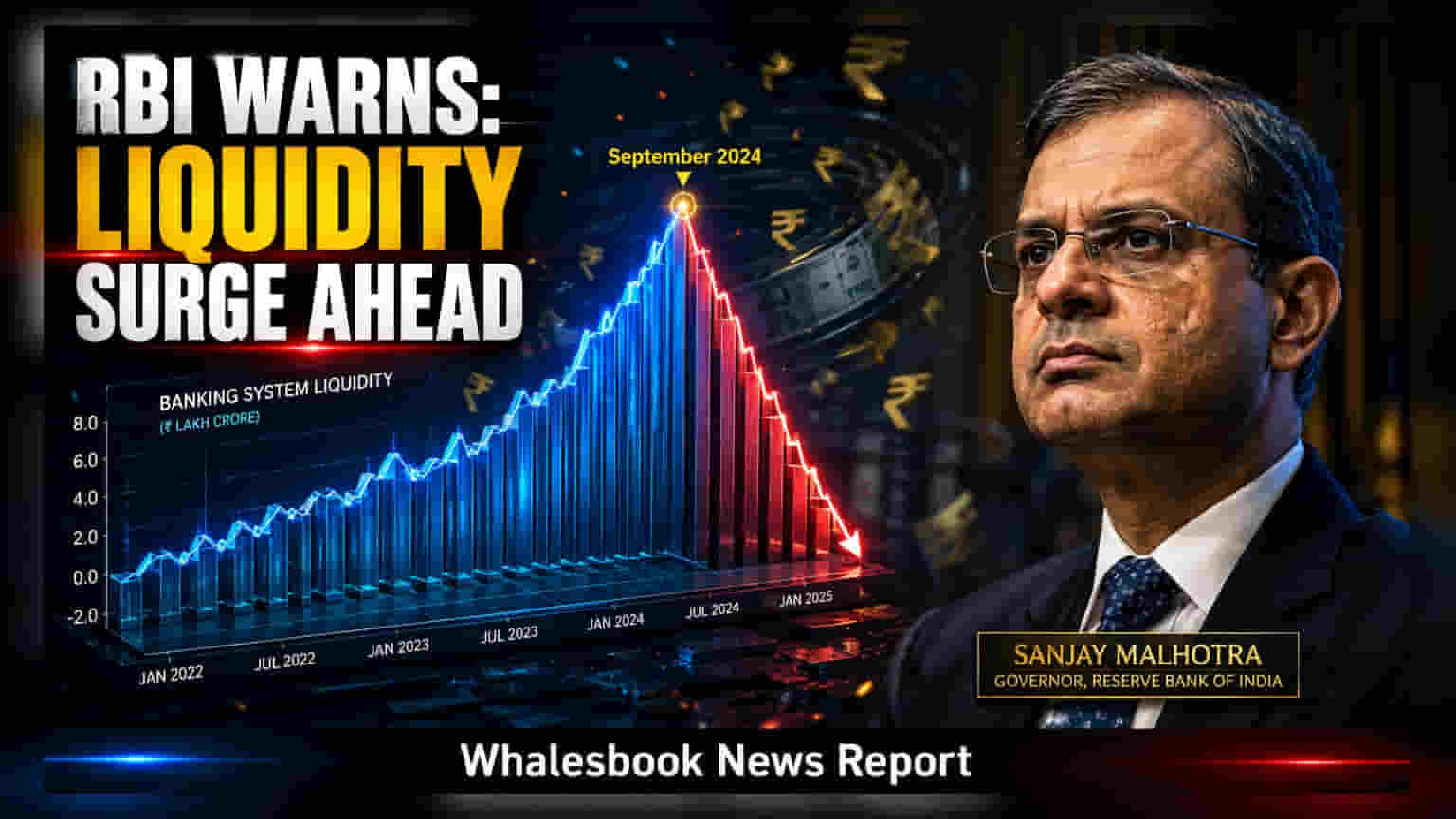
The Reserve Bank of India has kept the repo rate unchanged at 5.25% while maintaining a neutral policy stance. Governor Sanjay Malhotra noted that the current banking liquidity surplus is temporary and expected to peak in September before gradually decreasing through normal economic processes. This update offers clarity on the banking system's cash availability for the coming months.
The Reserve Bank of India (RBI) Monetary Policy Committee, led by Governor Sanjay Malhotra, decided to keep the repo rate unchanged at 5.25% on August 5, 2026. Maintaining a neutral stance, the central bank focused on managing inflation while ensuring the economy remains on a stable growth path. A key highlight for the banking sector was the RBI’s assessment of liquidity, or the amount of ready cash available in the banking system.
Governor Malhotra clarified that the current surplus of liquidity in the banking system is a temporary phase. The RBI expects this surplus to reach its high point around September before it naturally absorbs back into the economy. This absorption process is not unusual; it happens through routine factors such as an increase in the amount of physical currency in circulation, higher reserve requirements that banks must set aside as deposits grow, and the maturity of foreign exchange forward contracts.
The current surplus has been partly fueled by robust inflows from the concessional FCNR(B) deposit scheme, which encourages foreign currency deposits. The RBI indicated that this influx is not considered an extraordinary or massive injection of cash. Instead, it is a manageable flow that the central bank monitors to ensure that short-term interest rates, like the weighted average call rate, remain aligned with the policy repo rate. The goal remains to keep the money market stable and predictable.
Why Liquidity Management Matters
For investors and the banking sector, liquidity management is crucial because it influences the cost of funds. When liquidity is balanced, banks can lend and manage their operations without sudden spikes or drops in borrowing costs. The RBI’s proactive, two-way liquidity operations are designed to prevent such volatility. By ensuring the banking system does not have too much or too little cash, the RBI aims to maintain smooth policy transmission, which ultimately affects how interest rates are passed on to borrowers and depositors.
Risks and Future Monitorables
While the current liquidity outlook appears stable, the RBI continues to monitor several economic risks that could influence future policy decisions. These include potential volatility in food and fuel prices, which could put upward pressure on headline inflation, particularly toward the end of the year. Additionally, global factors such as geopolitical tensions, crude oil price swings, and shifting trade policies remain on the central bank's watch list. Investors should track future commentary from the RBI regarding these inflationary pressures and how they might influence the stance on interest rates in upcoming policy meetings.