

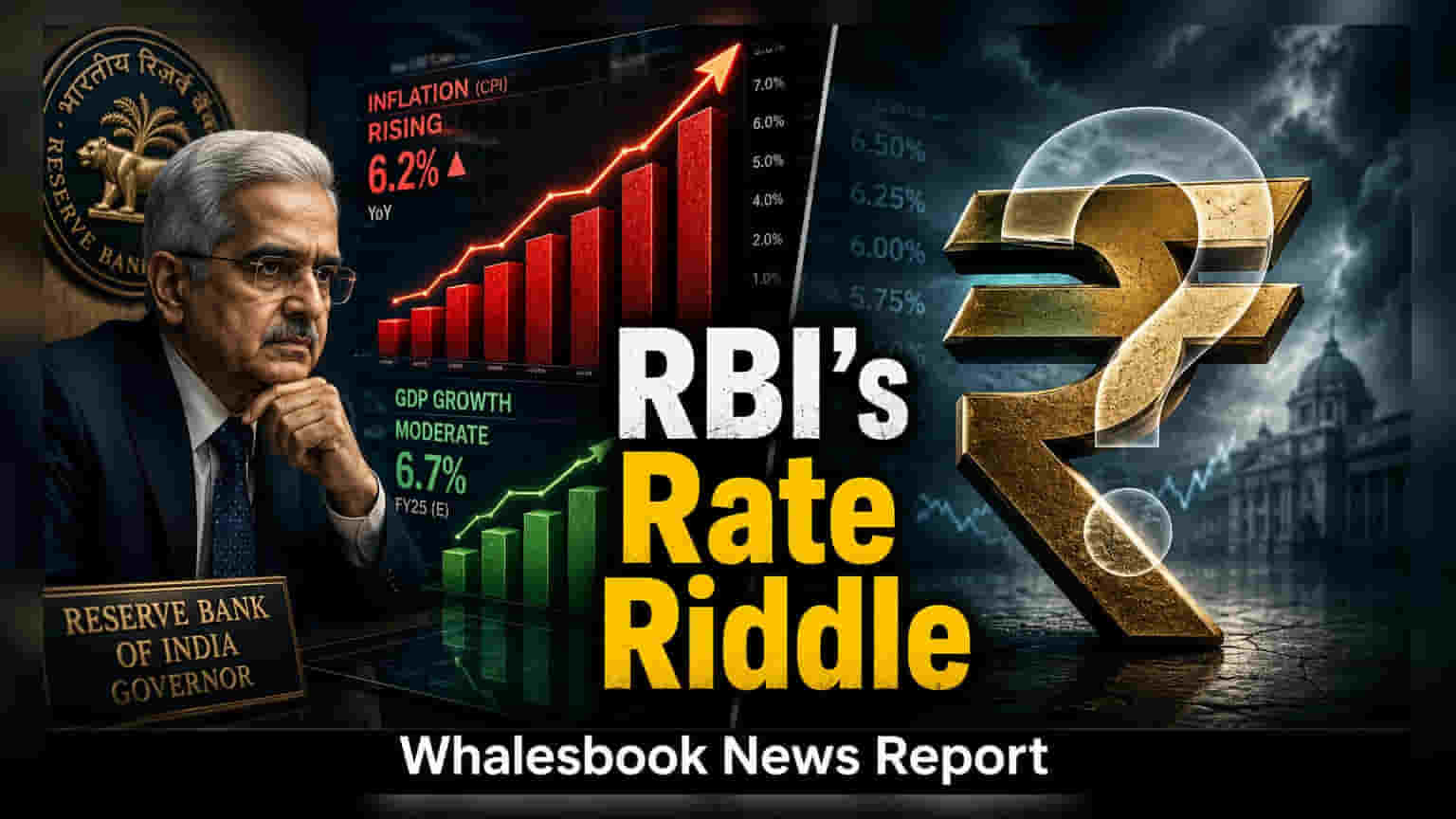
The Reserve Bank of India's monetary policy committee has held the repo rate steady at 5.25% and kept its neutral policy stance. While the central bank improved its FY27 GDP growth forecast to 6.7%, it remains cautious as inflation stays above the 4% target. This decision provides stability for interest rates, though investors should watch for potential economic headwinds.
The Reserve Bank of India (RBI) decided to maintain the policy repo rate at 5.25% in its latest review, keeping its stance neutral. This decision means borrowing costs for banks, and consequently for individuals and businesses, will remain unchanged for now. The neutral stance indicates that the central bank is neither actively trying to increase nor decrease rates, preferring to remain flexible depending on how future economic data unfolds.
The committee provided a positive outlook on the economy, raising its real GDP growth forecast for the 2027-28 financial year to 6.7% from the previous estimate of 6.6%. This reflects confidence in the resilience of domestic demand. However, the inflation outlook remains a central point of concern for the committee.
While the RBI lowered its retail inflation projection for 2027-28 to 5.0% from 5.1%, it still stays above the central bank’s 4% target. With retail inflation reported at 4.4% for June 2026, the RBI is closely monitoring how volatile factors like food and energy prices behave. The committee noted that while the current inflation numbers are manageable, they are not yet comfortable enough to signal a drop in interest rates.
For businesses and individual borrowers, the stability in interest rates is generally seen as a steadying factor for the economy. High interest rates typically increase the cost of debt, which can slow down expansion plans for companies and reduce purchasing power for consumers. By holding rates steady, the RBI is balancing the need to support growth with the need to keep price increases under control.
Despite the growth optimism, the central bank highlighted several risks that could complicate the path ahead. Geopolitical conflicts in West Asia continue to keep global crude oil prices volatile, which is a major factor in India’s import bill. Additionally, the unpredictable nature of the monsoon, partly due to El Niño conditions, remains a concern for the agricultural sector and rural demand. If these factors lead to higher food prices, they could put upward pressure on inflation, forcing the RBI to keep rates higher for longer.
Investors and market observers will now track upcoming monthly inflation data and global oil price trends. The focus will remain on whether these risks translate into broader price instability or if the economy can continue its growth trajectory while keeping prices within the expected range.