

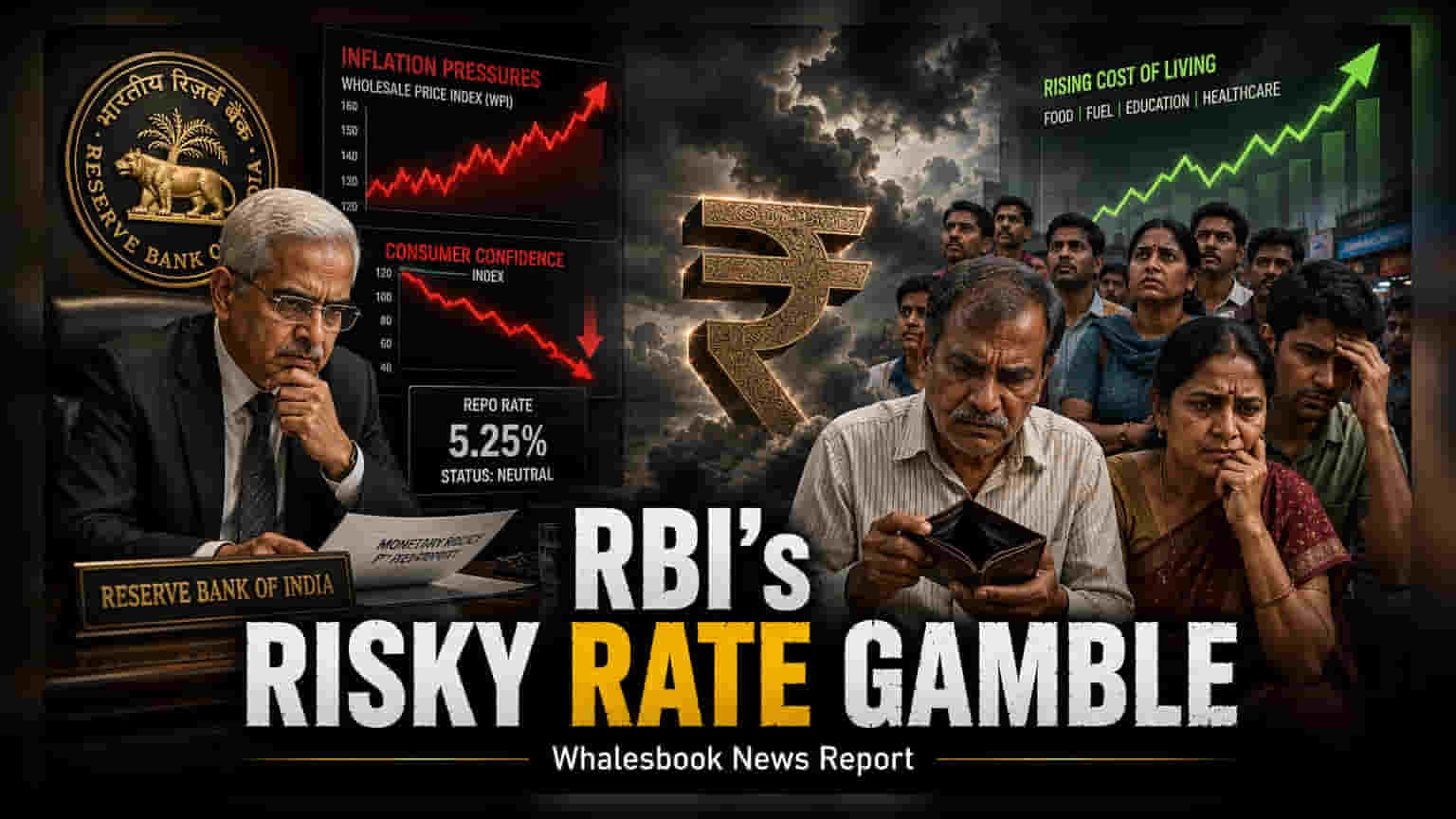
The Reserve Bank of India has maintained the repo rate at 5.25% in its August 2026 policy review while keeping a neutral stance. Investors should note that despite optimistic growth forecasts, companies face margin pressure, and consumption trends remain uneven, raising questions about the sustainability of current economic demand.
The Reserve Bank of India (RBI) decided to maintain the repo rate at 5.25% in its August 2026 monetary policy meeting. The central bank also retained a 'neutral' stance, aiming to balance economic growth with price stability. While the RBI revised its FY27 GDP growth projection upward to 6.7% and lowered its CPI inflation forecast to 5.0%, the policy decision has highlighted several underlying concerns that matter significantly for Indian stock market investors.
Corporate Margins Under Pressure
One of the most important takeaways for investors is the relationship between rising costs and corporate profitability. Data suggests that while retail inflation was 4.4% in June 2026, wholesale price pressures continue to build. Many companies are currently unable to fully pass these rising input costs on to consumers, fearing that price hikes could hurt demand. This trend leads to margin compression, meaning companies may report lower profit margins even if their revenue remains steady. Investors should closely examine the quarterly financial results of consumer-facing companies to see if they can protect their profitability in this environment.
The Sustainability of Consumption
Another key area for market participants is the quality of consumption growth. Official figures often show strong urban spending, particularly in durable goods. However, there is growing debate about whether this growth is organic, driven by rising incomes, or fueled by household debt. If consumption relies heavily on borrowing, any change in credit availability or income stability could slow down demand. Furthermore, the rural economy continues to show signs of strain, which can impact companies that depend on mass-market demand. An uneven recovery, sometimes described as K-shaped, creates different risks for companies in the premium and luxury segments compared to those in the mass or rural-focused segments.
Risks to Monitor
The economic outlook is not without challenges. The RBI has flagged several external and climate-related risks that could impact both the economy and company performance. Geopolitical tensions, particularly in West Asia, and potential supply chain disruptions remain constant threats. Additionally, unpredictable climate patterns like El Niño could impact monsoon outcomes, potentially affecting food prices and rural purchasing power. For investors, the most critical monitorables in the coming months include monthly inflation data, the monsoon progress, and management commentary regarding demand trends and raw material pricing power. Investors should track how these macro factors influence the operating margins of their portfolio companies, rather than relying solely on headline economic growth figures.