

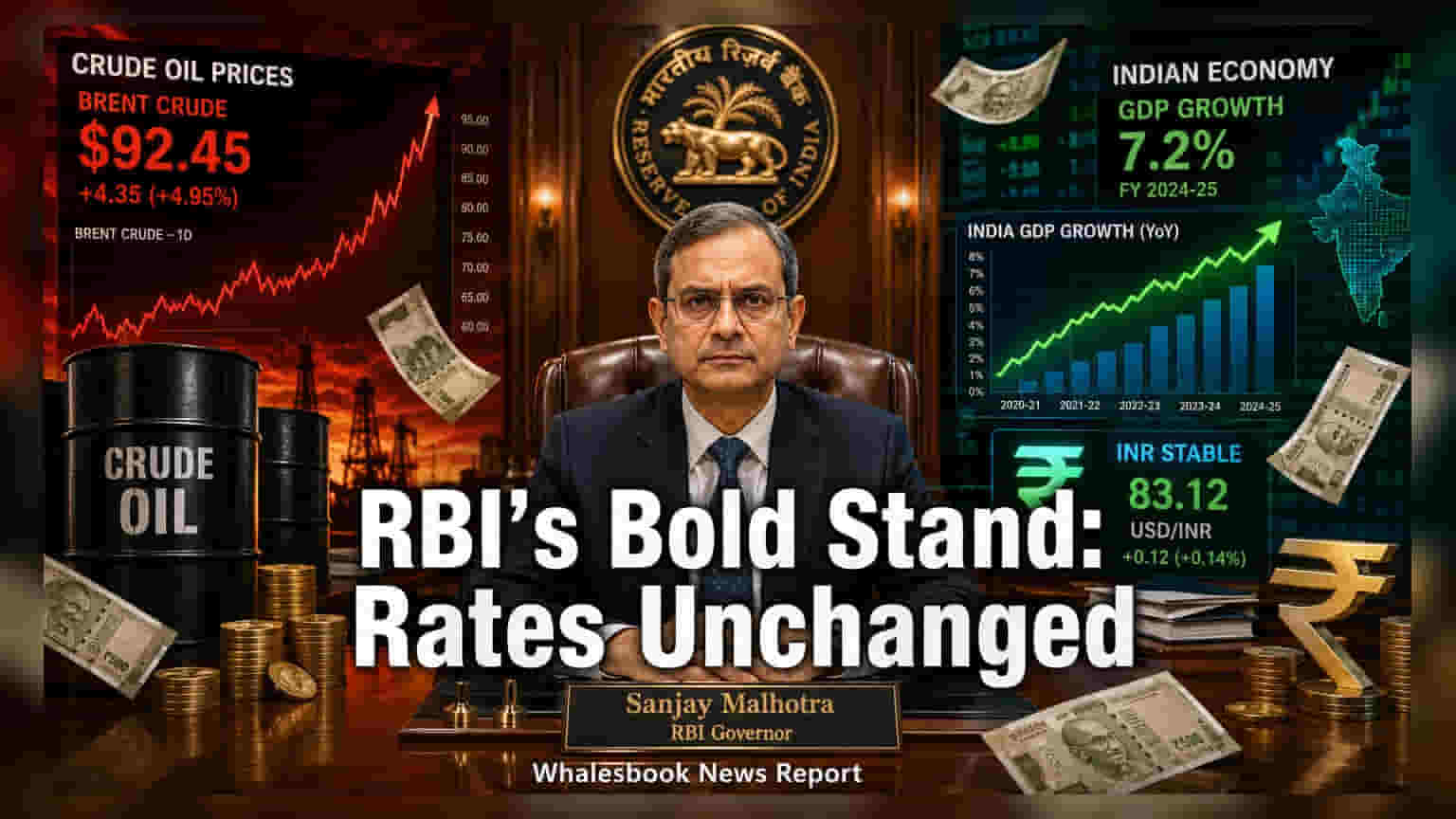
The Reserve Bank of India has maintained the benchmark repo rate at 5.25%, signaling confidence in domestic growth despite global uncertainties. The central bank raised its FY27 GDP growth forecast to 6.7% and lowered inflation projections, opting for a 'neutral' policy stance. This stability aims to balance inflation management with continued economic momentum, though external risks like crude oil volatility and monsoon patterns remain key focus areas.
The Reserve Bank of India (RBI) has decided to keep the benchmark repo rate—the interest rate at which the central bank lends money to commercial banks—steady at 5.25%. This decision, announced by Governor Sanjay Malhotra in the August 2026 monetary policy meeting, reflects the central bank's confidence in the Indian economy's resilience despite global challenges.
Following the decision, the central bank opted for a 'neutral' policy stance. This signifies that the RBI is keeping its options open and will not commit to immediate rate hikes or cuts. For investors and businesses, this suggests a period of stable borrowing costs, which is generally viewed as a positive factor for market sentiment and economic activity.
Growth remains a central theme for the central bank. The RBI has revised its GDP growth projection for the current fiscal year (FY27) upward to 6.7%, up from the earlier forecast of 6.6%. This improvement reflects the bank's assessment that domestic demand remains robust despite the high-interest-rate environment.
On the inflation front, the RBI seems comfortable with the current trajectory, even though retail inflation reached 4.38% in June 2026. This was the first time in 17 months that inflation crossed the central bank's 4% target. However, the RBI has lowered its overall CPI inflation projection for the year to 5.0% from 5.1%. Policymakers indicated that the recent price rise is primarily driven by temporary factors—such as food and fuel supply issues—rather than a widespread, permanent increase in prices across the economy.
While the current outlook appears stable, the RBI has highlighted several external risks that investors should monitor. Global geopolitical tensions, particularly the ongoing conflict in West Asia, continue to pose a threat to crude oil prices. Higher oil prices can increase import costs for India, which often exerts pressure on the rupee and domestic inflation.
Additionally, the central bank remains cautious regarding agricultural output. The progress of the southwest monsoon and the potential impact of El Niño conditions are critical factors that could affect food inflation and rural demand in the coming months. These uncertainties, combined with shifts in global trade policies, mean that the RBI will continue to watch incoming data closely before making any adjustments to the policy rate in future meetings.
The policy announcement serves as a signal that the Indian central bank is prioritizing steady growth while keeping a close watch on potential supply-side shocks. The next key monitorables for market participants will be the monthly inflation reports, the actual output from the monsoon season, and any major shifts in global oil prices that could alter the inflation landscape.