

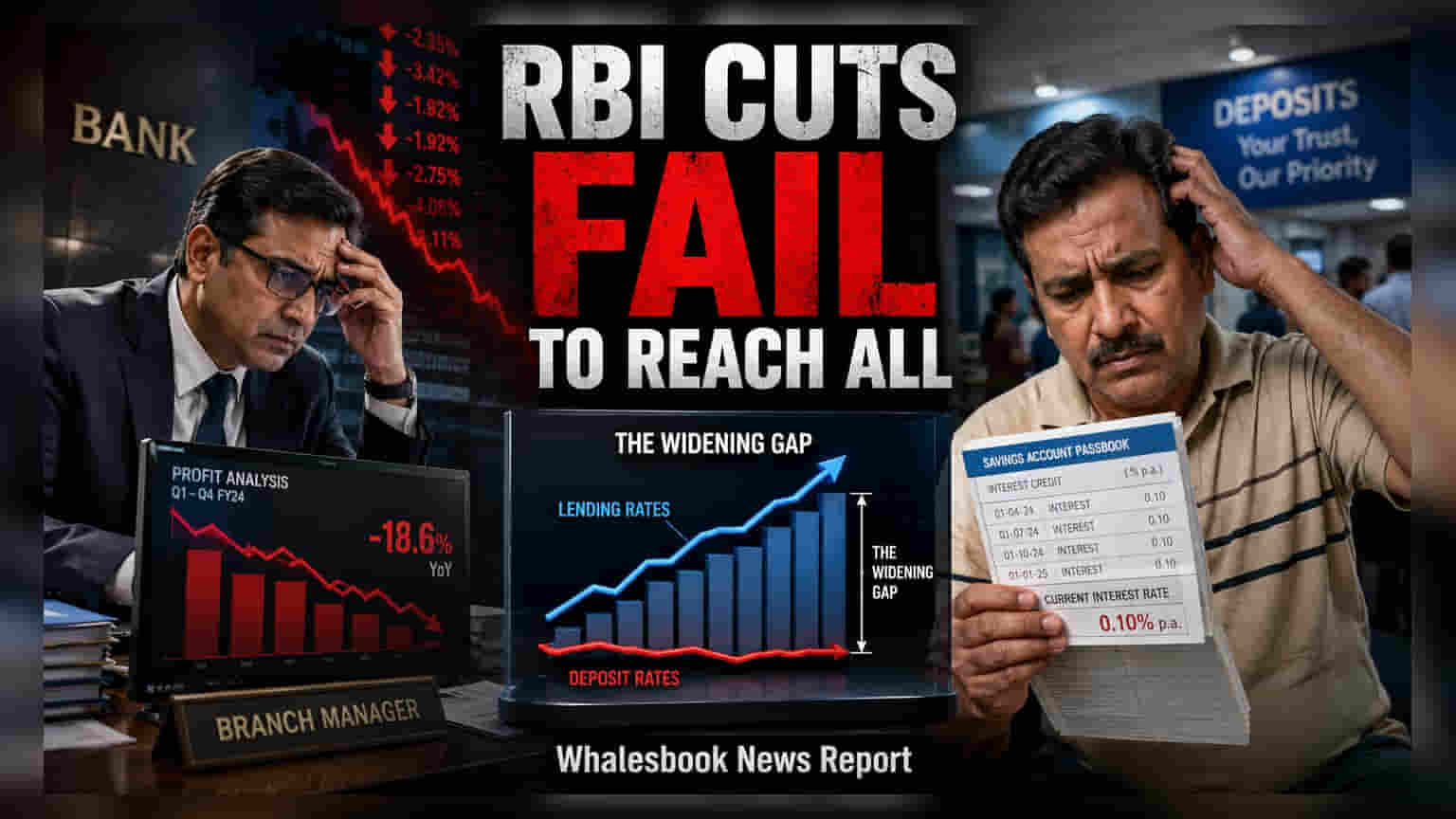
The Reserve Bank of India has held the repo rate at 5.25% in its August 2026 policy review while maintaining a neutral stance. As the central bank balances growth and inflation, banks are seeing their profit margins tighten because lending rates are falling faster than the rates they pay on deposits. Investors are now tracking how banks will manage these costs in upcoming quarters.
The Reserve Bank of India (RBI) Monetary Policy Committee, led by Governor Sanjay Malhotra, decided to maintain the policy repo rate at 5.25% during its meeting on August 5, 2026. This decision keeps the benchmark interest rate unchanged, as the central bank adopts a neutral stance to balance India's resilient economic growth against persistent inflationary pressures.
While the RBI's growth forecast for the 2027 fiscal year has been raised to 6.7%, the financial sector is currently grappling with the after-effects of previous rate cuts. The core issue for lenders is the uneven transmission of interest rates, which has begun to affect the profitability of the banking system.
The Interest Rate Transmission Gap
Although the RBI reduced the repo rate substantially last year, the benefits have not passed through to customers and banks equally. Lending rates, which are the interest charged on loans, have dropped significantly. For instance, the weighted average lending rate on new rupee loans has declined by about 80 basis points, while outstanding loans saw a reduction of nearly 91 basis points.
In contrast, deposit rates—the interest banks pay to their customers—have been slow to fall. New term deposit rates have decreased by only 63 basis points, and rates on older deposits have softened by roughly 51 basis points. This lag means that while banks are forced to lower the interest they earn from loans, their cost of funds remains relatively high, creating a tighter gap between earnings and expenses.
Impact on Profit Margins
This trend is reflected in the Net Interest Margin (NIM), which is the key measure of a bank's profitability—essentially the difference between the interest earned on loans and the interest paid on deposits. In the first quarter of 2026, three of the top four private banks reported a contraction in their NIMs. While high demand for credit has helped protect overall income, the margin compression is a trend that shareholders are observing closely.
With a daily liquidity surplus of ₹1.0 lakh crore held under the Liquidity Adjustment Facility, banks currently have more than enough funds. This suggests that deposit rates are unlikely to rise soon. However, the future path of interest rates remains uncertain. With inflation risks linked to food, fuel prices, and global supply chain disruptions, some economists suggest that rate hikes could return to the agenda before the end of the year.
For investors, the primary monitorable in the coming months will be how banks balance their credit growth against the pressure on margins. The ability of financial institutions to lower their cost of funds while maintaining a healthy loan book will be a critical factor in determining earnings performance. The market will continue to watch for guidance on deposit pricing and credit demand in upcoming quarterly results.