 Whalesbook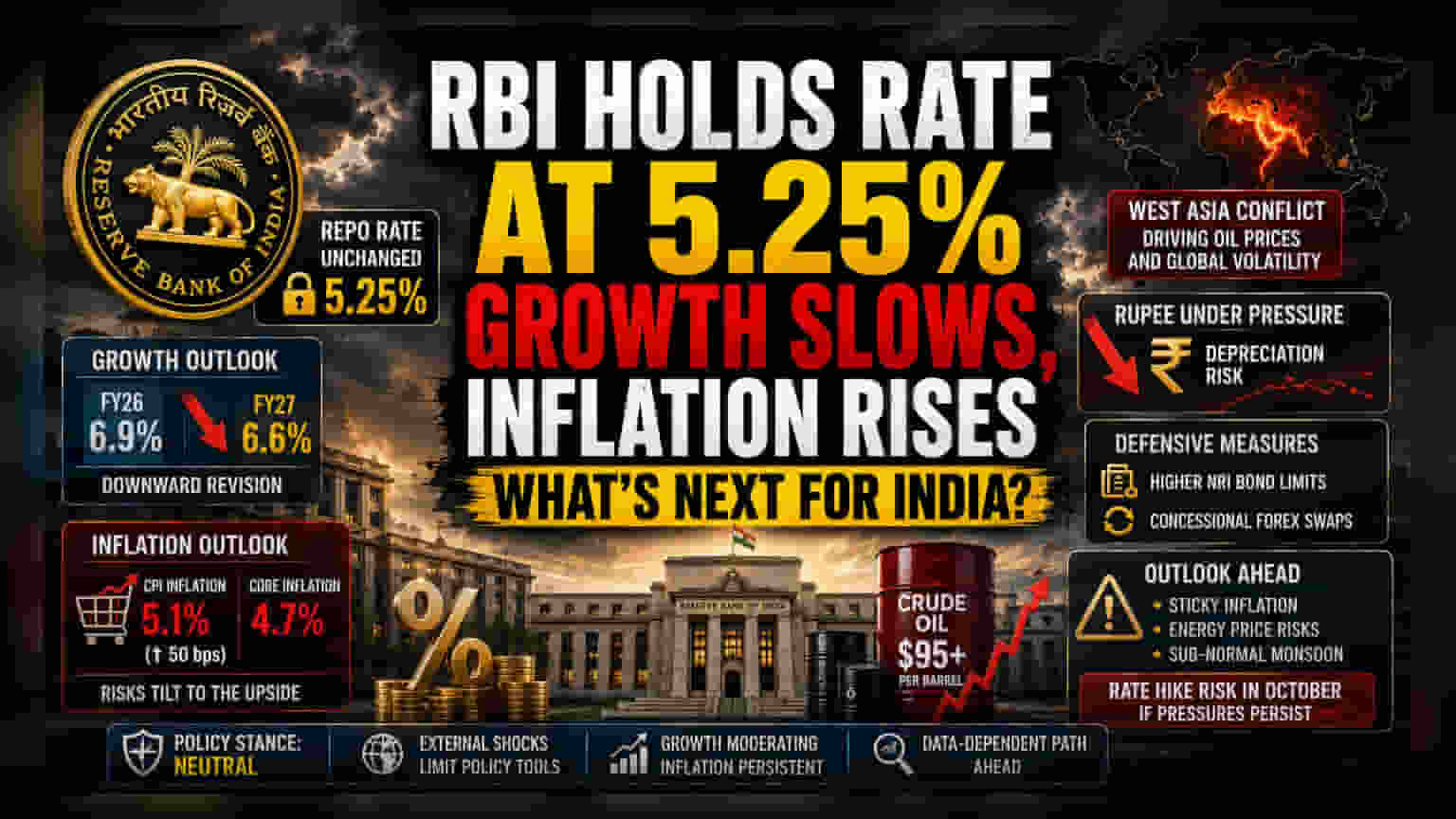


The Policy Equilibrium
The Reserve Bank of India’s decision to keep the repo rate steady at 5.25% represents a strategic retreat into caution. By maintaining this status quo, the central bank is implicitly acknowledging that the traditional levers of monetary policy are currently ill-equipped to combat the external supply-side shocks emanating from the West Asia conflict. Unlike previous cycles where domestic demand was the primary driver, the current policy environment is defined by the necessity to mitigate global spillover effects—specifically the surge in crude oil prices, which have consistently held above the $95 per barrel mark.
The Growth-Inflation Tradeoff
The revision of the FY27 GDP growth forecast to 6.6% from 6.9% reflects a deteriorating macroeconomic reality. The downward adjustment is not merely a statistical recalibration but a recognition that input cost pressures are beginning to erode industrial margins. Concurrently, the escalation of the CPI inflation forecast to 5.1%—up 50 basis points from earlier estimates—signals that the central bank is bracing for sustained price volatility. Core inflation, pegged at 4.7%, reveals that underlying demand remains resilient but is increasingly vulnerable to food and fuel price transmission. This divergence creates a challenging landscape: growth is moderating even as inflation risks tilt to the upside, narrowing the central bank's operational flexibility.
Structural Vulnerabilities and The Bear Case
Critics argue that the central bank's neutral stance may be insufficient to anchor inflation expectations in the face of a weakening rupee. The local currency, which recently faced significant depreciation pressures, reflects a broader skepticism among foreign institutional investors. The reliance on defensive measures—such as liberalizing bond investment limits for NRIs and providing concessional forex swaps—highlights a desperate need to bolster foreign capital inflows. However, these liquidity injections are stopgap measures. The structural weakness remains: India’s vulnerability to energy price shocks persists, and any further escalation in global geopolitical tensions could force the RBI to abandon its neutral posture for a more aggressive tightening cycle in the second half of the fiscal year.
Future Outlook
Market participants should remain anchored to incoming high-frequency data. While the current policy pause provides temporary relief to interest-sensitive sectors, the persistence of sticky inflation and the potential for a sub-normal monsoon remain significant downside risks. Guidance from the Monetary Policy Committee suggests a data-dependent path, but the prevailing market consensus increasingly points toward the possibility of a rate hike in the October quarter should energy prices fail to stabilize and supply chains remain disrupted.