

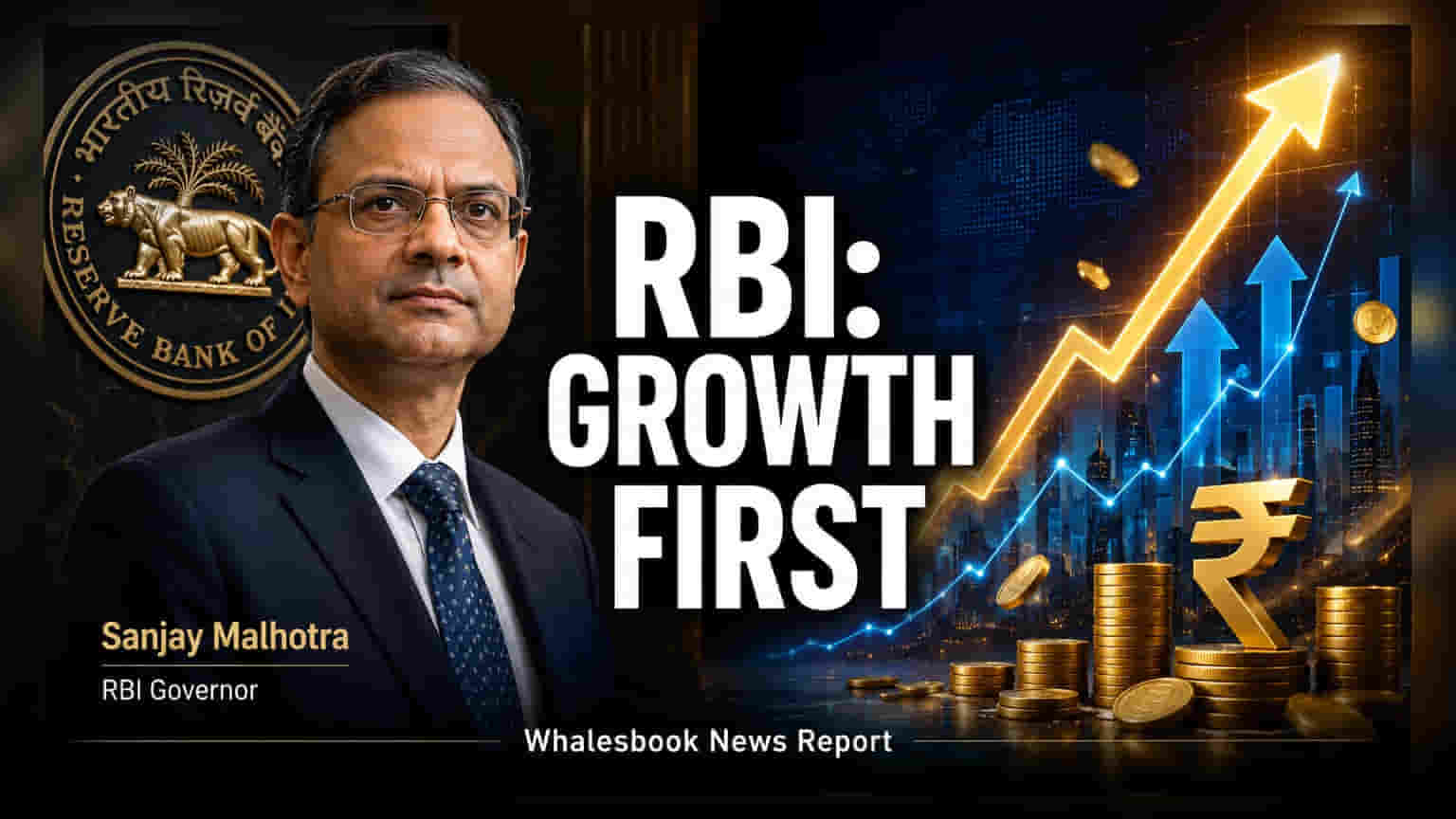
Reserve Bank of India Governor Sanjay Malhotra stated that the central bank may overlook temporary inflation spikes and high credit growth to focus on supporting economic expansion. The RBI currently views price pressures as largely driven by supply issues rather than demand, suggesting a steady monetary policy stance for now. Investors should monitor how this approach influences credit access and corporate borrowing costs in the coming quarters.
The Reserve Bank of India (RBI) is signaling a preference for maintaining economic momentum over immediate policy tightening. Governor Sanjay Malhotra recently indicated that the central bank remains comfortable with current inflation levels, viewing the uptick in prices as a consequence of temporary supply-side issues rather than an overheated economy.
Prioritizing Growth Amid Price Pressures
While the Consumer Price Index (CPI) is currently projected at approximately 5.1%—slightly above the RBI's ideal target—the Governor emphasized that policy decisions will not rely solely on this headline figure. Instead, the central bank is adopting a more granular approach, analyzing the specific sectors causing price rises. By focusing on these underlying drivers, the RBI aims to avoid aggressive interest rate hikes that could unintentionally stifle domestic investment and consumption.
Credit Growth Trends and Monitoring
India is currently witnessing robust credit expansion of nearly 18%, a significant figure that reflects active borrowing by businesses and individuals. Within this, lending to Micro, Small, and Medium Enterprises (MSMEs) and gold-backed loans are growing at a faster pace of 24-25%. While this highlights strong economic participation, the RBI is maintaining a watchful eye on these segments. The central bank is focused on ensuring that this credit boom remains healthy and does not lead to a build-up of bad loans, a challenge that has surfaced in various credit cycles in the past.
Investor Context and Future Monitorables
For investors, the RBI’s stance suggests a period of relative stability in borrowing costs. When the central bank prioritizes growth, it often creates a more favorable environment for companies to fund their expansion plans through debt. However, this strategy hinges on the assumption that inflation does not become widespread or persistent. If supply-side issues continue longer than expected or if global commodity prices shift, the central bank may be forced to recalibrate its approach.
Looking ahead, the market will track the RBI’s upcoming policy reviews for any shift in rhetoric regarding credit quality. Specific attention will be paid to whether the rapid growth in MSME and gold loan portfolios remains sustainable or if the regulator introduces new measures to curb excessive risk-taking in these high-growth segments. Clear communication from the central bank on these fast-growing credit areas will be essential for financial institutions and investors to gauge potential regulatory risks.