

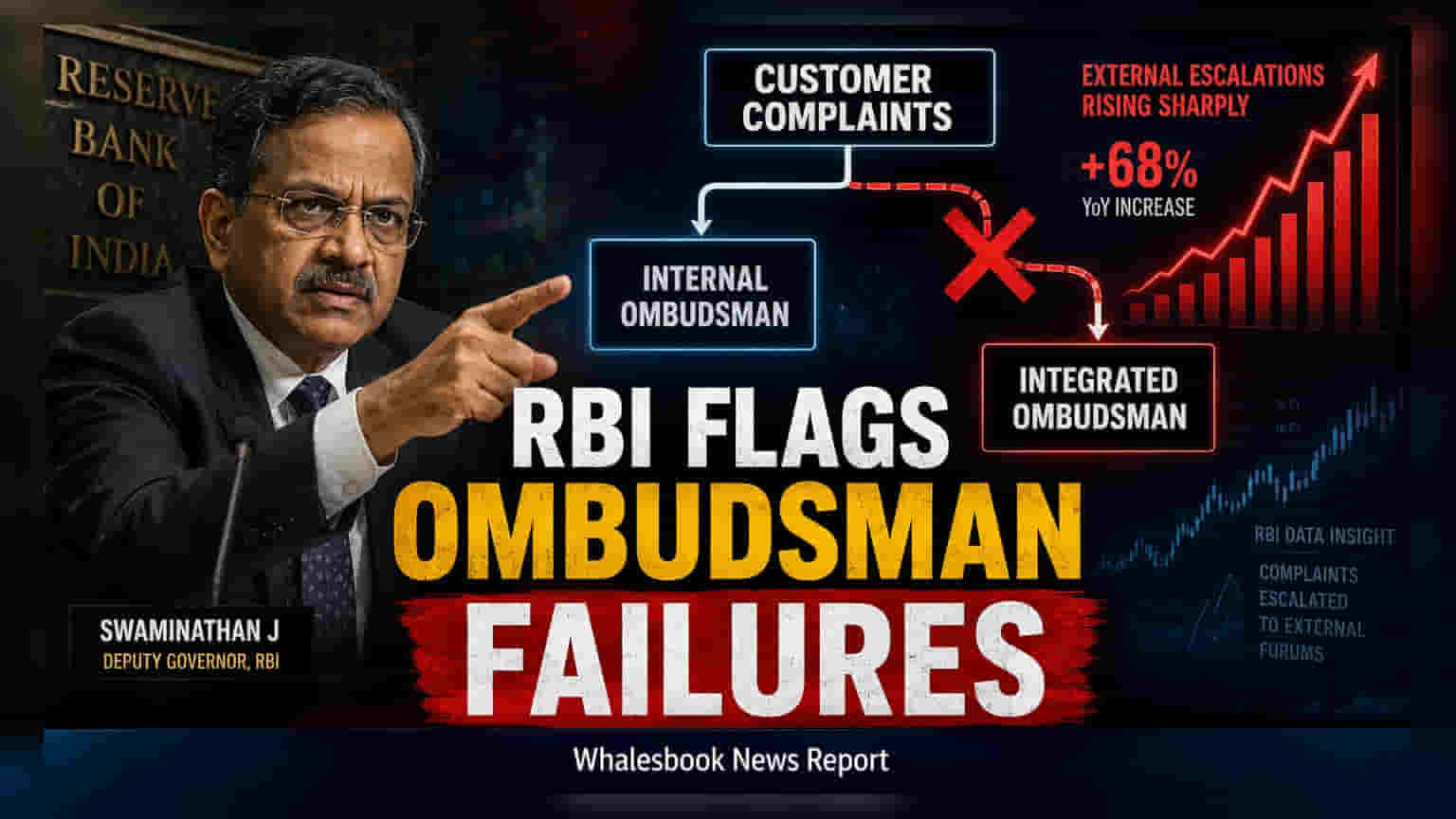
RBI Deputy Governor Swaminathan J has raised concerns that many customer complaints are skipping banks' internal ombudsman process. This bypasses a key resolution step and leads to unnecessary escalations to the central bank.
Detailed Coverage
The Reserve Bank of India has identified a procedural gap in how banks handle customer grievances. Deputy Governor Swaminathan J recently highlighted that a large volume of complaints reaching the RBI’s integrated ombudsman were never first processed by the concerned bank's own internal ombudsman. According to the central bank, this bypasses an essential layer of the grievance redressal framework designed to resolve issues at the source.
Why The Internal Ombudsman Matters
The internal ombudsman framework acts as a vital buffer for banks to identify service failures and rectify errors before they become public or require regulatory intervention. When a complaint is handled effectively at the internal level, it serves as an early warning system for management to address systemic operational flaws. The RBI expects that a well-functioning internal system should naturally lower the number of cases that escalate to the external ombudsman, thereby improving customer trust and reducing the administrative burden on regulators.
Impact On Bank Operations
This regulatory focus suggests that banks may soon face stricter scrutiny regarding their complaint management systems. The RBI has indicated that these lapses often stem from poor classification of complaints or rigid procedural flaws. For banks, this could necessitate a redesign of existing digital and manual complaint-tracking systems. Institutions that fail to streamline these processes risk increased regulatory oversight and potential costs associated with the external resolution process.
What Investors Should Track
Investors in banking stocks may want to monitor how efficiently individual banks manage their customer grievance frameworks. While this issue currently focuses on procedural compliance, persistent failures in customer service and complaint resolution can lead to reputational risks and increased regulatory audits. In upcoming quarterly reports or investor presentations, banks may provide updates on improvements made to their customer redressal mechanisms and internal control systems to align with these regulatory expectations.