 Whalesbook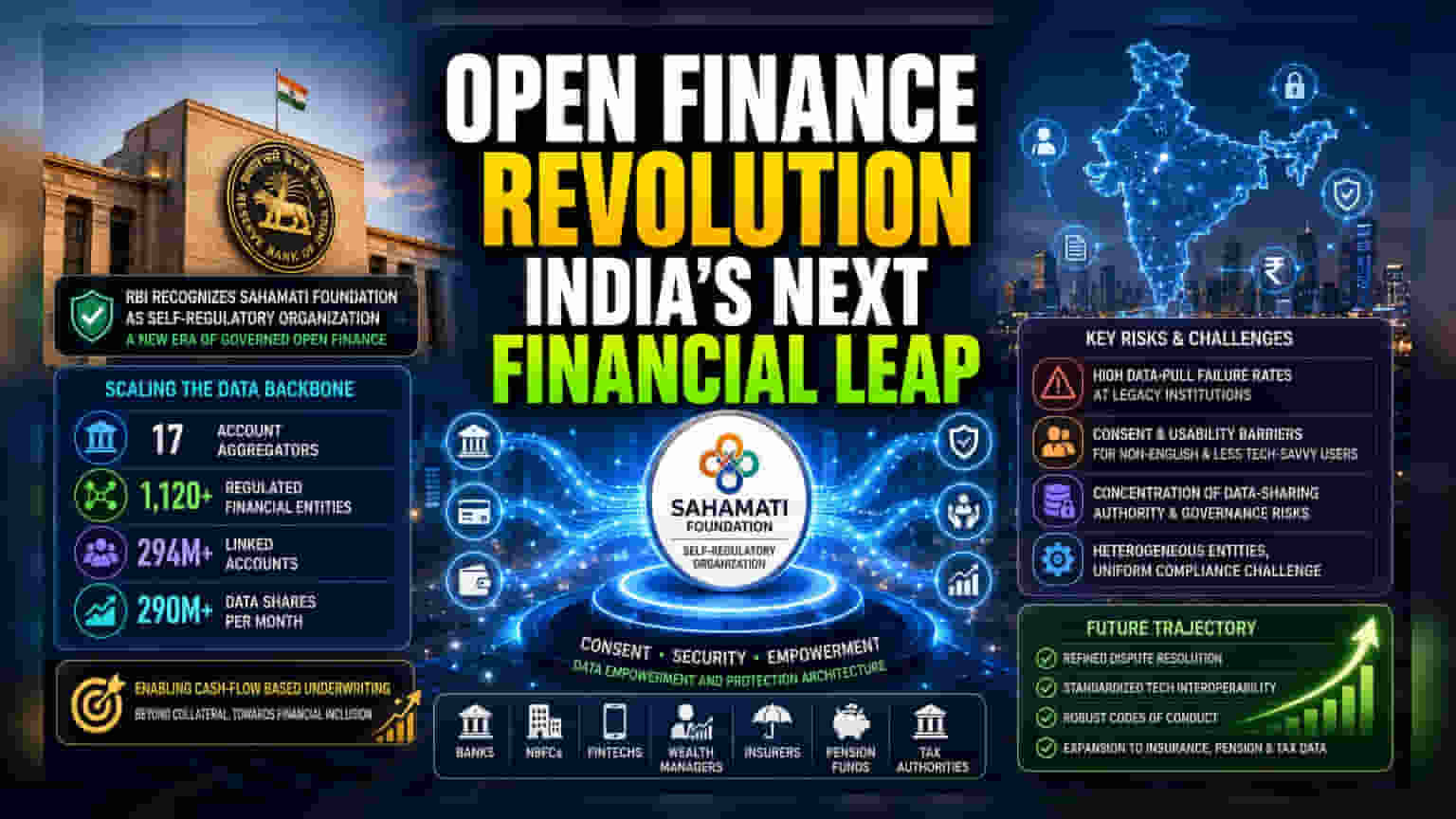


The Institutionalization of Open Finance
The Reserve Bank of India’s decision to grant Sahamati Foundation status as a Self-Regulatory Organization (SRO) marks a shift from experimental digital public infrastructure to a governed, institutionalized framework. By moving beyond the initial establishment phase, the regulator is placing the burden of operational discipline directly onto industry participants. This model mirrors other successful digital public goods, ensuring that governance evolves in step with the rapid adoption of consent-based data sharing.
Scaling the Data Backbone
The Account Aggregator network has evolved into a cornerstone of India’s Data Empowerment and Protection Architecture. Currently, the ecosystem boasts 17 operational account aggregators and connects over 1,120 regulated financial entities, including banks, non-banking financial companies, and wealth managers. With over 294 million linked accounts and a monthly volume exceeding 290 million data shares, the network is fundamentally altering credit underwriting. Lenders are increasingly moving away from collateral-heavy assessment models, favoring cash-flow-based underwriting that leverages the real-time, granular financial data available through these channels.
The Forensic Risk Perspective
While the SRO model promises standardization, significant structural hurdles remain for the ecosystem. The move toward self-regulation comes at a time when the network faces persistent technical friction, such as high data-pull failure rates at certain legacy institutions. Furthermore, the ecosystem's reliance on standardized, often technical, consent flows creates potential barriers for non-English speaking or less tech-savvy populations, raising concerns about truly inclusive financial access. From a risk management standpoint, the shift also highlights the concentration of data-sharing authority. While the framework is designed to be consent-led and non-custodial, the creation of a centralized SRO structure adds a layer of responsibility that, if managed poorly, could become a bottleneck rather than an accelerator for fintech innovation. Moreover, the heterogeneous nature of participating entities—ranging from major private banks to small fintech startups—means that maintaining uniform compliance and service-level agreements will be a complex governance challenge for Sahamati.
Future Trajectory
Moving forward, the SRO-AA mandate will focus on refining dispute resolution, standardizing technical interoperability, and establishing codes of conduct that transcend individual corporate interests. As the framework expands into insurance, pension, and taxation data, the effectiveness of this self-regulatory mechanism will determine whether India can scale its open finance journey while maintaining public trust. Market participants and institutional lenders are now looking to Sahamati to translate these high-level regulatory expectations into tangible improvements in ecosystem uptime and data reliability.