

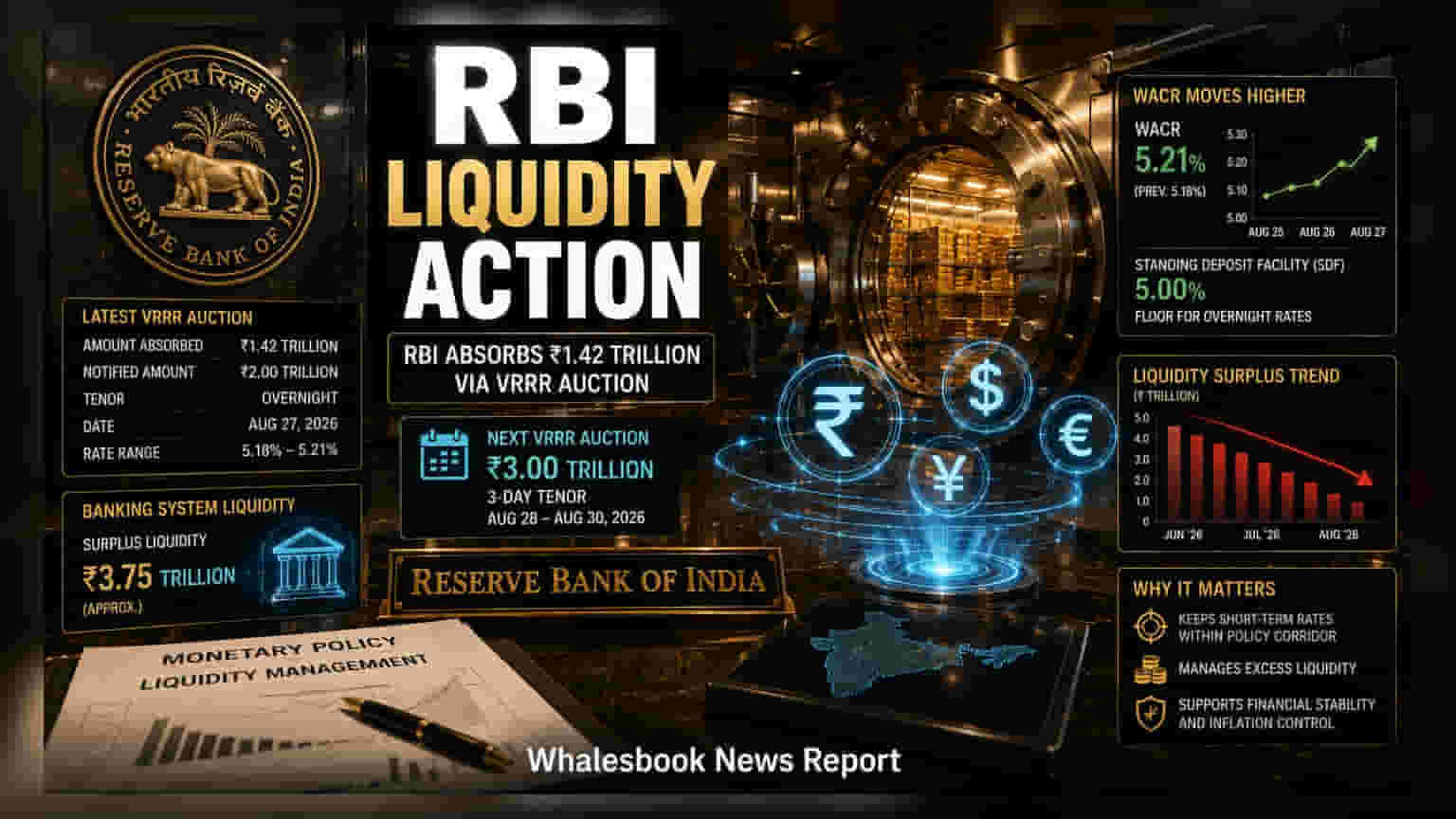
The Reserve Bank of India absorbed ₹1.42 trillion from the banking system via an overnight auction on August 27, 2026. This move comes as the central bank works to manage a large surplus of cash in the market. A larger auction is planned for tomorrow to keep interest rates stable.
The Reserve Bank of India (RBI) continues its efforts to manage excess cash in the banking system, absorbing ₹1.42 trillion through its latest overnight Variable Rate Reverse Repo (VRRR) auction. This exercise was part of the central bank's strategy to keep short-term interest rates aligned with its policy objectives. While the RBI had set a target to absorb up to ₹2 trillion, the actual participation reached ₹1.42 trillion, reflecting the current state of liquidity in the financial system.
The banking system has been dealing with a significant surplus, which recently climbed toward ₹3.75 trillion. When banks have too much idle cash, they tend to lend it out at very low rates, which can push short-term borrowing costs below the central bank's comfort level. By using VRRR auctions, the RBI temporarily borrows this excess money from banks, ensuring that the Weighted Average Call Rate (WACR)—the rate at which banks borrow from each other overnight—stays within the intended policy corridor.
Following the auction, the WACR moved slightly higher to 5.21 per cent, up from 5.18 per cent previously. The Standing Deposit Facility (SDF) rate, which acts as the floor for these borrowing costs, remains at 5 per cent. This suggests that the central bank's actions are effectively keeping market rates anchored near its target range despite the high levels of liquidity.
To further manage the situation, the RBI has already scheduled another absorption exercise for Friday, August 28, 2026. This upcoming three-day auction aims to soak up ₹3 trillion from the market. These frequent and large-scale auctions are a routine but important part of the RBI’s monetary policy toolkit. They allow the regulator to tighten or loosen cash conditions without making permanent changes to the benchmark repo rate.
For the banking sector and investors, these liquidity operations are important to track because they influence short-term money market yields. While the system currently holds a large surplus, any sudden change in government spending or tax outflows could quickly shift this balance. Investors generally watch these auction results to gauge how comfortable the central bank is with the current level of cash in the system and to anticipate any potential volatility in bond markets.