

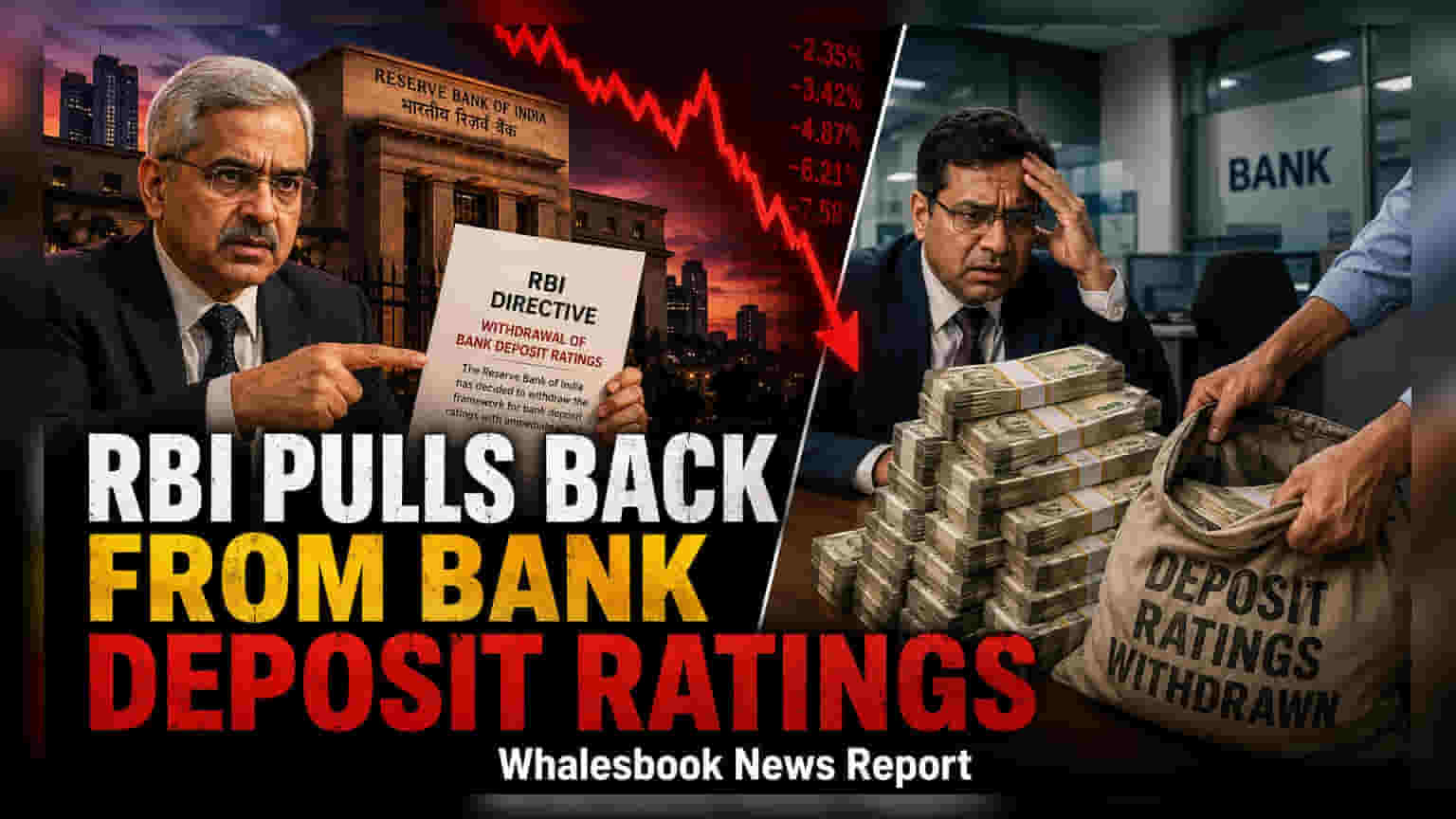
The Reserve Bank of India has asked credit rating agencies to stop listing the central bank as the regulator for bank deposit ratings. This creates a compliance conflict with SEBI regulations, which mandate identifying the sector regulator for any rated instrument. Consequently, rating firms may stop evaluating bank deposits entirely, potentially reducing the available risk information for investors and depositors.
The Reserve Bank of India (RBI) has issued a directive to credit rating agencies (CRAs) instructing them to stop referring to the central bank as the regulator for bank deposit ratings in their communications. This instruction marks a significant shift in how these agencies manage the documentation for the financial instruments they evaluate.
The core of the issue lies in existing rules set by the Securities and Exchange Board of India (SEBI). SEBI regulations require that any credit rating agency issuing a rating for a financial instrument must explicitly identify the sector regulator responsible for that instrument. Because the RBI regulates banks but does not act as the direct regulator of the specific business process of 'rating a bank deposit' in the way SEBI requires for other securities, it has directed agencies to omit the RBI’s name in this context.
This puts rating agencies in a difficult compliance position. If they follow the RBI’s instruction to remove the reference, they may no longer satisfy SEBI's requirements for identifying a sector regulator. As a result, many expect that credit rating firms might choose to discontinue the practice of rating bank deposits entirely to avoid potential regulatory friction between the two governing bodies.
For investors, this change could lead to a reduction in available information. External ratings are often used by individuals and institutions to gauge the safety and risk profile of funds parked in bank deposits. While a rating is not a guarantee of safety, it provides an independent assessment of a bank's financial health. The loss of these ratings could create uncertainty, particularly concerning smaller or cooperative banks, where depositors often rely on these assessments to make decisions.
While the absence of a rating does not indicate that a bank is unsafe, it does mean that one layer of independent evaluation will be missing. There is also a concern that the withdrawal of ratings could lead to deposit volatility if depositors lose a standardized tool to compare the financial stability of different institutions. The immediate focus for the market will be to see if there is any clarification from either SEBI or the RBI that resolves this conflict. Investors should monitor for further updates, as this will determine whether bank deposit ratings continue to exist in their current form.