

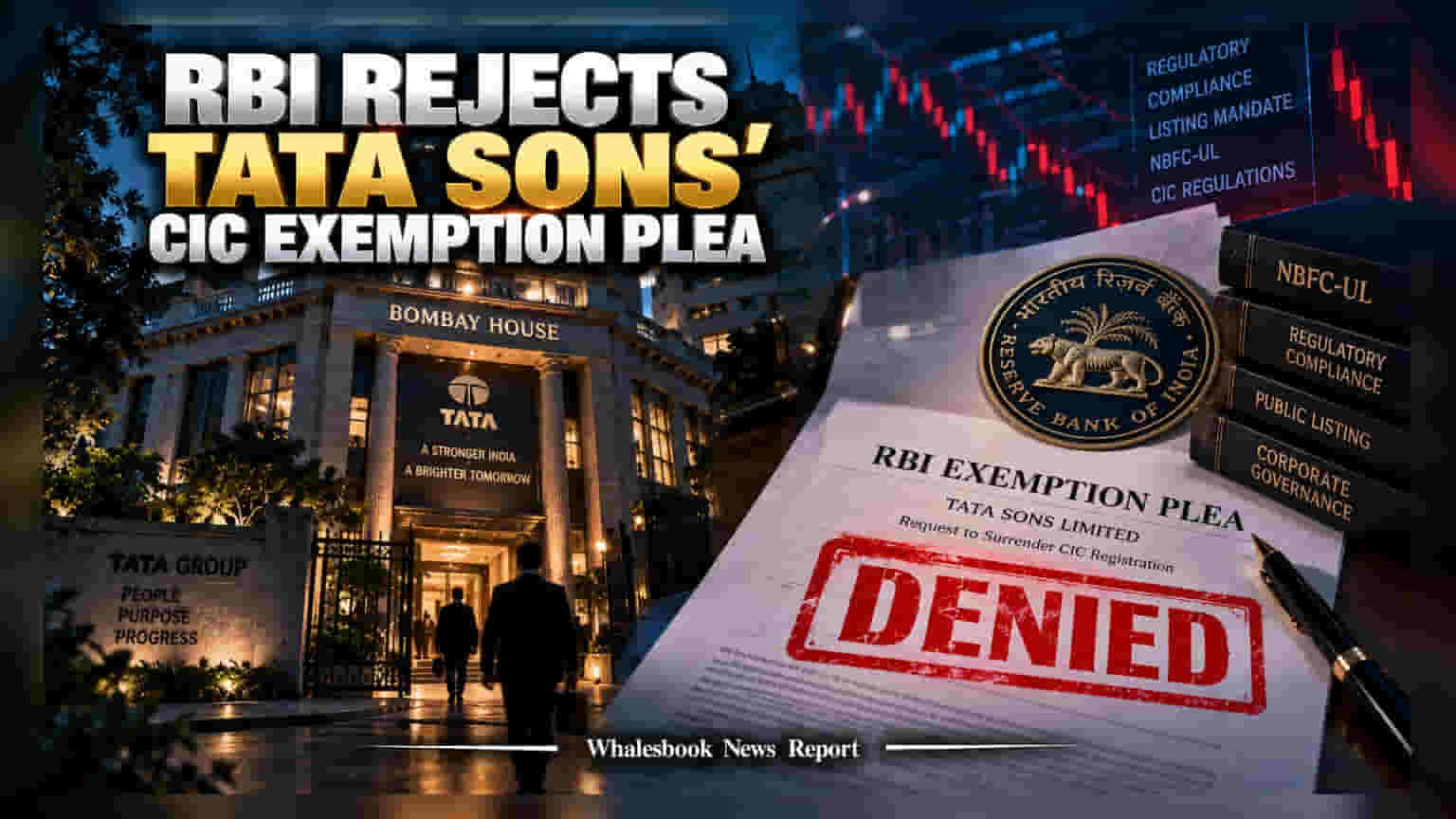
The Reserve Bank of India has rejected Tata Sons’ application to surrender its Core Investment Company registration, keeping the holding company classified as an Upper-Layer NBFC. This decision effectively reinstates the mandatory public listing requirement for the conglomerate, which was initially due for completion by September 2025.
The Reserve Bank of India (RBI) has issued a decision that carries significant implications for India’s largest corporate house. In an order dated September 11, 2026, the central bank denied Tata Sons’ request to surrender its registration as a Core Investment Company (CIC). This rejection ensures the company retains its classification as an Upper-Layer Non-Banking Financial Company (NBFC-UL), a regulatory status that requires the holding company to comply with strict public listing directives.
At the core of this issue is the regulatory framework for large non-banking entities. As of March 2026, Tata Sons reported an asset base of approximately ₹2.01 lakh crore. This figure far exceeds the ₹1 lakh crore asset threshold that triggers the Upper-Layer NBFC classification under central bank norms. By attempting to deregister as a CIC, the company had sought to exempt itself from the mandatory listing rule that had an original deadline of September 2025. With this path now closed, the conglomerate faces renewed pressure to align with the scale-based regulatory framework.
The regulatory hurdle arrives at a sensitive time for the group's internal governance. The question of whether to take the holding company public has been a long-standing point of friction between major stakeholders. Tata Trusts, which holds a controlling 66% stake in the entity, has historically maintained a firm position against a public listing. Conversely, the Shapoorji Pallonji Group, which holds an 18.37% stake, has frequently advocated for a public offering to unlock liquidity for its own business requirements. This regulatory decision essentially forces the group to navigate these conflicting interests while addressing the central bank's mandate.
While the RBI's ruling clarifies that the listing requirement remains active, it does not set a new, specific deadline for the company to enter the capital markets. For investors and market observers, the situation remains fluid. The company has not yet provided a public timeline for an Initial Public Offering, and the management is currently navigating a period of leadership transition, with Chairman N. Chandrasekaran’s term concluding in February 2027.
Going forward, the primary area for investors to track will be any official communication from the board regarding their strategy for compliance. Shareholders will also monitor whether the group seeks legal avenues to appeal the decision or if it initiates preparations for a public market debut. Given the size of the holding company and its influence across numerous group firms, any move toward a listing would be a complex process involving significant changes to the group’s corporate structure and disclosure practices.