

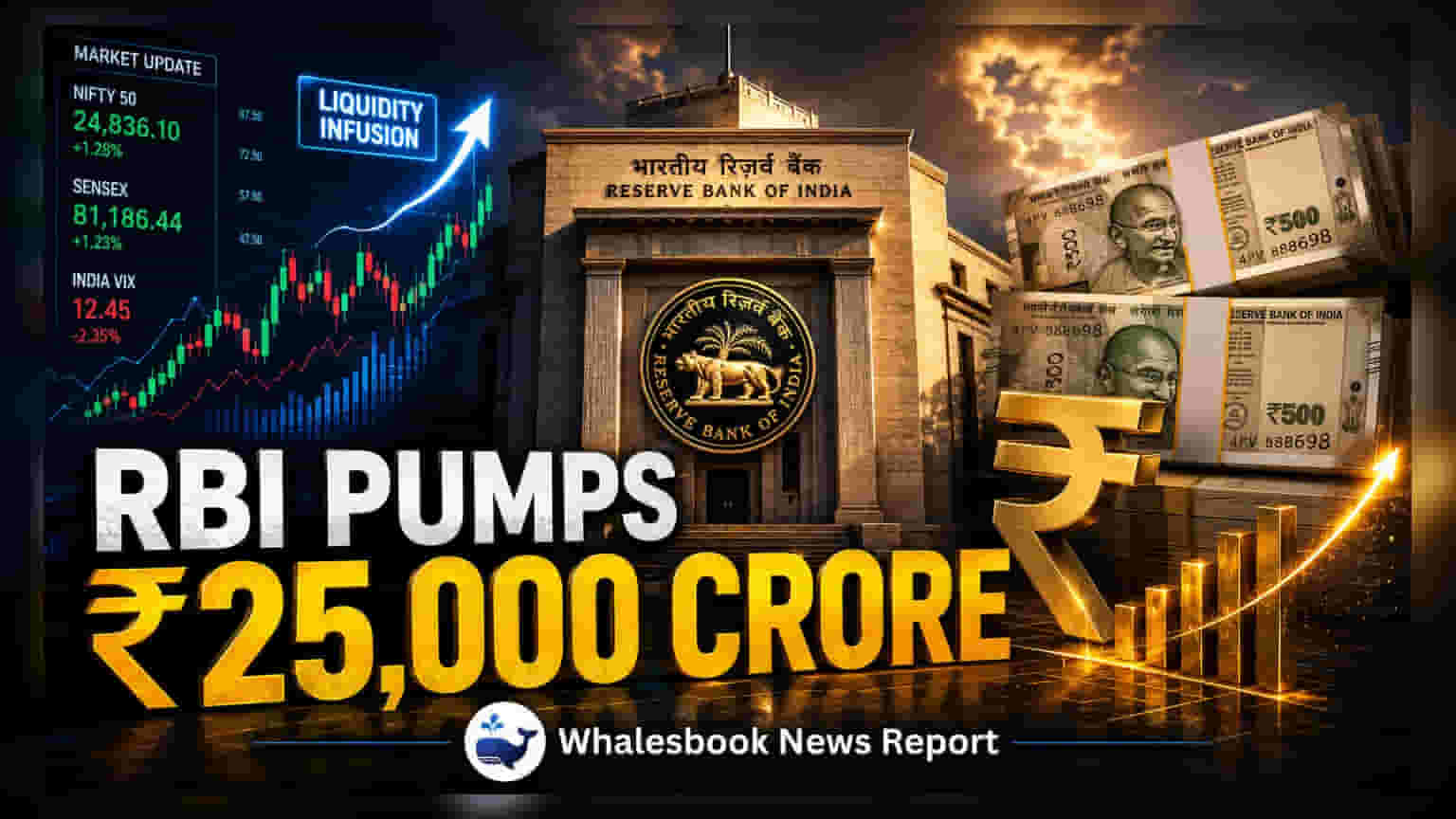
The Reserve Bank of India is injecting ₹25,000 crore into the banking system through an overnight Variable Rate Repo auction on July 8. This operation aims to manage short-term liquidity, even as the system maintains a significant surplus of over ₹1 lakh crore. Investors may monitor this as a signal of the central bank's focus on maintaining stable money market conditions.
The Reserve Bank of India (RBI) is conducting an overnight Variable Rate Repo (VRR) auction today, July 8, to inject ₹25,000 crore into the Indian banking system. The auction, scheduled between 9:30 am and 10:00 am, allows banks to access short-term funds by pledging government securities. The borrowed funds are set to mature tomorrow, July 9.
Managing Liquidity Through Competitive Bidding
Unlike fixed-rate liquidity operations, this Variable Rate Repo allows banks to bid for funds at rates determined by market demand. This flexibility helps the central bank manage liquidity more effectively. According to the central bank, the decision follows a routine review of evolving liquidity conditions in the economy. This tool is part of the broader Liquidity Adjustment Facility, which the RBI uses to ensure that the banking sector has the necessary funds to maintain smooth operations.
System Liquidity Trends
While this injection is taking place, the broader banking system is currently experiencing a period of high surplus. As of July 6, the system surplus was estimated at approximately ₹1.19 lakh crore. This indicates that banks generally have significant cash reserves available. The demand for these liquidity windows has been inconsistent; for example, in a previous auction held on July 7, banks bid only ₹1,135 crore against a notified amount of ₹50,000 crore. This low uptake underscores the existing abundance of funds within the banking system.
Historical Context and Monitoring
Since June, the central bank has been active in managing these levels, having injected over ₹6 lakh crore through various VRR auctions to ensure stability. For market participants, the key monitorable remains the central bank's approach to absorbing or injecting liquidity as the fiscal year progresses. Investors typically watch these operations to understand the interest rate environment and the overall availability of credit in the economy. The next updates on liquidity will depend on shifts in government spending, tax collections, and currency demand, all of which influence the cash position of the banking sector.