

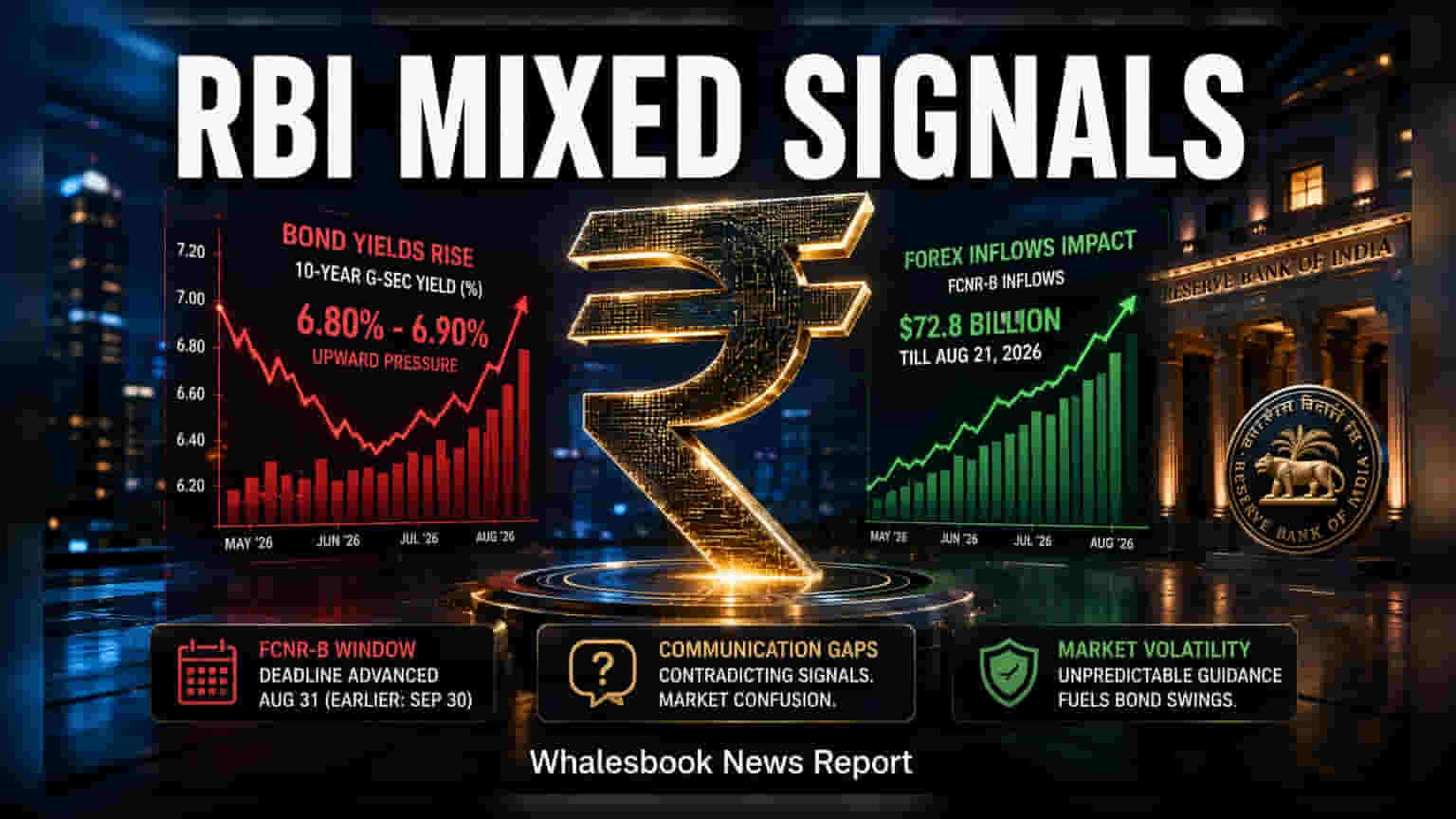
The Reserve Bank of India is facing market criticism following the abrupt early closure of the FCNR-B forex swap window and mixed signals from the latest MPC minutes. These communication gaps have unsettled bond traders, causing government bond yields to rise as investors demand more consistent policy signaling from the central bank.
The Reserve Bank of India is facing increasing pressure from the investment community due to perceived gaps in its communication strategy. This frustration stems from two major issues: the unexpected early termination of the FCNR-B (Foreign Currency Non-Resident) forex swap window and the confusing signals contained in the latest Monetary Policy Committee minutes.
The central bank’s reversal on the FCNR-B scheme has been a primary source of concern. On August 5, 2026, RBI Governor Sanjay Malhotra indicated that there were no plans to terminate the FCNR-B swap window prematurely. However, just nine days later, the regulator moved the deadline from September 30 to August 31. This sudden change, which effectively shuttered the facility one month ahead of the original schedule, caught market participants off guard. The program had seen significant activity, with total forex inflows reaching $72.8 billion by August 21, 2026. For banks and financial institutions, such abrupt shifts in rules create uncertainty regarding regulatory predictability.
Simultaneously, the debt markets have reacted to disjointed guidance regarding interest rates. During the August 3–5, 2026 meeting, the MPC voted unanimously to keep the repo rate steady at 5.25%, maintaining a neutral stance. However, the subsequent release of the meeting minutes revealed a more hawkish tone, with committee members expressing concerns about potential inflation risks. This contradiction—between a neutral policy decision and a hawkish analytical tone—has fueled volatility. Since the minutes were published, benchmark 10-year government bond yields have faced upward pressure, moving into the 6.8%–6.9% range.
For investors, this climate of ambiguity is problematic. Financial stakeholders argue that the central bank’s communications should ideally be precise and beyond subjective interpretation to help the market price in risk effectively. When guidance becomes open to wide interpretation, it often leads to unnecessary price swings and creates difficulties for traders managing bond portfolios. The key update investors will be monitoring next is whether the central bank shifts toward more direct, consistent, and predictable signaling in future policy statements to help stabilize bond yields and restore market confidence.