

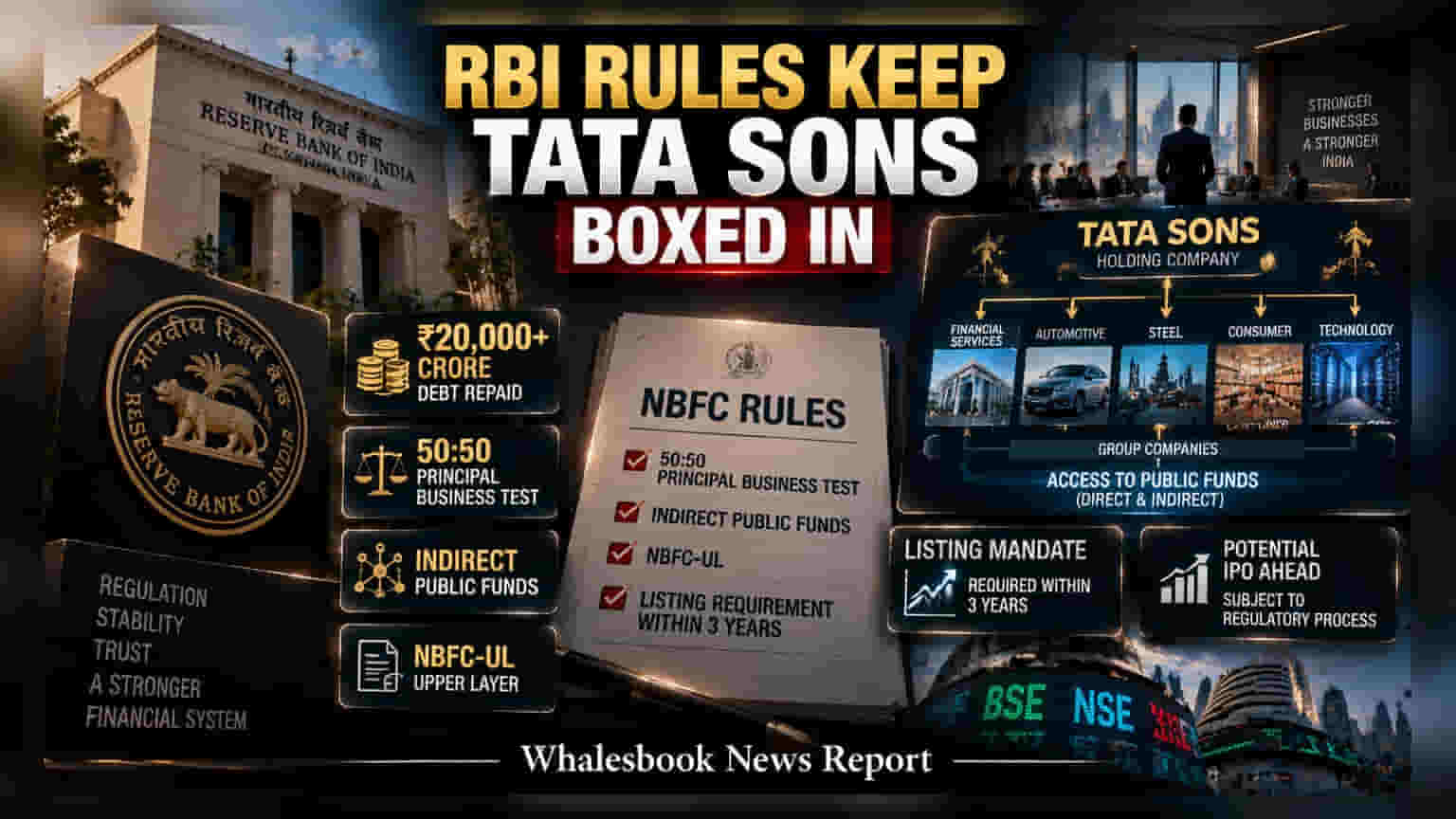
The Reserve Bank of India’s latest updates on NBFC regulations have effectively blocked Tata Sons' effort to surrender its registration as a core investment company. By broadening the definition of public funds, the central bank has reinforced the firm’s status as an Upper Layer NBFC, which mandates a stock market listing within three years.
The Reserve Bank of India (RBI) has issued a set of updated frequently asked questions regarding non-banking financial companies (NBFCs) that significantly narrows the path for Tata Sons to exit its regulatory classification. The central bank's stance maintains that the holding company remains an Upper Layer NBFC, even after the entity became debt-free on a standalone basis.
Tata Sons had previously sought to surrender its Certificate of Registration, arguing that it no longer relied on public funds and therefore did not meet the criteria for continued regulation. However, the RBI’s updated guidance clarifies that the definition of 'public funds' is broader than just direct public deposits. It now explicitly includes funds accessed indirectly through group entities, associates, or other external sources. Because Tata Sons controls and finances several large group companies that operate within the financial system, the regulator considers it to have access to these resources.
The regulatory classification is critical because Tata Sons is categorized in the 'Upper Layer' of the NBFC framework. This classification is reserved for entities with significant systemic importance, often based on asset size. Under the current regulatory roadmap, all entities placed in the Upper Layer are required to list their shares on a stock exchange within three years of their classification. The RBI’s latest clarifications serve to solidify this position, effectively removing the technical grounds Tata Sons was using to request an exit.
To ensure its regulatory position is upheld, the RBI has filed a caveat in the Bombay High Court. This legal step is a precautionary measure to ensure the central bank is heard if Tata Sons attempts to legally challenge the listing mandate. The regulator is signaling that the classification is not merely an administrative choice but a matter of systemic oversight.
For the broader investment community, this development is significant because it brings the prospect of an initial public offering from the group's holding company back into focus. While the RBI's guidance does not set an immediate IPO date, it reinforces the regulatory timeline. Investors in the Tata group will now be watching for any official communication from the management regarding how they plan to comply with these listing requirements. The key monitorable remains whether the company will initiate the listing process or attempt to engage further with the regulator to argue its case on different grounds. The uncertainty regarding the timeline and the potential structure of such a listing remains a primary concern for the market.