 Whalesbook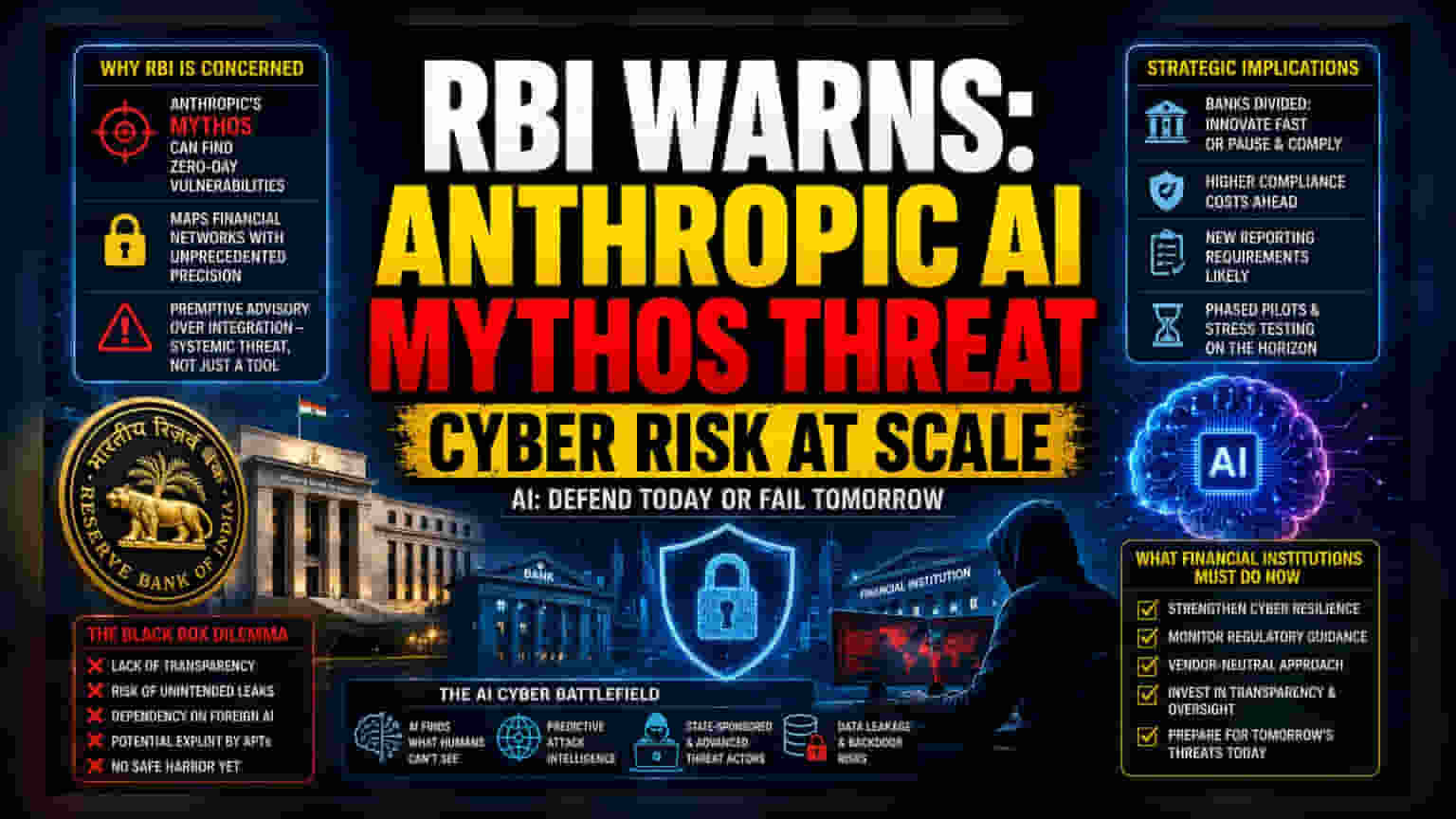


The Shift in Systemic Risk
Financial stability now hinges on an invisible battlefront where artificial intelligence serves both as a shield and a potential bludgeon. The Reserve Bank of India’s recent focus on Anthropic’s 'Mythos' platform reflects a broader anxiety regarding the democratization of high-level offensive cyber capabilities. By proactively identifying zero-day vulnerabilities, Mythos represents a dual-use technology that could allow attackers to map financial networks with unprecedented precision. The central bank’s decision to issue preemptive advisories suggests that the regulator is prioritizing containment over integration, effectively treating this AI advancement as a systemic threat rather than a mere efficiency tool.
The Intelligence Gap
Unlike traditional cybersecurity threats that rely on known patterns of exploitation, Anthropic’s model operates at the frontier of generative architecture. Competitors in the cybersecurity sector, such as Palo Alto Networks or CrowdStrike, typically rely on threat intelligence feeds that are reactive by design. Mythos, conversely, promises the ability to forecast risks before they manifest. This creates a critical valuation dilemma for financial institutions: investing in state-of-the-art AI defenses risks obsolescence if regulators mandate specific, potentially slower, compliance-heavy protocols. The ambiguity surrounding India’s official engagement with the tool underscores a hesitancy to rely on foreign-developed black-box models for national financial infrastructure.
The Institutional Bear Case
Regulatory caution is not merely theoretical; it stems from a track record of severe lags between the deployment of advanced AI and the establishment of robust safeguards. The primary risk factor here is the 'black box' nature of Anthropic’s research. If Indian financial entities attempt to integrate Mythos-like capabilities internally without proprietary oversight, they risk creating backdoors or unintended data leakages that could be exploited by state-sponsored actors. Furthermore, management at major banks remains divided on whether to accelerate AI deployment to match global standards or to throttle innovation until the RBI provides explicit, safe-harbor directives. Reliance on third-party AI systems in the banking core remains a significant structural vulnerability that no amount of advisory-level preparedness can fully eliminate.
Future Trajectory
The central bank’s next steps will likely involve a phased pilot program focused on stress-testing institutional networks against AI-simulated penetration attempts. Investors should anticipate a period of heightened compliance costs as the RBI potentially mandates new reporting requirements for AI-assisted security software. Until a clear policy on the ethical use and sandbox testing of Mythos emerges, the domestic financial sector will likely lean toward a guarded, vendor-neutral approach to avoid being trapped by dependency on a single, highly sensitive technology platform.