

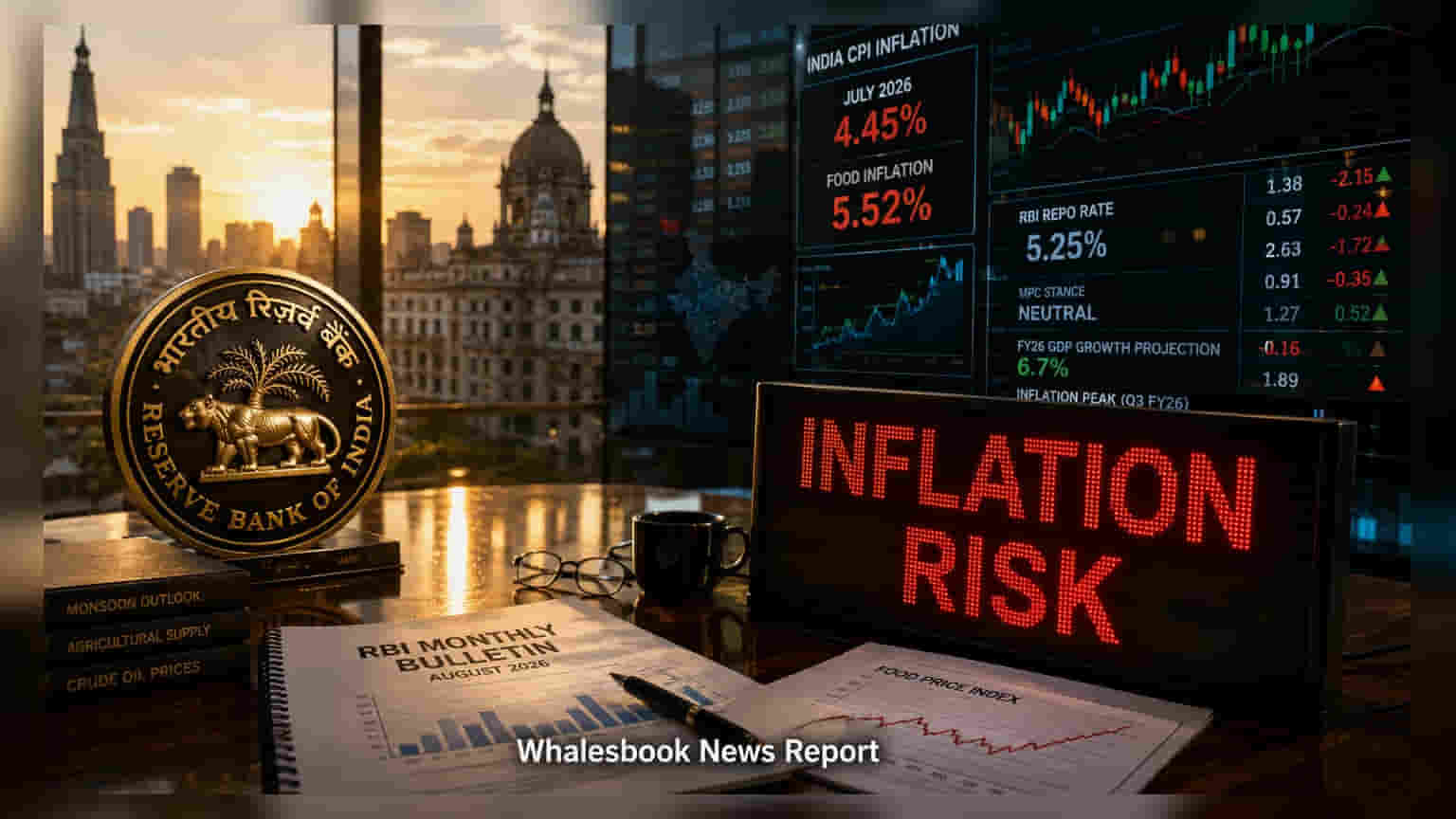
The Reserve Bank of India has issued a fresh warning about rising food prices, which reached 5.52% in July 2026, posing a risk to headline inflation. With the repo rate steady at 5.25%, the central bank is prioritizing price stability while monitoring the impact of monsoon patterns. Investors should note that interest rate cuts may remain on hold until inflation pressures cool down.
The Reserve Bank of India (RBI) has issued a fresh warning regarding the impact of food prices on the nation's inflation outlook. In its August 2026 monthly bulletin, the central bank noted that supply-side shocks in the food and beverage categories are keeping headline inflation elevated, even as core inflation remains relatively stable. This cautious stance comes after official data showed that retail inflation stood at 4.45% in July 2026, with food inflation specifically recording a higher rise of 5.52%.
During its early August meeting, the Monetary Policy Committee (MPC) decided to keep the repo rate unchanged at 5.25%. The central bank is currently maintaining a neutral stance, as it tries to balance the goal of supporting economic growth with the need to keep price increases in check. The RBI has projected a GDP growth rate of 6.7% for the current financial year, but it has cautioned that headline inflation could potentially peak at 5.9% in the third quarter of the financial year.
Inflation Risks and Economic Impact
For the broader economy, the main concern remains the potential impact of weather patterns on agricultural output. With forecasts suggesting below-normal rainfall for the remainder of the monsoon season, there is a risk that food supplies could tighten, which would keep prices under pressure. Additionally, the central bank is monitoring global geopolitical tensions and the volatility of crude oil costs. These external factors are unpredictable and can lead to higher input costs for manufacturers and consumers alike.
While industrial production remains steady and urban consumption holds firm, the central bank’s recent comments suggest that it is not yet comfortable enough to reduce interest rates. The fact that core inflation remains contained at approximately 3.9% indicates that demand-side pressure is not yet widespread, but the persistently high food inflation forces the central bank to remain vigilant.
Investors may closely track upcoming monthly inflation prints, data on monsoon progress, and official commentary from the central bank. The primary monitorable for the market is whether food prices begin to stabilize or if supply-side issues force the central bank to maintain its current interest rate level for a longer period than previously expected.