

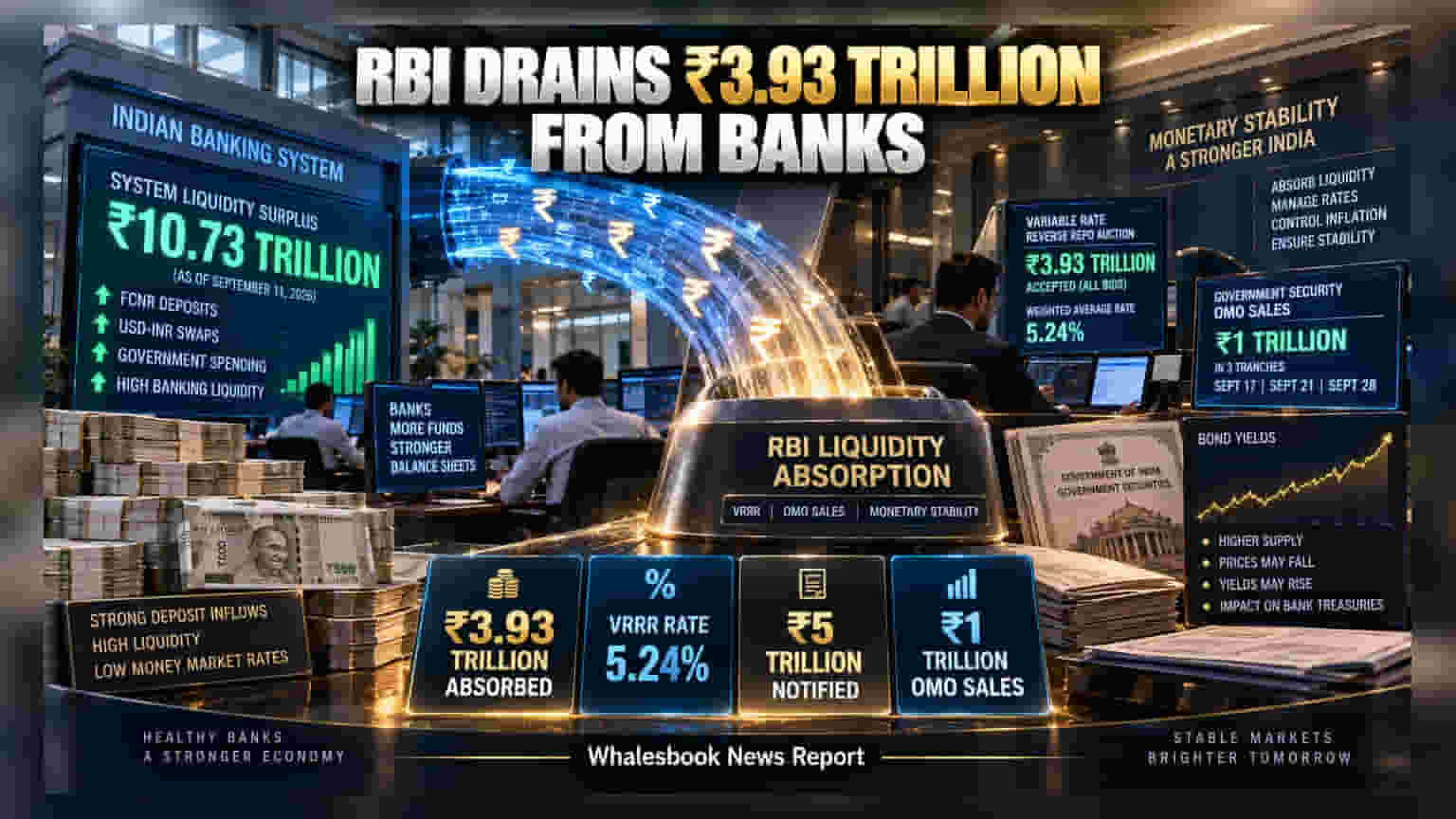
The Reserve Bank of India (RBI) has withdrawn ₹3.93 trillion from the banking system through a reverse repo auction to manage record liquidity. With excess cash estimated at ₹10.73 trillion, the central bank is also preparing to sell ₹1 trillion in government bonds. Investors should watch the upcoming OMO auctions, as increased bond supply could lead to higher yields and impact bank treasury valuations.
The Reserve Bank of India has intensified its efforts to mop up excess cash from the banking system, absorbing ₹3.93 trillion in a variable rate reverse repo auction on September 15, 2026. The central bank accepted all bids at a weighted average rate of 5.24%, just slightly below the prevailing repo rate. This move comes as the central bank faces a significant challenge in managing banking system liquidity, which was estimated at a record high of approximately ₹10.73 trillion as of September 11.
Drivers of the Liquidity Surplus
The massive surplus is largely a result of heavy inflows from Foreign Currency Non-Resident (FCNR) deposits. Banks mobilized these deposits and engaged in dollar-rupee swap operations with the RBI, effectively injecting large amounts of rupee liquidity into the domestic banking system. Additionally, recent government spending, including salary and pension payments, has further added to the cash pile. When such high levels of surplus liquidity persist, short-term money market rates can drop significantly below the RBI’s policy repo rate, which complicates the central bank's ability to control monetary conditions effectively.
Impact of Upcoming OMO Sales
While reverse repo auctions help the RBI manage cash on a short-term basis, the central bank is now taking more structural action. It has announced the sale of government securities worth ₹1 trillion through Open Market Operations (OMO). These sales will take place in three tranches, with the first auction scheduled for September 17, followed by others on September 21 and September 28.
For investors, these OMO sales are a critical update. Unlike temporary reverse repo auctions, selling government bonds effectively reduces the supply of cash in the system on a more permanent basis. However, this also increases the supply of bonds in the market. When the supply of bonds increases, prices typically fall, which forces yields higher. Banks and other financial institutions that hold large portfolios of government bonds in their treasury books may see the value of these investments fluctuate as yields rise, potentially impacting their short-term financial performance.
Key Monitorables for Investors
The central bank's aggressive stance indicates it is prioritising the alignment of market rates with its policy stance and managing inflationary pressures stemming from high liquidity. Investors should track the results of the OMO auctions starting September 17. The success of these bond sales and the resulting movement in government bond yields will be the primary indicators of how effectively the RBI is able to normalize cash conditions in the banking system.