

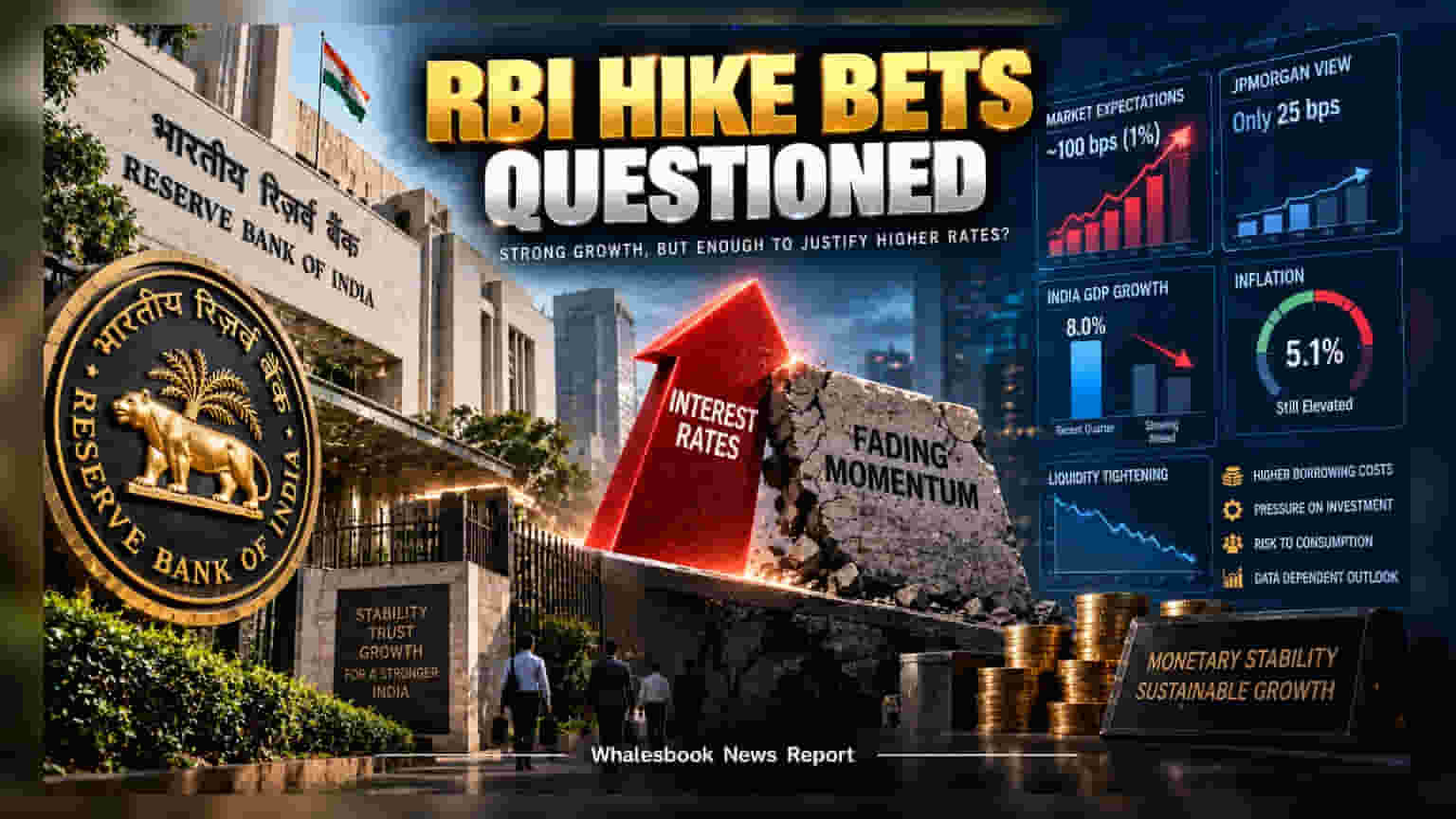
JP Morgan Chase suggests that financial markets may be over-optimistic about future rate hikes by the Reserve Bank of India. While one 25-basis-point increase is expected, the firm warns that aggressive tightening could harm economic growth, which currently relies on stimulus measures from late 2025.
JP Morgan Chase has issued a note of caution regarding expectations for the Reserve Bank of India’s (RBI) monetary policy. The investment bank argues that current economic momentum may not be enough to justify an aggressive cycle of interest rate increases, which some in the financial markets are currently anticipating.
While the market is pricing in roughly 100 basis points of rate hikes—or a 1% increase—throughout the year, JP Morgan expects a more moderate path. The firm anticipates the RBI will likely deliver only one 25-basis-point increase, aligning with signals already provided by policymakers. A basis point is a standard unit used in finance, where 100 basis points equal 1%.
Impact of Fading Stimulus
India reported nearly 8% economic growth in its latest quarter, a strong figure that has fueled market optimism. However, JP Morgan attributes a significant portion of this performance to policy support introduced in the second half of 2025. This support included lower borrowing costs, tax adjustments, and regulatory changes that helped boost credit growth.
The concern is that the positive impact of these past measures is beginning to fade. If the economy has been growing largely due to this artificial boost rather than self-sustaining internal demand, then aggressive rate hikes could create a problem. Higher interest rates increase borrowing costs for businesses and individuals, which may lead to slower investment and reduced consumer spending.
Liquidity and Market Rates
Another factor influencing this view is liquidity, or the amount of cash available in the banking system. Currently, abundant liquidity has kept many market interest rates lower than the RBI’s official policy rate. This has kept financial conditions easier than they might otherwise be.
As the banking system sees this excess liquidity tighten, financial conditions will naturally become more restrictive. This process is expected to test the resilience of the Indian economy. If the system tightens too quickly while the RBI is also hiking rates, the combined effect could dampen corporate expansion plans and household consumption more than expected.
What Investors Should Monitor
For investors, the durability of growth is the most critical question. The coming quarters will reveal whether the economy can maintain its momentum without the support of the earlier fiscal and monetary stimulus. Key factors to track include inflation trends, credit growth, and how consumption holds up as borrowing costs normalize. The pace of future policy decisions by the RBI will likely depend on whether incoming data shows that the underlying economy is strong enough to withstand tighter financial conditions without a significant drop in activity.