

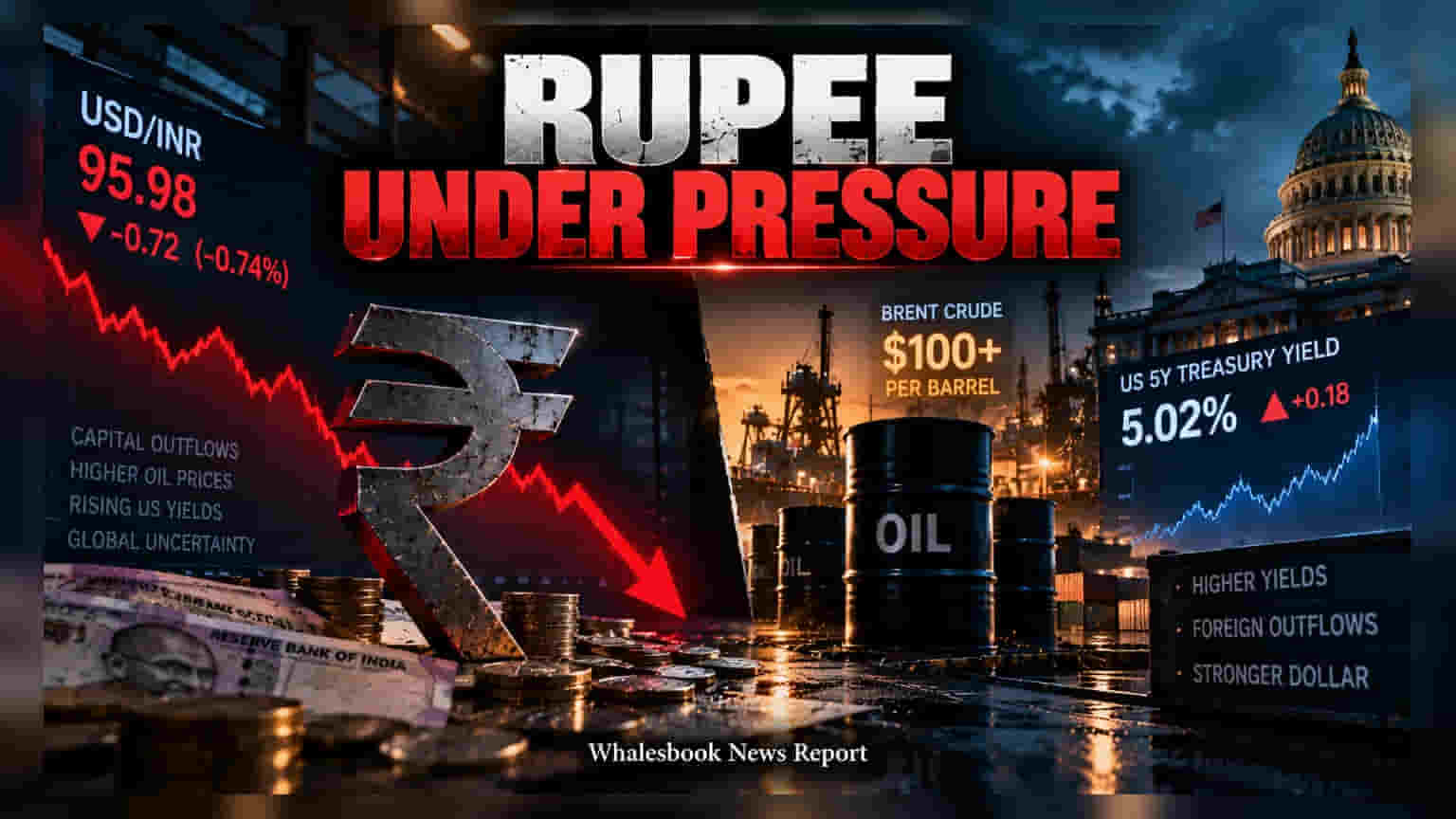
The Indian rupee is under pressure, nearing the 96 level against the US dollar due to surging oil prices and rising US Treasury yields. Investors are monitoring the situation as Foreign Institutional Investors pull funds out of the market. The Reserve Bank of India is actively stepping in to control volatility.
The Indian rupee is facing renewed selling pressure against the US dollar, with the currency trading near the 96 mark. This decline is largely driven by a combination of two major global factors: the rise in Brent crude oil prices and the climb in US Treasury yields.
Oil Prices and Import Costs
Brent crude oil has recently crossed the $100 per barrel threshold. This is a significant concern for the Indian economy, which relies heavily on imported energy. When oil prices rise, the amount of dollars required to pay for these imports increases. This higher demand for dollars naturally weakens the rupee. For investors, this creates concern about the country's import bill and potential inflationary pressure on the domestic economy.
US Yields and Foreign Outflows
Simultaneously, US Treasury yields have seen a sharp rise, with the five-year yield recently moving above 5%. When interest rates in the United States increase, global capital often shifts from emerging markets like India to the US, where investors can earn higher, safer returns. This trend has led to an outflow of capital, with Foreign Institutional Investors pulling out approximately $3.5 billion from Indian equities and debt this month. This exodus of foreign money adds to the downward pressure on the rupee.
RBI Intervention
The Reserve Bank of India is closely watching these developments. Deputy Governor Poonam Gupta recently noted that the current decline in the rupee does not align with the strong performance of India's domestic economy. She described the currency's weakness as a temporary shift driven by external factors rather than domestic fundamentals. To manage this volatility, the central bank has been intervening in the currency market to prevent the rupee from falling decisively past the 96 handle.
For investors, the most important indicators to watch will be global crude oil price movements, any changes in the data regarding foreign investor inflows or outflows, and further communication or action from the Reserve Bank of India. These factors will determine whether the current currency pressure remains a temporary event or continues to influence market sentiment.