 Whalesbook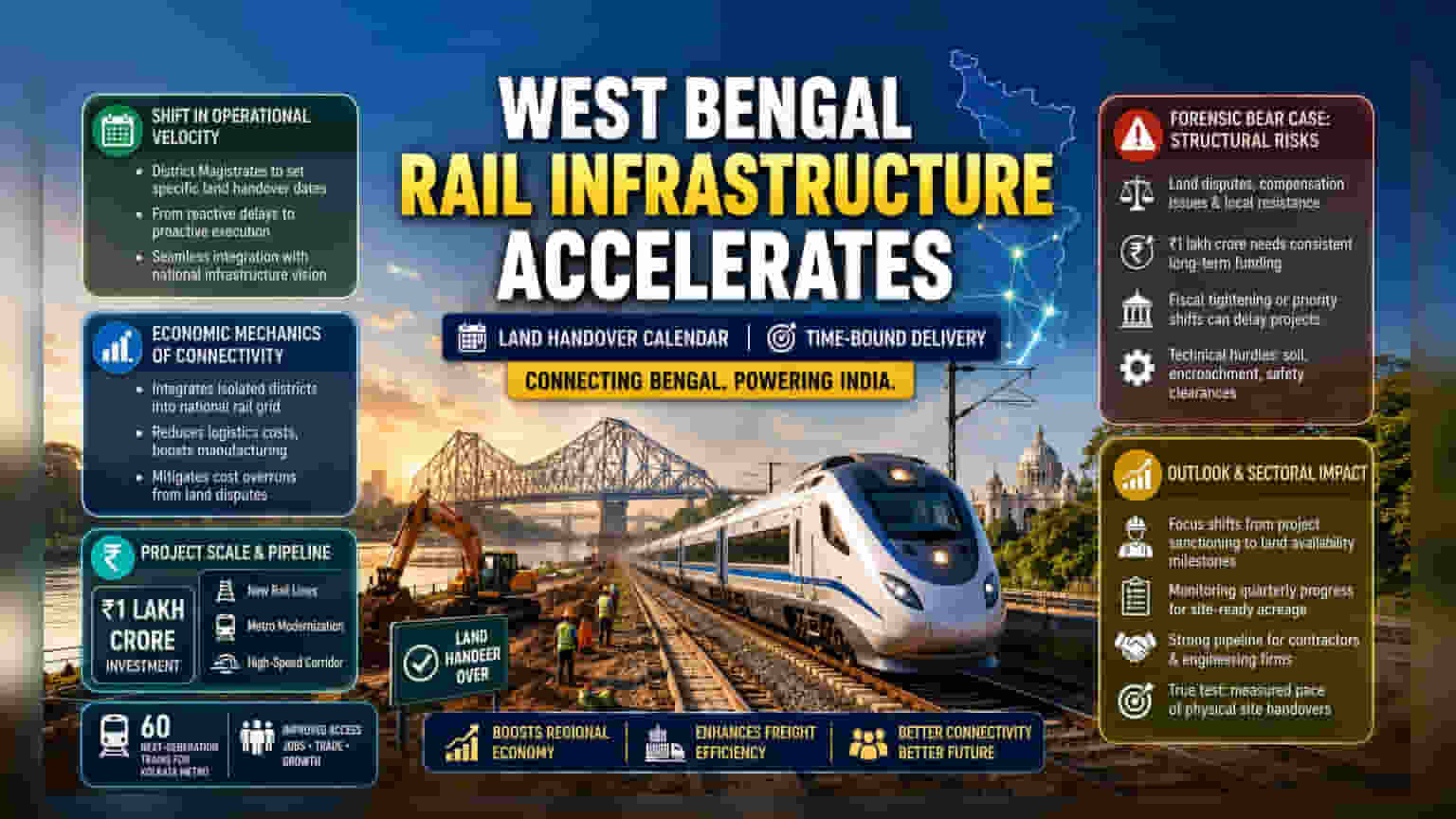


The Shift in Operational Velocity
The initiation of a land handover calendar marks a distinct departure from the historical frictions that characterized West Bengal’s infrastructure development. By mandating that district magistrates define specific delivery dates, the state administration is attempting to move away from the reactive, often paralyzed state of project execution that previously saw vital rail links languish in administrative purgatory. This move aligns with broader national efforts to integrate state-level land acquisition more seamlessly into the central government’s infrastructure mandate.
The Economic Mechanics of Connectivity
Railway projects of this magnitude are not merely about track laying; they represent a fundamental restructuring of regional logistics. The proposed expansion is set to bring previously isolated districts into the national railway grid, a move likely to reduce operational costs for manufacturers and improve passenger accessibility. Historically, the inability to resolve land disputes has been the primary factor behind cost overruns in Indian rail projects. By aligning the state’s executive machinery with the central government’s objectives, the administration is attempting to mitigate the risk premium typically associated with infrastructure projects in the region.
The Forensic Bear Case: Structural Risks
Investors must remain cautious despite the optimism surrounding improved federal cooperation. While the alignment between the state and the Centre reduces political risk, the systemic challenges of land acquisition in India remain formidable. Legal disputes, compensation disagreements, and resistance from local communities are endemic issues that often transcend political cycles. Furthermore, the sheer scale of a ₹1 lakh crore commitment requires consistent, long-term capital allocation. Any fiscal tightening at the central level or shifts in state priorities could see these timelines slip, regardless of the current executive urgency. Furthermore, historical data confirms that infrastructure execution in the state has suffered from more than just political disagreements; technical hurdles like soil stability, dense urban encroachment, and complex safety clearances along operational tracks present technical risks that cannot be solved by ministerial meetings alone.
Outlook and Sectoral Impact
For contractors and engineering firms involved in these developments, the focus must shift from 'project sanctioning' to 'land availability milestones'. With the central government pushing for modernization—exemplified by the 60 next-generation trains for the Kolkata Metro and high-speed corridor proposals—the pipeline for project execution is robust. However, the true test of this new administrative era will be the actual, measured pace of physical site handovers. Analysts will be monitoring the upcoming quarterly progress reports to see if the mandate to district magistrates results in meaningful, site-ready acreage or if it remains a nominal administrative exercise.