

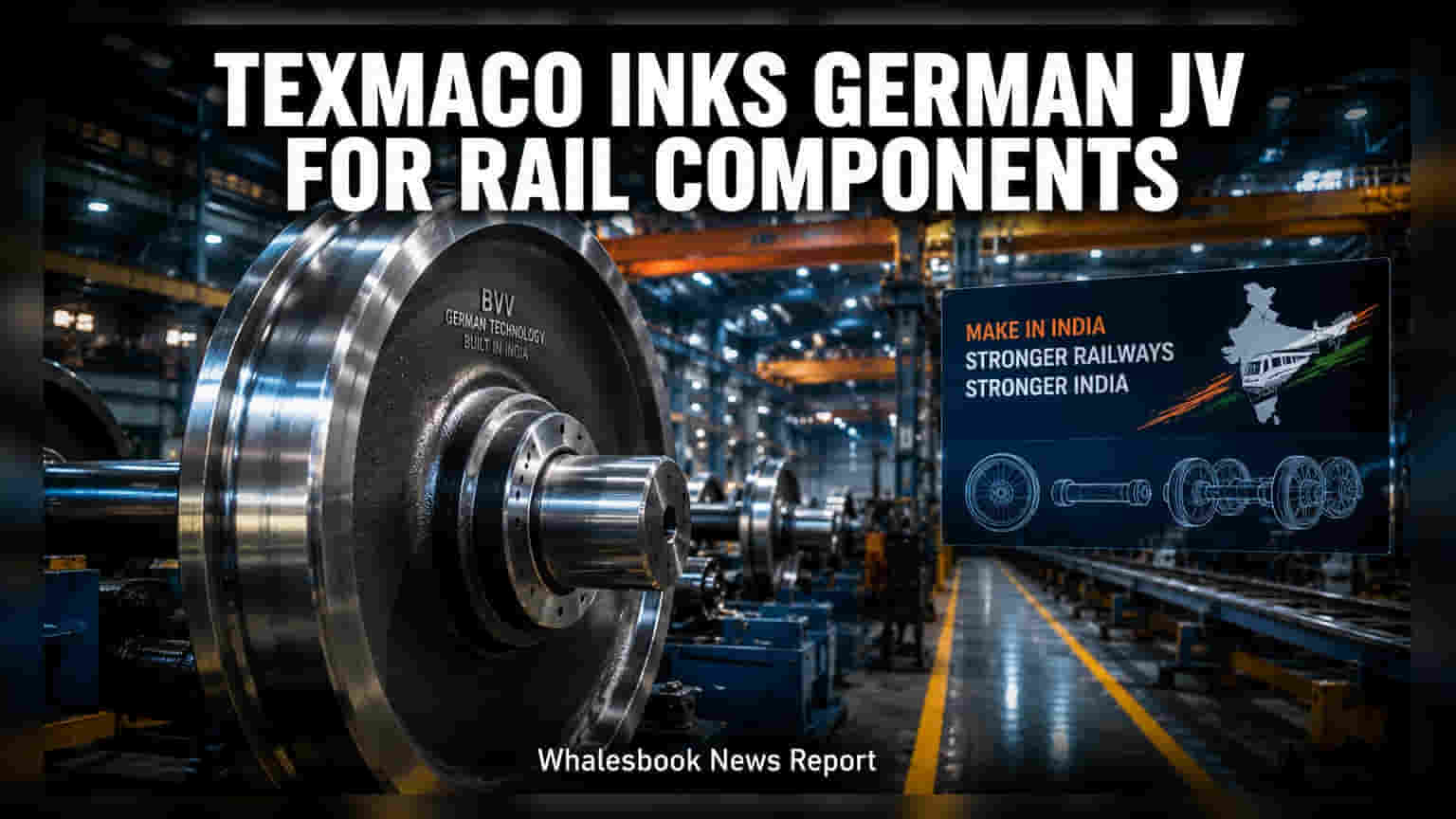
Texmaco Rail & Engineering has signed a 12-month agreement with Germany’s BVV to explore manufacturing railway wheels and axles in India. The partnership aims to support domestic demand and exports. As the deal is in a preliminary stage with no immediate financial commitment, investors may track future funding plans and final commercial terms to assess the impact on debt and margins.
Texmaco Rail & Engineering announced on August 27, 2026, that it has signed a memorandum of understanding (MoU) with Germany-based Bochumer Verein Verkehrstechnik GmbH (BVV). The partnership aims to explore the formation of a joint venture in India to manufacture railway wheels, axles, and wheelsets. This collaboration represents a strategic attempt to localize the production of critical rail components, which are currently significant imports for the domestic rail sector.
The companies have outlined a 12-month timeline to finalize the details of the collaboration. During this period, the entities will negotiate the ownership structure, production capacity, and specific funding requirements for the potential joint venture. In an exchange filing, Texmaco clarified that this is a preliminary arrangement and carries no immediate financial commitment. This means there is no current impact on the company’s cash flow or debt profile, as the project is still in the planning phase.
Strategic Importance and Market Context
For Texmaco, the alliance with a German firm known for its rail engineering expertise is aimed at meeting the high-quality standards required by Indian Railways. Large government tenders for railway rolling stock often come with strict localization requirements under the 'Make in India' initiative. By securing access to German manufacturing processes, Texmaco may improve its ability to compete for these large-scale contracts, which are essential for long-term revenue growth. If successful, the venture intends to serve both the domestic market and explore export opportunities.
Investor Monitorables and Risks
While the partnership signals a move toward higher-value manufacturing, investors should monitor several factors as the project progresses. First, the execution of such projects is capital-intensive. If the joint venture proceeds to the manufacturing stage, investors will need to watch how the company intends to fund the capital expenditure. Reliance on fresh debt to build production facilities could put pressure on the balance sheet and return ratios.
Second, the rail component sector is highly competitive. Profit margins in this space are often sensitive to raw material prices, particularly steel. Furthermore, any new manufacturing unit must receive rigorous technical certifications from Indian authorities, such as the Research Designs and Standards Organisation (RDSO), before its products can be used in the rail network. Any delays in achieving these certifications or in the finalization of the joint venture terms could affect the expected timeline.
On August 27, 2026, shares of Texmaco Rail & Engineering traded around the ₹108.37 to ₹108.43 level. As the company moves toward the definitive agreement, the key investor focus will remain on the clarity of the funding structure and the projected timeline for setting up the local production capacity.