

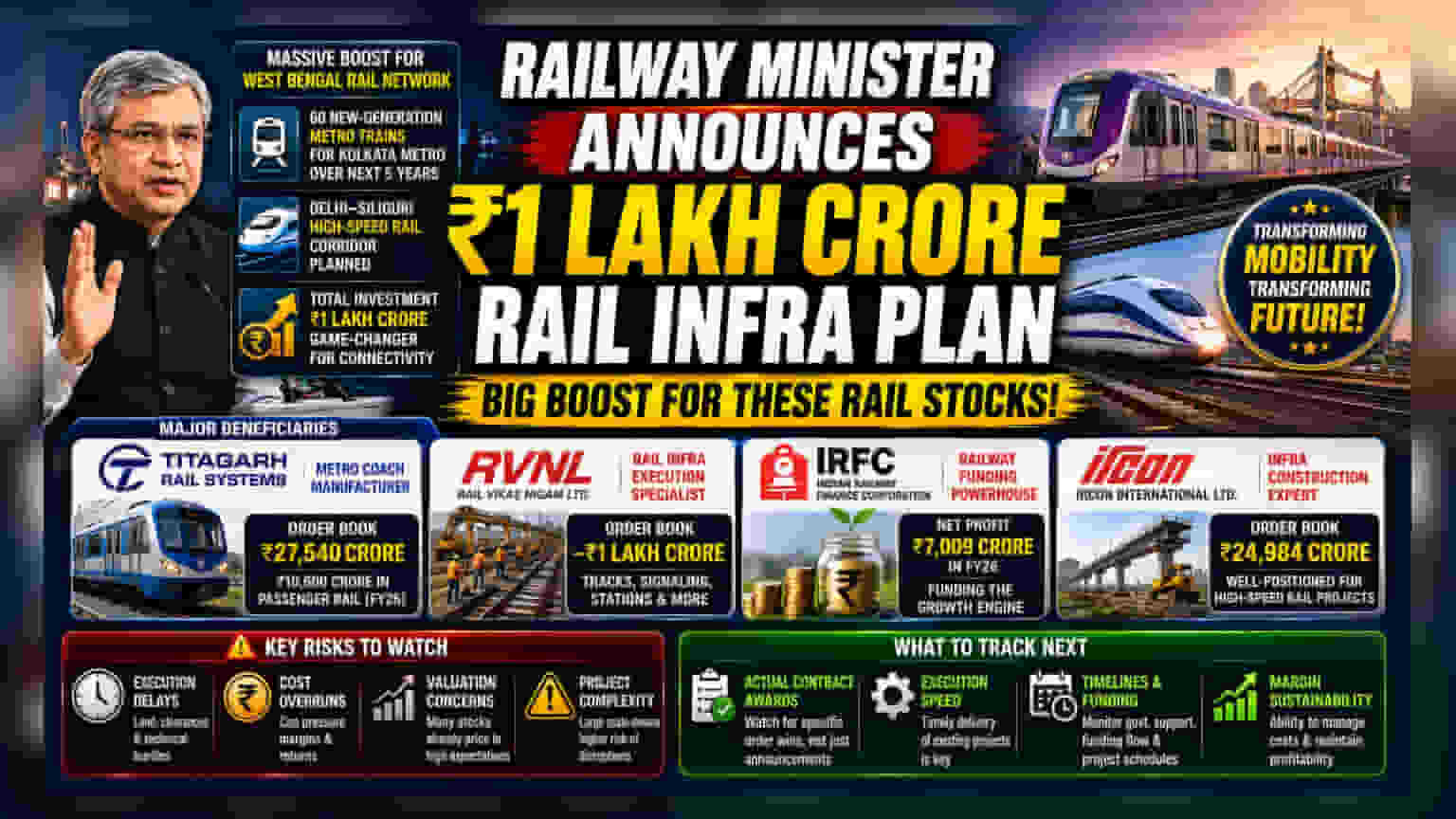
West Bengal's new Rs 1 lakh crore railway infrastructure project, including new Kolkata Metro trains and a high-speed corridor, aims to boost regional connectivity. The announcement highlights potential opportunities for rail stocks like Titagarh Rail Systems, RVNL, IRFC, and Ircon International, though investors should balance these prospects against execution and valuation risks.
What Happened
Union Railway Minister Ashwini Vaishnaw has announced a massive Rs 1 lakh crore infrastructure plan dedicated to revitalizing West Bengal's railway network. The project is wide-ranging, featuring plans for 60 new-generation metro trains for the Kolkata Metro to be rolled out over the next five years. Additionally, the government aims to develop a high-speed rail corridor connecting Delhi and Siliguri to reduce travel time significantly. This initiative highlights the government's focus on expanding urban mobility and long-distance rail connectivity, which typically involves substantial capital spending on rolling stock, track construction, and financial support mechanisms.
Why It Matters For These Rail Stocks
For investors, the primary implication is the potential for new orders and business visibility for companies already embedded in the railway supply chain. When the government announces such large-scale infrastructure projects, companies involved in manufacturing, civil construction, and project financing often see their order books grow.
Titagarh Rail Systems is positioned to benefit as a specialist in manufacturing metro coaches. Its total order book stands at Rs 27,540 crore as of FY26, with Rs 10,600 crore dedicated to passenger rail.
Rail Vikas Nigam (RVNL) acts as a project execution powerhouse. With an order book of nearly Rs 1 lakh crore, it manages complex infrastructure work, including track signaling and station redevelopment, rather than coach manufacturing.
Indian Railway Finance Corporation (IRFC) serves as the funding arm. It reported a net profit of Rs 7,009 crore in FY26, and a major state-level rail push suggests a steady demand for capital to fund these projects.
Ircon International, known for its construction expertise, is also a potential participant, particularly in the high-speed rail segment, backed by an order book of Rs 24,984 crore.
The Risks Investors Should Watch
While the announcement brings visibility, investors must look beyond the initial headline number. Railway infrastructure projects are complex, and the path from announcement to revenue is often long.
Execution risk remains the biggest challenge. Projects of this scale, especially high-speed rail corridors, can face delays due to land acquisition, regulatory clearances, or technical hurdles. Cost overruns are also a common issue in large infrastructure projects, which can pressure profit margins if not managed efficiently.
Furthermore, valuation is a critical factor. Many railway PSU stocks have seen significant price appreciation over the past few years based on government spending expectations. Investors should evaluate whether the current stock prices already reflect these potential future orders or if the market is being overly optimistic.
What To Track Next
For those following these stocks, the next steps are crucial. First, look for actual contract awards rather than just general announcements. A plan is only as good as the order it generates for specific companies. Second, monitor the execution speed of existing projects; if a company struggles to finish current work, a new, larger project might create more pressure than profit. Finally, observe management commentary on funding and project timelines. The timing of order inflows and the ability of companies to maintain their margins while managing high project costs will determine whether this Rs 1 lakh crore plan translates into actual long-term value for shareholders.