

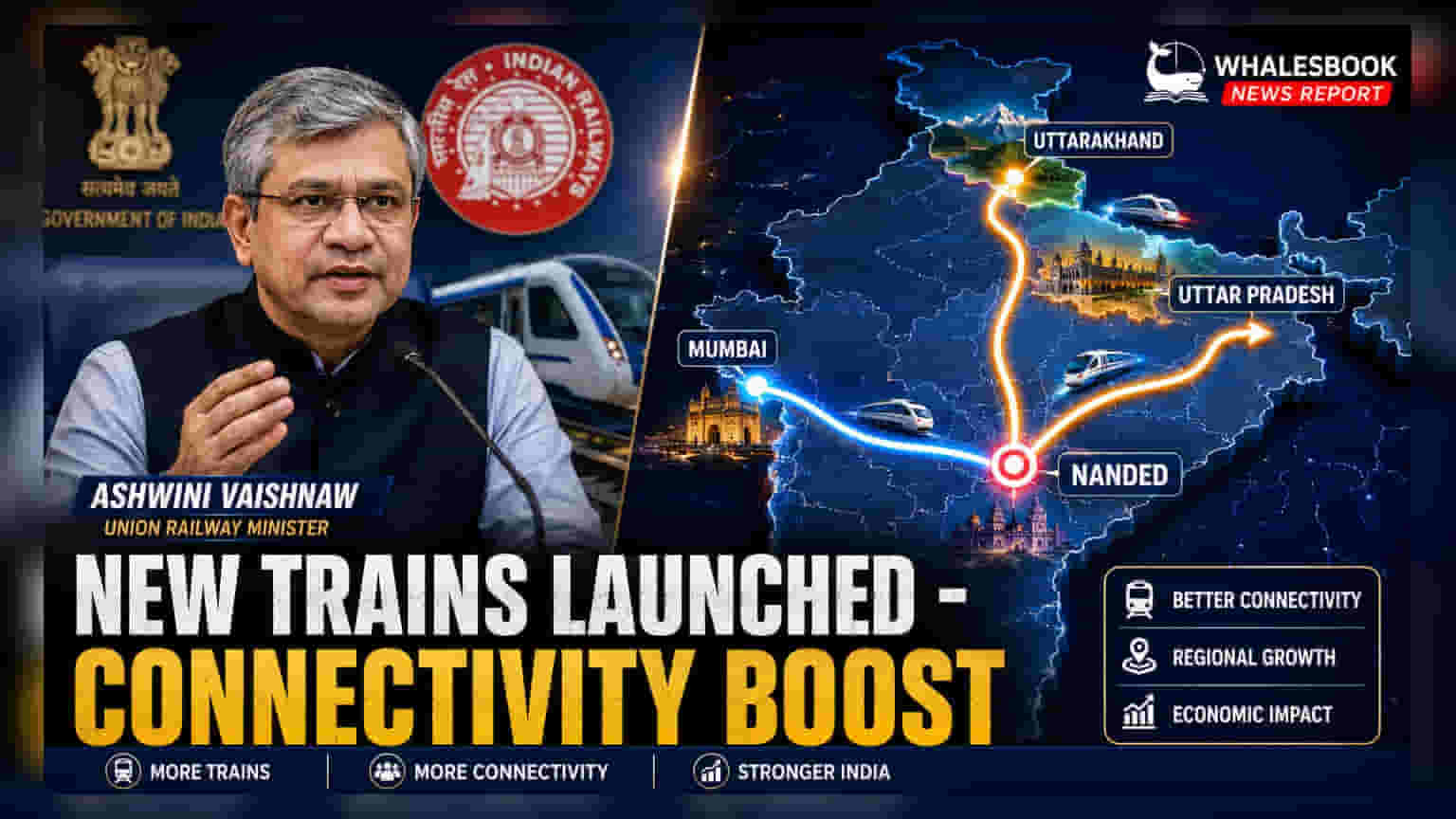
Railway Minister Ashwini Vaishnaw has launched new services connecting Nanded to Mumbai and expanded routes in Uttar Pradesh and Uttarakhand. This move aims to improve passenger connectivity and infrastructure utilization across key pilgrimage and industrial regions.
Union Railway Minister Ashwini Vaishnaw on Monday inaugurated several new train services, including the Nanded-Mumbai Express and an extended route from Tanakpur to Shahjahanpur via Pilibhit. These additions are part of a broader government strategy to improve connectivity in the Marathwada and Vidarbha regions of Maharashtra, as well as the Terai belt in Uttar Pradesh and Uttarakhand. By providing a direct rail link to Hazur Sahib Nanded, the ministry aims to cater to increased pilgrimage traffic.
Infrastructure and Capacity Progress
Beyond new services, the Ministry of Railways highlighted significant progress in network development. Official data indicates that approximately 37,000 kilometers of new tracks have been laid over the last 12 years, alongside achieving 99.6% electrification across the network. These infrastructure updates are intended to improve operational efficiency and allow for higher train speeds and frequency. The completion of the Eastern and Western Dedicated Freight Corridors also signals a strategic shift aimed at moving freight traffic away from passenger lines to reduce congestion.
Impact on Passenger Services
For the common traveler, the ministry is focusing on the deployment of general coaches to maintain affordability. About 4,000 of the planned 12,000 new general coaches have already been put into service. This focus is crucial as the railways manage high seasonal demand; for instance, the sector operated over 15,000 special trains during the recent summer season to address passenger volume. Similar operational adjustments are planned for upcoming festivals like the Jagannath Rath Yatra and Onam.
Execution and Future Monitorables
While the expansion of infrastructure and services is significant, investors and stakeholders typically monitor the financial viability of these routes, specifically the balance between operational costs and passenger revenue. The Ministry is also reviewing potential new stoppages at stations like Khatima and Banbasa, which may impact turnaround times. Future updates to track include the progress of the upcoming bullet train project, which is scheduled for commencement next year, and the operational performance of the new east-west freight corridors. The sustained demand for rail travel, combined with the government's ongoing capital spending on track laying and coach manufacturing, will continue to be a primary area of focus for the long-term efficiency of the Indian railway network.