

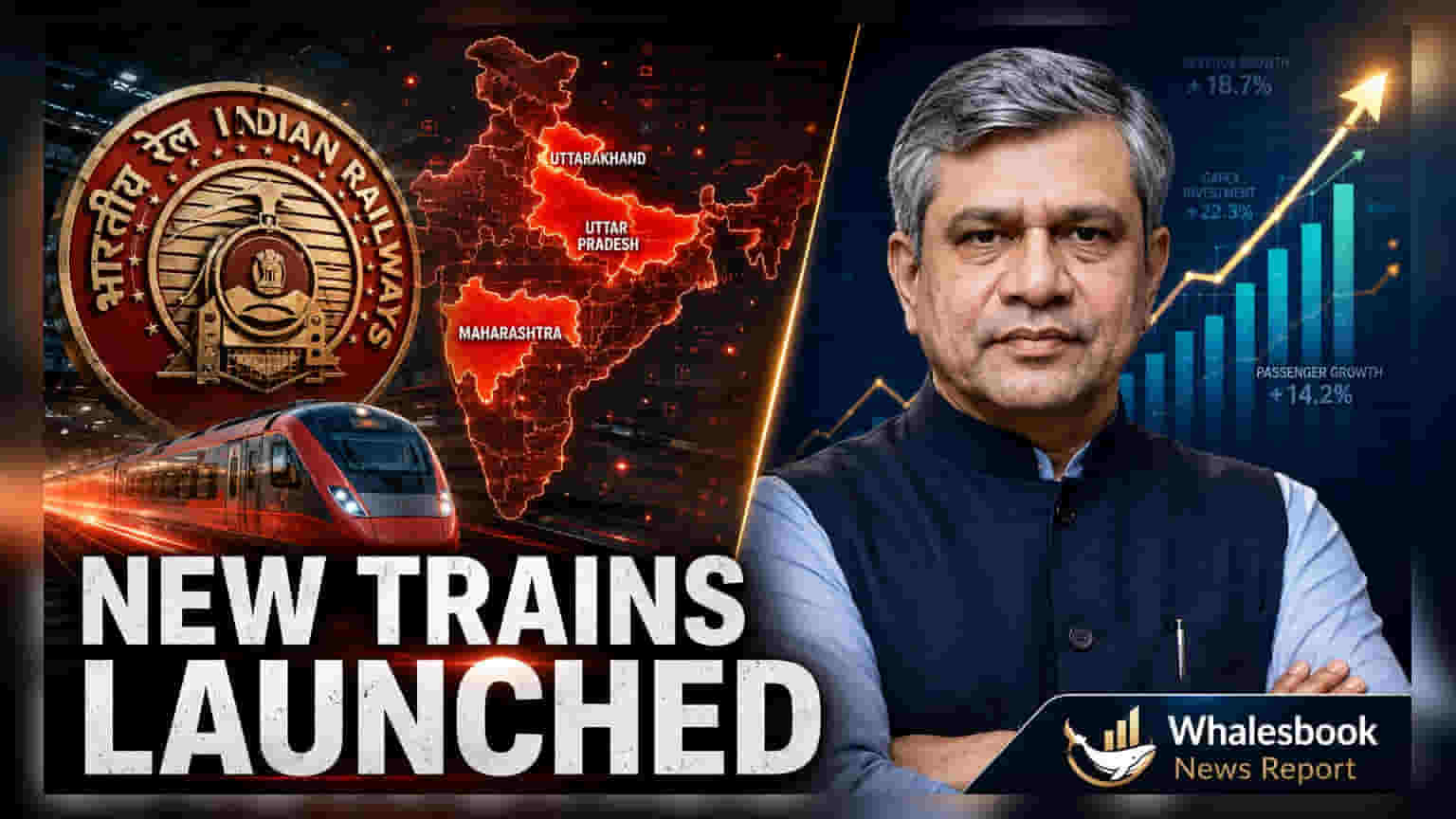
Railway Minister Ashwini Vaishnaw has introduced new train routes and extensions connecting Maharashtra, Uttar Pradesh, and Uttarakhand to address passenger demand. These additions, along with special festive services, aim to enhance regional connectivity as part of broader efforts to modernize the national rail network.
Railway Minister Ashwini Vaishnaw officially inaugurated several new train services and route extensions this Monday, aiming to improve passenger connectivity across key Indian regions. Launched from Bhubaneswar, the expansion targets districts in the Vidarbha and Marathwada regions of Maharashtra, as well as passenger needs in the Terai belt of Uttar Pradesh and Uttarakhand.
Among the notable service updates, the Nanded–Mumbai Express will now connect through Washim and Hingoli, a move intended to provide a direct link for residents in these districts. The network also sees the Tanakpur–Nanded Express joining the schedule, while the Tanakpur–Pilibhit service is extended to reach Shahjahanpur. Additionally, the previously temporary Tanakpur–Agra special service has been upgraded to a regular train route, providing more consistent travel options for passengers in the region.
Expanding Network and Festive Capacity
These additions are part of a larger, ongoing effort to scale up Indian Railways' operations. The ministry has also planned for increased traffic during peak travel periods, announcing 100 special trains for Onam in Kerala and over 300 additional services for the upcoming Rath Yatra in Puri. This focus on special seasonal trains is a standard operational practice designed to manage high passenger volume and reduce crowding on popular pilgrimage and holiday routes.
Beyond immediate service launches, the ministry provided updates on long-term infrastructure progress. Over the last 12 years, the government has focused on network-wide enhancements, including the installation of nearly 37,000 kilometers of new tracks and the near-total electrification of the network. In Odisha specifically, the government has earmarked projects valued at over Rs 90,000 crore, which are currently at various stages of implementation.
What Investors Should Track
For investors monitoring the rail sector, the primary focus remains on the execution of these large-scale infrastructure projects. The efficiency of track laying, station modernization, and the ability to maintain profitability while expanding services are key areas of concern. While these service expansions improve connectivity and public utility, the financial health of the sector depends on balancing the costs of these expansive infrastructure projects with operational revenue. Investors may continue to track updates on the pace of capital spending and the eventual impact of these network upgrades on total cargo and passenger traffic volumes.