

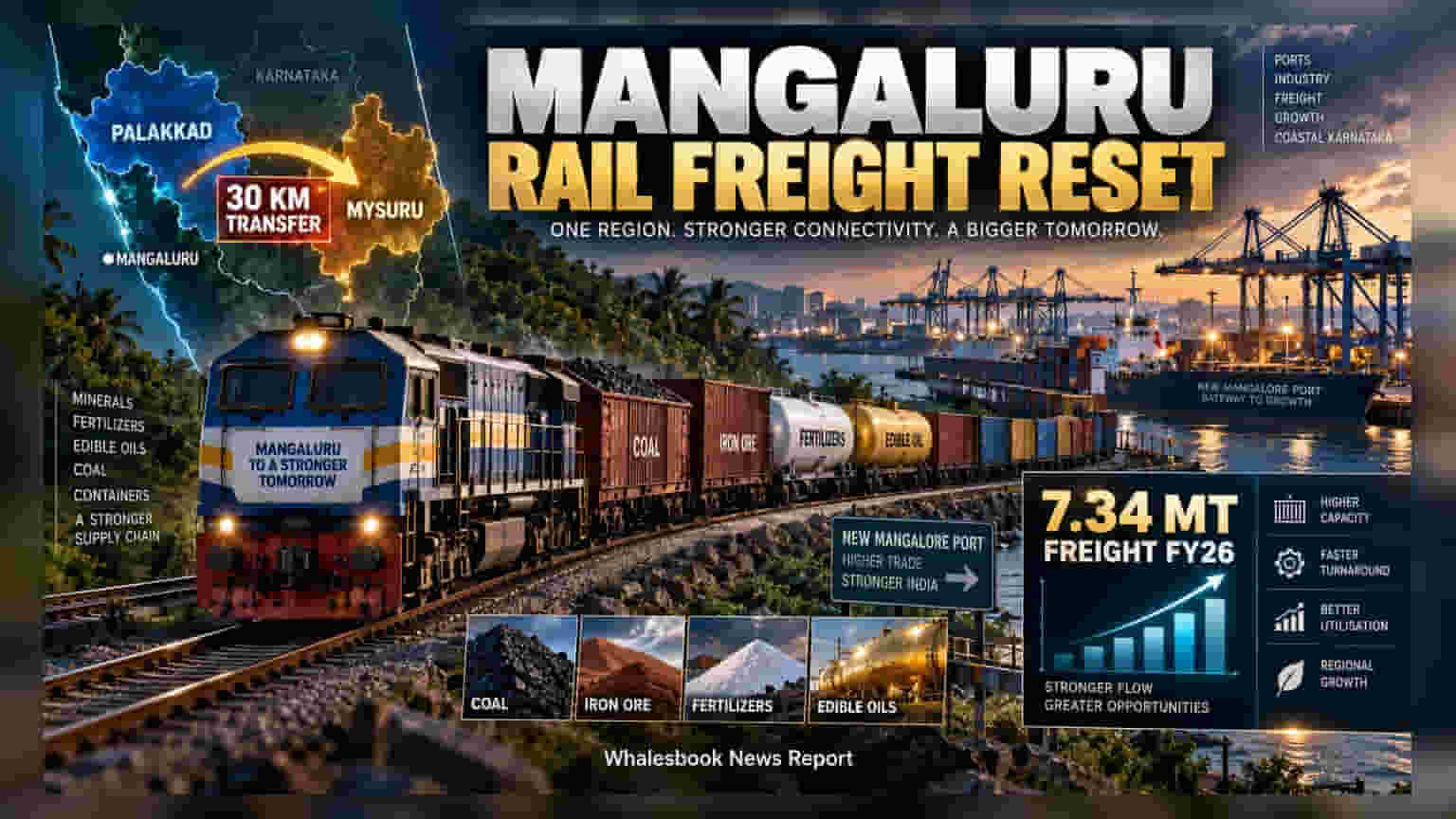
Effective October 1, the Railway Board is transferring a 30-km rail stretch in Mangaluru to the South Western Railway. The move aims to streamline freight coordination and infrastructure planning for New Mangalore Port. Since the region accounts for nearly 90% of the outgoing Palakkad division's freight revenue, the change is expected to improve logistical efficiency and rake availability for industrial users.
Starting October 1, 2026, the Railway Board will transfer a 30-km rail stretch in Mangaluru from the Southern Railway’s Palakkad division to the South Western Railway’s Mysuru division. This administrative restructuring is designed to consolidate railway operations under one zone for the coastal Karnataka region, addressing long-standing complaints from local industry regarding fragmented control. Currently, the Mangaluru rail network is split across three entities, including the Konkan Railway Corporation, which has historically complicated decision-making for infrastructure and freight management.
The economic rationale behind this shift is linked to the scale of freight activity at the New Mangalore Port. According to industry data, the Mangaluru region generates approximately 90% of the freight revenue for the entire Palakkad division. Despite this high contribution, local businesses have previously argued that infrastructure investment and service planning in the region did not match the freight volumes generated. By moving the stretch to the Mysuru division, stakeholders expect better alignment between local logistical needs and administrative decisions, potentially improving the allocation of freight rakes and the speed of infrastructure upgrades.
Industrial users of the New Mangalore Port—which handles cargo ranging from coal and iron ore to edible oils and fertilizers—stand to benefit if the new administration succeeds in optimizing rake availability. The Palakkad division managed over 7 million tonnes of freight in the 2025-26 period, and businesses are looking for this transfer to reduce operational bottlenecks that have previously hampered port-linked logistics.
However, administrative alignment is only part of the challenge. Physical constraints, such as the limited capacity of the railway line through the Western Ghats, remain a significant hurdle for increasing cargo movement. Trade bodies are already emphasizing that this jurisdictional change must be followed by concrete development plans, such as doubling the railway line through the Western Ghats, to truly expand capacity.
Investors and port users should monitor whether this structural shift leads to faster approvals for maintenance, station upgrades, and connectivity projects. The ability of the South Western Railway to accelerate infrastructure spending while managing higher freight volumes will be the primary indicator of the move's long-term effectiveness. For companies dependent on efficient rail logistics through the Mangaluru hub, the focus will remain on whether these administrative changes translate into faster turn-around times and improved freight infrastructure over the coming quarters.