 Whalesbook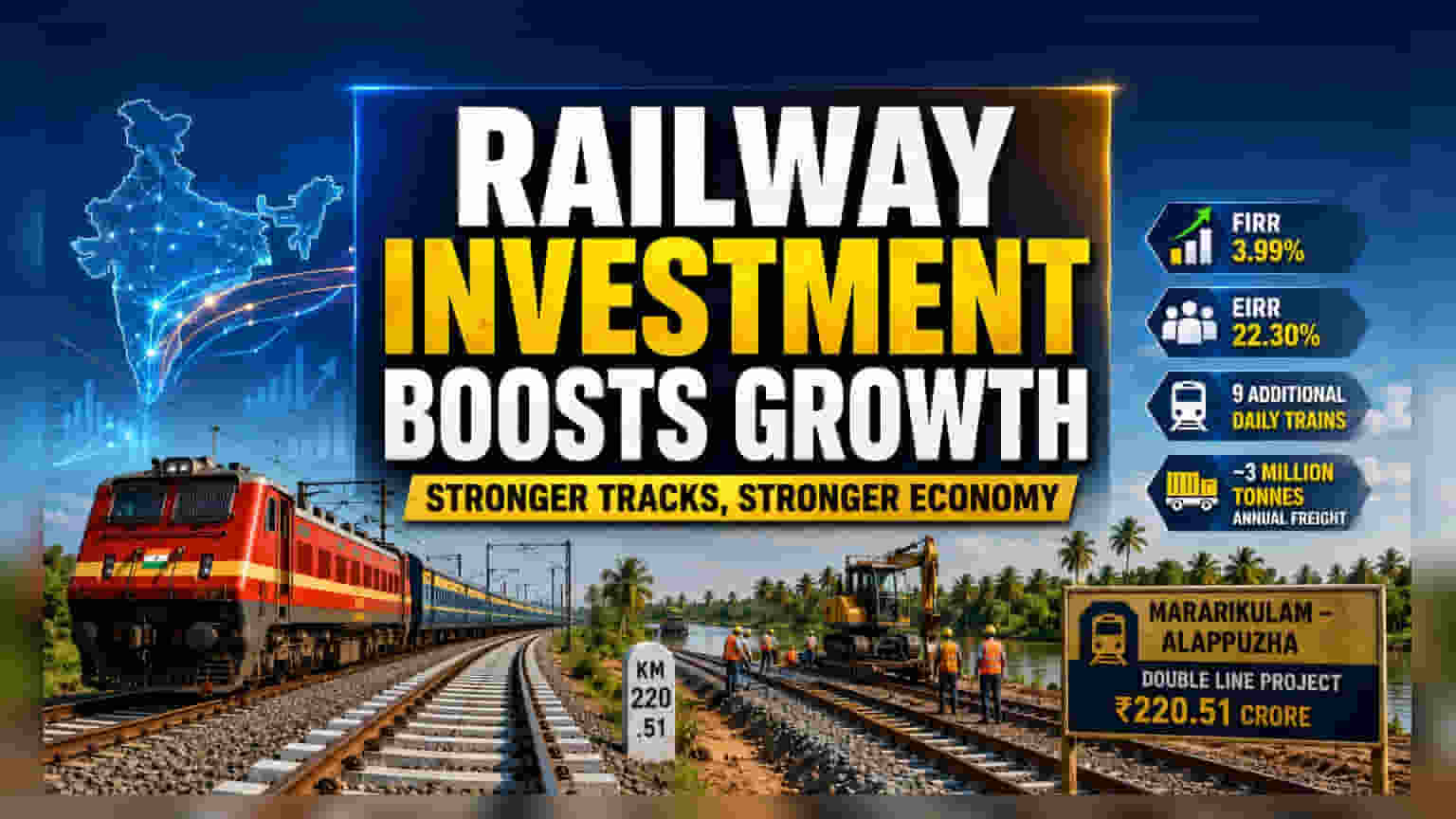


The Capacity Bottleneck
The Mararikulam-Alappuzha section has long stood as a singular constraint within the vital Ernakulam-Kayankulam corridor. By authorizing this ₹220.51 crore investment, the Ministry of Railways is executing a critical tactical move to achieve continuous double-line status across this high-density traffic artery. While completion is essential for operational flow, the project acts as a functional bridge, integrating disparate double-line segments that have either been finalized or remain under execution.
Financial and Economic Calibration
This initiative is deeply intertwined with the broader Mission 3000 MT roadmap, a multi-year effort designed to elevate national freight capacity by addressing infrastructure deficits. The project carries a Financial Internal Rate of Return of 3.99%, suggesting a modest yet steady contribution to net earnings, which are projected at approximately ₹3.08 crore annually. More significantly, the Economic Internal Rate of Return sits at 22.30%, a figure that highlights the anticipated broader socio-economic dividends, including reduced detention times for logistics assets and a necessary surge in regional passenger mobility.
The Forensic Bear Case
Despite the clear operational benefits, the project faces skepticism when viewed through the lens of long-term sector sustainability. Indian Railways has historically struggled with a dwindling share in the national freight market, which has slid from 85% in the 1950s to below 30% in recent years. This reliance on bulk commodity haulage—such as coal, iron ore, and cement—poses a structural risk to revenue growth as the national energy transition shifts away from fossil-fuel-based power generation. Furthermore, this doubling project, while locally impactful, represents an incremental fix rather than the fundamental shift in marketing, pricing, and containerized logistics required to compete with the flexibility of road transport. Investors and analysts often point out that until the system addresses its average cargo speed and diversification of its freight portfolio, localized infrastructure spends may yield diminishing returns against rising operational overheads.
Future Outlook
The commitment to this corridor is part of a larger national expenditure exceeding ₹2.5 trillion annually toward revamping the logistics ecosystem. While the doubling will indeed facilitate nine additional daily trains and support nearly 3 million tonnes of annual freight, the ultimate success of the initiative rests on the broader ability of the zonal network to manage increased throughput without inflating detention costs. For stakeholders tracking the sector, the focus remains on whether these capacity-building efforts can stem the modal shift toward road and effectively integrate into a more agile, high-value cargo model.