 Whalesbook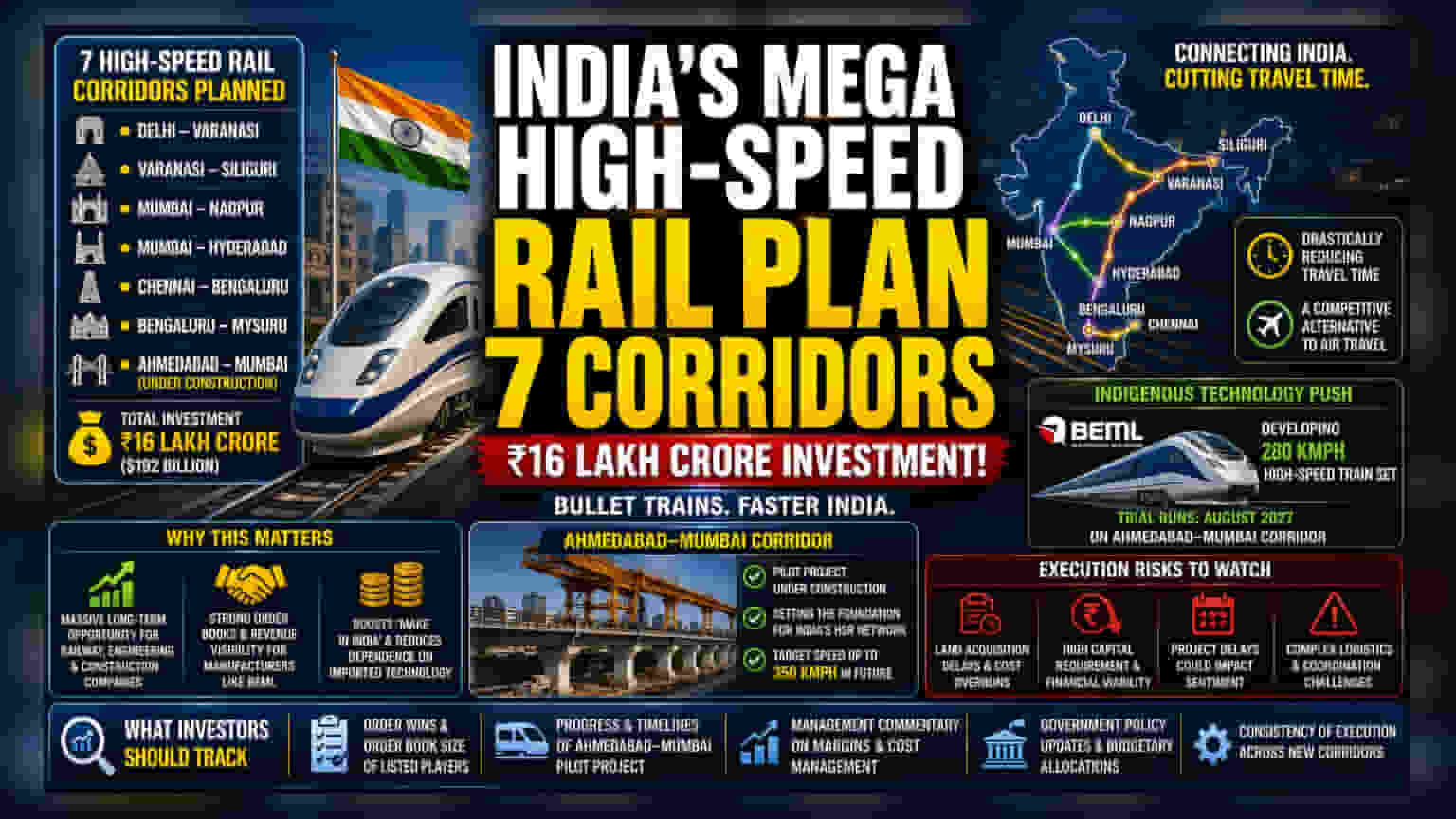


India is planning seven major high-speed rail corridors with a massive Rs 16 lakh crore investment. While this marks a significant infrastructure boost for companies involved in train manufacturing and construction, investors should watch for execution risks, project delays, and the long gestation period of such large-scale capital projects.
What Happened
The Indian government has announced an ambitious infrastructure plan to build seven high-speed rail corridors across the country, with an estimated investment of Rs 16 lakh crore ($192 billion). This initiative aims to connect major cities with high-speed bullet trains, drastically reducing travel times. The projects include key routes such as Delhi-Varanasi and Varanasi-Siliguri, with the goal of making train travel a competitive alternative to domestic air travel. The Ahmedabad-Mumbai corridor, which is already under construction, serves as the pilot for this network. Indian Railways aims to set up a system capable of sustaining high-speed operations, with future train designs targeted to reach speeds of up to 350 kmph.
The Focus on Indigenous Technology
A significant part of this plan involves boosting local manufacturing capabilities. State-owned company BEML Ltd is currently developing an indigenous high-speed train set designed for speeds of 280 kmph. Trial runs for this technology are scheduled for August 2027 on a section of the Ahmedabad-Mumbai corridor. By focusing on domestic manufacturing, the government aims to lower costs and reduce dependence on imported technology, which has historically been a major component of high-speed rail infrastructure.
Why This Matters For Investors
This massive expenditure creates potential long-term opportunities for companies in the railway manufacturing, engineering, and construction sectors. For manufacturers like BEML, securing orders for these high-speed train sets could lead to significant revenue visibility over the coming years. Similarly, construction firms and specialized engineering companies involved in railway infrastructure stand to benefit from the sustained demand for track laying, signaling systems, and station development. However, the benefits for shareholders will depend on the company's ability to maintain healthy profit margins amidst strict price competition and the logistical challenges of building such a complex network.
The Reality Check: Execution and Risks
While the scale of this project is significant, investors must remain aware of the inherent risks associated with large-scale infrastructure projects in India. Historically, projects of this magnitude have faced hurdles such as land acquisition delays, which can lead to significant cost overruns and pushed-out timelines. Furthermore, the sheer size of the Rs 16 lakh crore investment highlights the immense capital required. Ensuring that these projects remain financially viable without putting excessive strain on government finances or creating long-term debt pressure for the entities involved is a factor that market observers will likely monitor closely. Any delay in the commissioning of the pilot corridors could lead to sentiment shifts regarding the entire high-speed rail roadmap.
What Investors Should Track
Investors looking at the sector should focus on a few key monitorables. First, watch for the actual awarding of contracts and the size of order books for listed railway suppliers. Second, monitor project timelines, particularly the progress on the Ahmedabad-Mumbai pilot project, as any deviations here could signal potential delays for the new corridors. Third, keep an eye on management commentary regarding profit margins, as high-tech manufacturing can sometimes face initial cost pressures. Finally, track government policy updates and budgetary allocations, as the consistency of funding will be the most critical factor in ensuring these projects reach completion.