

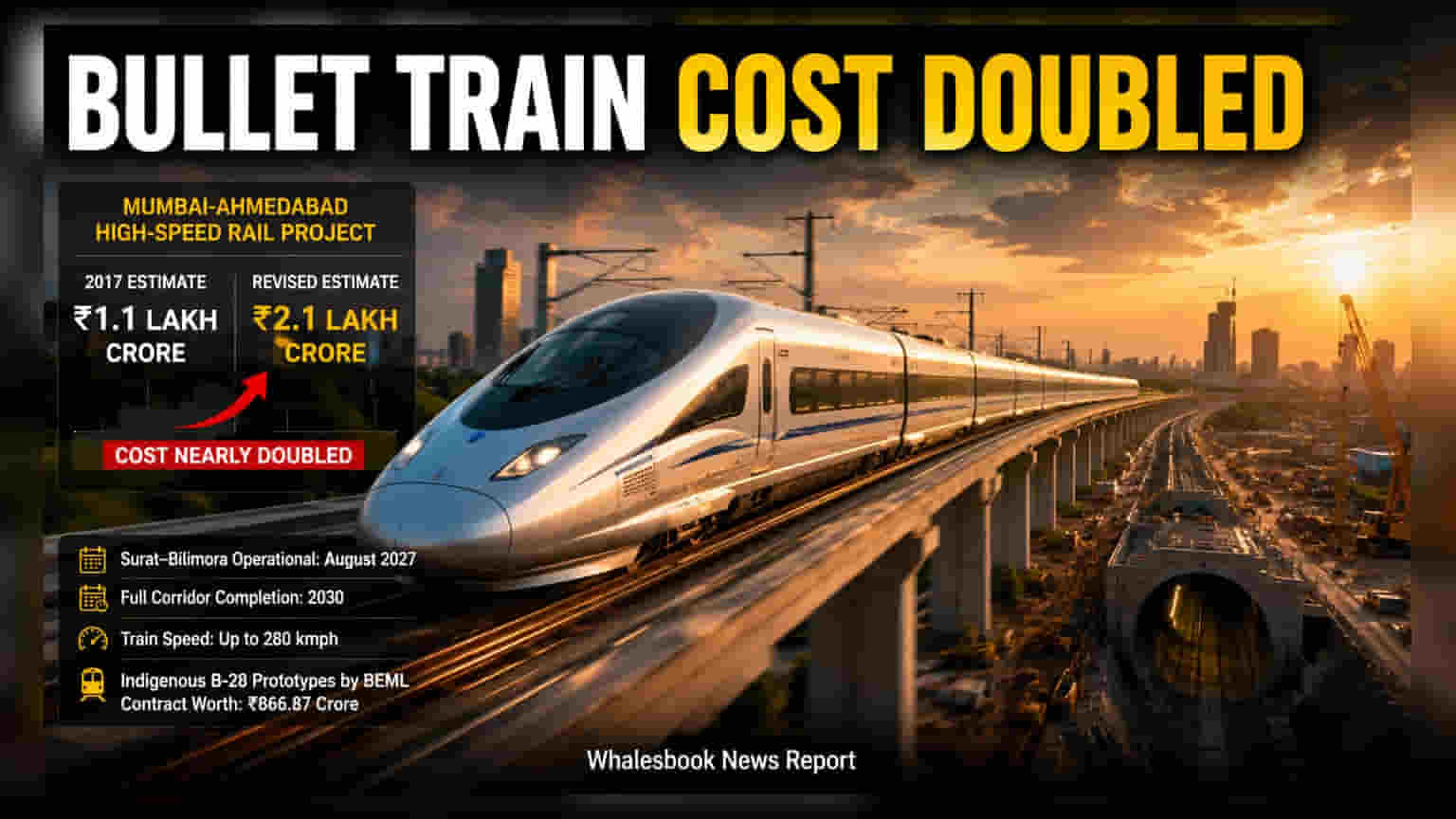
The budget for the Mumbai-Ahmedabad bullet train project has been raised to Rs 2.1 lakh crore, nearly doubling the initial estimate due to land acquisition and logistical delays. While the full project is now expected to be completed by 2030, focus is shifting toward local manufacturing with BEML developing indigenous high-speed trainsets. This development highlights both the execution challenges of large infrastructure and the government's push for local rail technology.
The Mumbai-Ahmedabad high-speed rail project, India's flagship infrastructure initiative, is undergoing a major financial adjustment. The projected cost for the corridor has been revised to approximately Rs 2.1 lakh crore, nearly double the original 2017 estimate of Rs 1.1 lakh crore. This revised budget proposal is currently being reviewed by the Cabinet.
The cost escalation is primarily attributed to prolonged land acquisition cycles, particularly within Maharashtra, and logistical complications in sourcing specialized equipment from Japan. Large-scale infrastructure projects frequently face such hurdles, which often result in both time delays and increased expenses. The technically demanding nature of the construction, which includes a 7-km undersea tunnel near Thane Creek, also adds to the operational complexity.
Despite these challenges, the project has a revised timeline. The first operational phase, connecting Surat and Bilimora, is now scheduled for August 2027. The completion of the full corridor is currently anticipated by 2030, supported by a combination of Japanese financial assistance and domestic budgetary allocations.
Amid these project updates, there is a distinct move toward localizing technology. The Integral Coach Factory has awarded a contract worth Rs 866.87 crore to BEML Limited. The company is developing two prototype high-speed trainsets, codenamed B-28. These units are designed to reach speeds of up to 280 kmph and are being specifically engineered to withstand India's environmental conditions, such as intense heat and dust. This is part of a broader ambition to move away from total reliance on imported Shinkansen technology.
For the infrastructure and rail sectors, this project represents a long-term commitment despite the immediate cost overruns. The government is already in the process of exploring seven additional high-speed rail corridors, including routes connecting Bengaluru, Chennai, and Hyderabad. These plans suggest that while the Mumbai-Ahmedabad project faces current pressure, the overarching strategy involves creating a wider high-speed network across the country.
Investors and stakeholders will likely monitor several key updates in the coming months. These include the progress on the Thane Creek undersea tunnel, the operational readiness of the Surat-Bilimora segment by 2027, and any further government announcements regarding the planning and detailed project reports for the seven proposed high-speed rail corridors.