

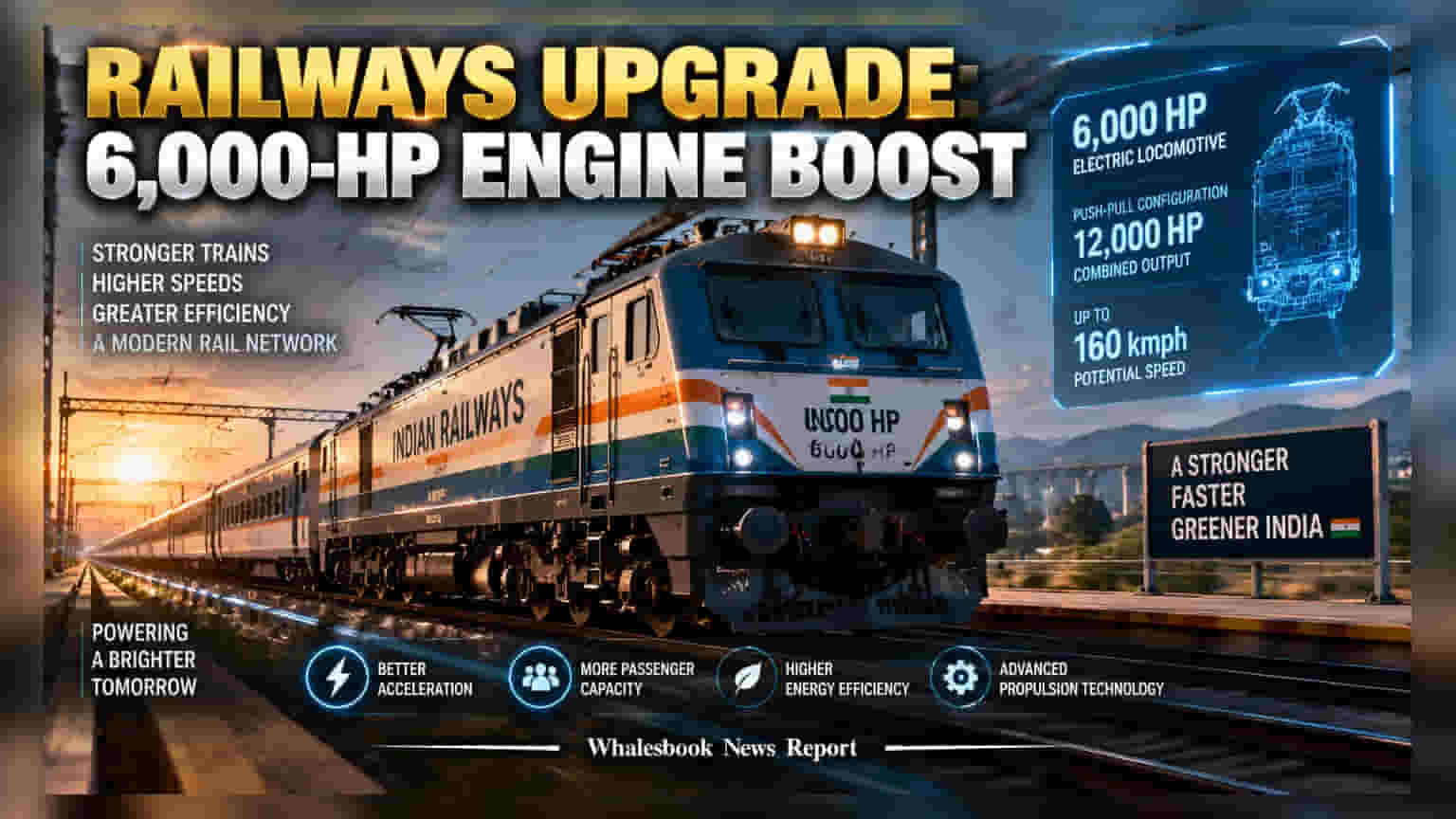
Indian Railways is upgrading its fleet with 6,000-HP electric locomotives in a push-pull configuration. This move aims to eliminate generator cars, improve train acceleration, and enable speeds of up to 160 kmph on modernized routes, marking a shift for non-Vande Bharat trains.
Indian Railways is executing a strategic upgrade to its locomotive-hauled train fleet by introducing 6,000-horsepower (HP) electric locomotives. By deploying these units in a push-pull configuration, the national transporter aims to achieve a combined output of 12,000 HP, which will significantly improve acceleration and allow for higher travel speeds across major corridors.
This initiative serves as a practical modernization strategy for traditional coach-based trains, functioning as an alternative to complete train-set overhauls. A key feature of this design is the removal of the power generator car, which currently occupies space and adds weight. With the new locomotives handling onboard electrical loads—such as lighting, fans, and air conditioning—the energy efficiency and passenger capacity per train are expected to improve.
Technological advancement is a core element of this plan, with the procurement process involving long-term supply and maintenance contracts. Indian Railways is increasingly working with technology partners to support the production of advanced propulsion systems and traction motors. Companies such as Hirect and Titagarh Rail Systems have recently emerged as ecosystem participants, with Hirect focusing on propulsion systems and Titagarh Rail Systems receiving regulatory approvals for 3-phase asynchronous traction motors, which are critical for high-performance rail operations.
The success of this project is tied closely to the broader infrastructure readiness of the rail network. While the new locomotives are technically capable of speeds up to 160 kmph, actual operational velocity will depend on the completion of track, signaling, and safety system upgrades on specific routes. Without these supporting infrastructure enhancements, the full potential of the increased horsepower cannot be utilized effectively.
For investors, the capital-intensive nature of these projects suggests that the benefits will likely be realized over a long procurement cycle. The pace of execution, the conversion of tenders into firm orders, and the speed at which track modernization is completed remain the key factors to monitor. The railway ministry’s ongoing shift toward standardizing comfort and efficiency across the network, alongside the increasing localization of high-end rail components, will be important developments to watch in the coming quarters.