

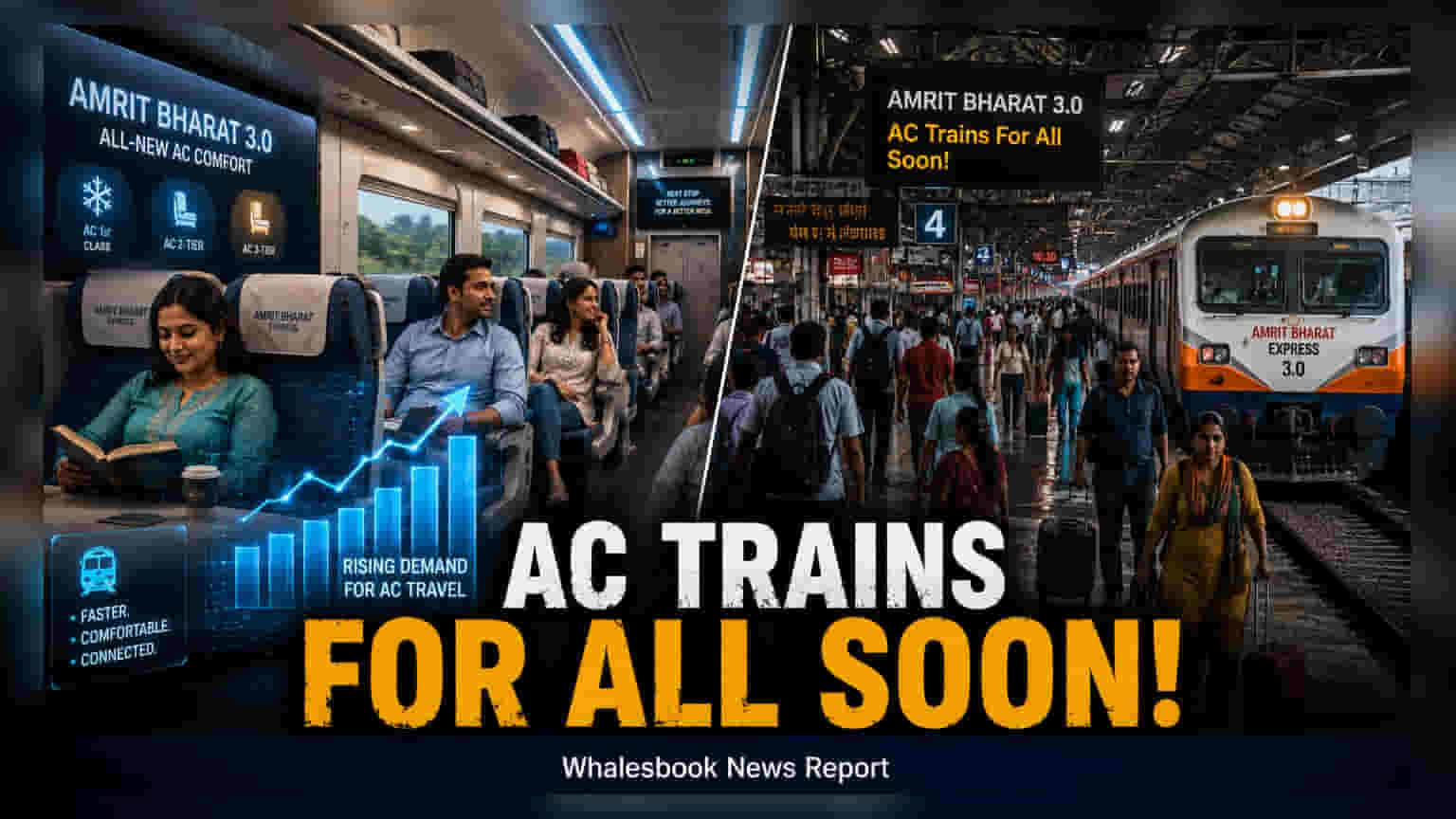
Indian Railways is upgrading its Amrit Bharat Express service by introducing air-conditioned coaches in the upcoming 3.0 version. While the national carrier is not a listed entity, the continued expansion of this train fleet highlights a sustained focus on infrastructure spending. For investors, this development signals ongoing business potential for railway-linked public sector undertakings and component suppliers as the network scales.
Indian Railways is set to expand the capabilities of its Amrit Bharat Express service with the introduction of the 'Amrit Bharat 3.0' version, which will include air-conditioned coaches. Until now, this service has primarily operated as a non-AC train focused on affordable, long-distance travel, utilizing a push-pull locomotive setup to reach speeds of up to 130 kilometers per hour. The new upgrade will introduce AC 1st, AC 2-tier, and AC 3-tier options alongside existing sleeper and general classes, aiming to balance the high demand for rail connectivity with a demand for more comfortable travel.
Impact on the Railway Ecosystem
While Indian Railways itself is a government-run entity and not listed on stock exchanges, its operational decisions create a ripple effect across the broader railway ecosystem. The government’s consistent push to upgrade and expand the train fleet requires significant capital spending. For investors, this translates into potential long-term order books for listed railway-linked companies. These entities are often involved in various stages of the value chain, ranging from financing new infrastructure and project construction to catering services and the supply of specialized train components.
Companies involved in the manufacturing of rolling stock, or those providing essential sub-systems like braking systems, electrical components, and internal fittings, often benefit from the government's sustained capex cycle. As the production volume at state-owned facilities like the Integral Coach Factory in Chennai and the Rail Coach Factory in Kapurthala increases to meet these new requirements, downstream suppliers and service providers typically see steady demand.
Operational Risks and Monitorables
Transitioning to an all-AC or mixed-AC fleet brings its own set of challenges. One primary operational trade-off is passenger capacity. Adding air-conditioning equipment and more complex interiors generally reduces the total space available for passengers compared to a standard non-AC rake, which may impact the total number of travelers a single train can carry. Balancing this against the need for affordable travel is a persistent hurdle for the network.
Furthermore, the success of the Amrit Bharat 3.0 rollout depends heavily on manufacturing efficiency. Any delays at government-run manufacturing units can create bottlenecks that ripple through the entire supply chain. Investors tracking this sector should watch for official announcements regarding production timelines, order placements for new rakes, and management commentary from listed railway PSUs. These updates often provide the clearest signal regarding the speed of execution and the health of the government’s railway infrastructure spending plans.