

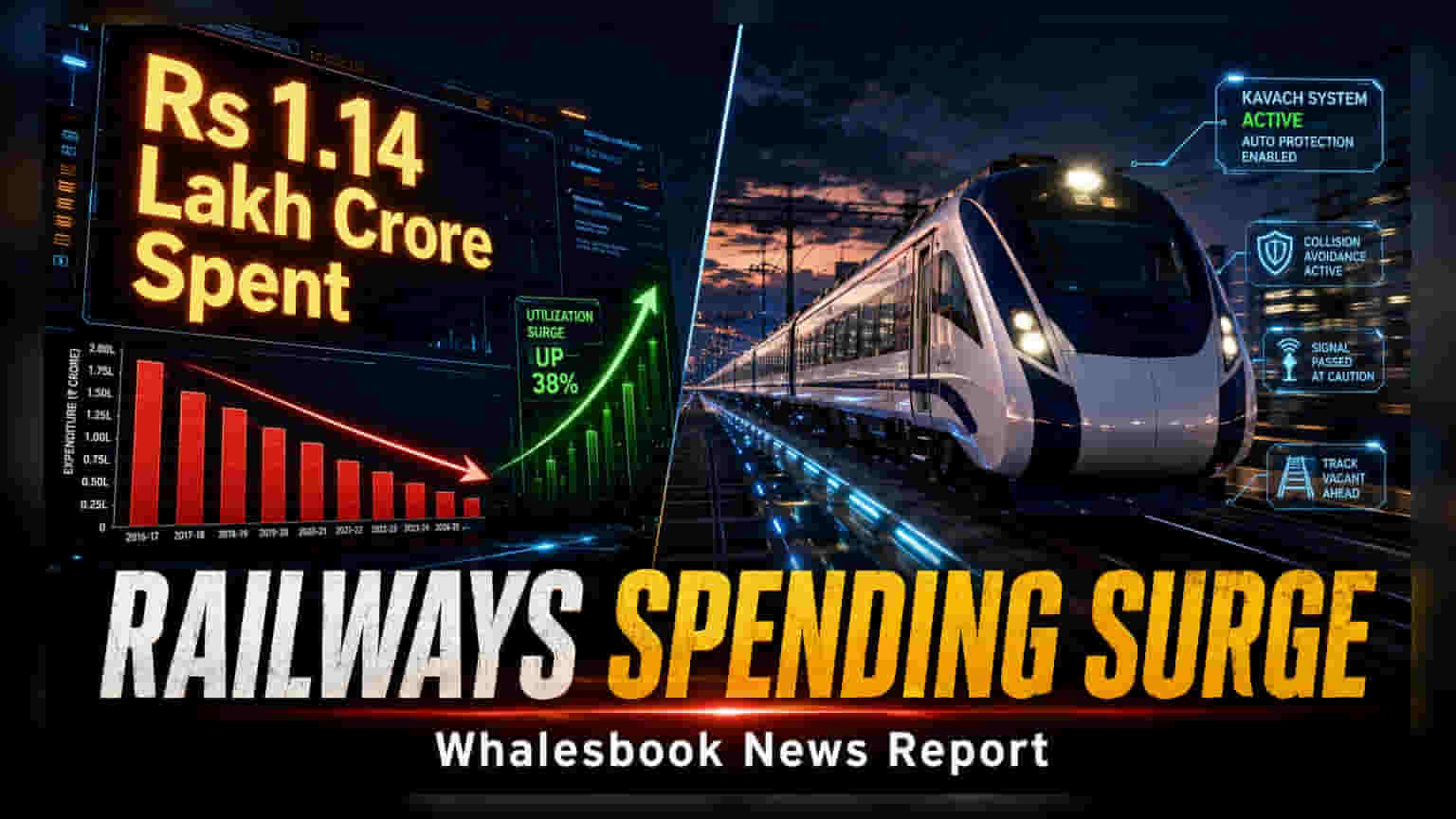
Indian Railways has spent Rs 1.14 lakh crore, or 39% of its FY27 budget, by July 2026. This accelerated spending is driving massive infrastructure development and the rollout of the Kavach train protection system. The scale of these projects creates significant demand for suppliers and technology providers in the railway ecosystem.
Indian Railways has hit a significant milestone in its spending plans for the 2026-27 fiscal year. By the end of July 2026, the national transporter had already utilized Rs 1.14 lakh crore, which accounts for 39% of its total budget grant of Rs 2.93 lakh crore. This rapid pace of expenditure highlights a government push to modernize rail infrastructure and enhance passenger safety through large-scale capital investments.
The capital spending is spread across 514 infrastructure projects nationwide. These projects, which cover a total length of approximately 40,000 kilometers, are estimated to cost Rs 8.31 lakh crore. For investors and market analysts, this massive allocation indicates a sustained demand cycle for construction firms, engineering companies, and equipment suppliers that provide the materials and services required for railway expansion.
Accelerating the Kavach Safety System
A major focus of the current spending is the indigenous Automatic Train Protection (ATP) system, known as Kavach. As of July 31, 2026, Version 4.0 of the Kavach system has been commissioned across 2,633 route kilometers. This includes critical segments on the high-traffic Delhi-Mumbai and Delhi-Howrah corridors. The financial commitment to this safety initiative is substantial; while Rs 3,875 crore has been spent on Kavach works to date, an additional Rs 2,066 crore has been earmarked for the current fiscal year alone.
The scale of this rollout is immense. Trackside implementation is currently active on 21,794 route kilometers, requiring the installation of thousands of kilometers of optical fibre cables and hundreds of telecom towers. The system also requires the retrofitting of thousands of locomotives, creating a long-term pipeline of orders for electrical and signaling equipment manufacturers.
Execution and Implementation Risks
While the spending demonstrates strong intent, the sheer size of the railway network poses significant execution challenges. Scaling the Kavach Version 4.0 system across the entire national network requires rigorous safety certification and complex integration with older locomotives and existing signaling infrastructure. There is also the operational hurdle of maintaining daily train services while simultaneously retrofitting older rolling stock and installing trackside equipment, which could lead to project delays if not managed efficiently.
Furthermore, the speed of this infrastructure upgrade remains heavily dependent on continued central government budgetary support. Any shift in fiscal policy or changes in the speed of project execution could impact the revenue visibility for companies within the railway supply chain. Investors tracking this sector may monitor progress reports on Kavach deployment, the commissioning of new infrastructure projects, and updates on whether the spending pace remains consistent throughout the remainder of the fiscal year.