

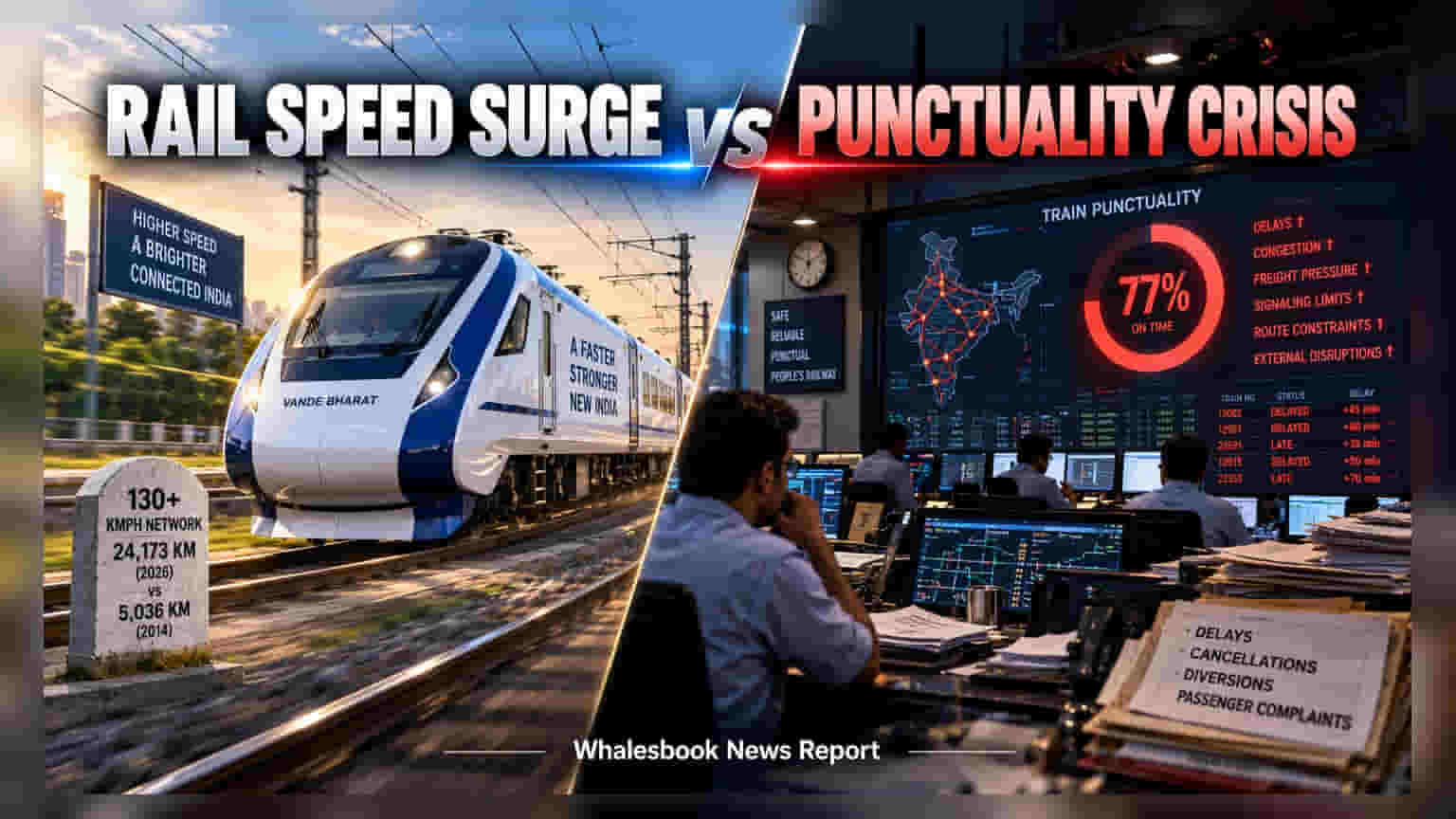
Indian Railways has increased its high-speed track capacity to over 24,000 km, up significantly from 2014. Despite this massive infrastructure spending, system-wide punctuality remains stalled at 77%. This operational gap highlights the persistent challenge of managing heavy traffic congestion, which continues to impact the reliability of logistics for industries dependent on rail freight.
Indian Railways has completed a major infrastructure overhaul to support faster travel across its network. Data shows that the track length capable of handling speeds of 130 kmph or higher has grown from 5,036 km in 2014 to 24,173 km as of August 2026. This means nearly 23% of the total network now meets higher speed standards, a significant shift from the 6% seen a decade ago. The progress is attributed to modernization efforts like mechanized track maintenance and integrated management systems.
The Operational Efficiency Gap
While infrastructure speed ratings have improved, the actual reliability of train services, measured by punctuality, has not kept pace. For the fiscal period ending February 2026, punctuality stood at 77.24%, showing only minor improvement from the 73.62% recorded in 2023-24. Only three railway zones have managed to maintain a punctuality rate above 90%, meaning the vast majority of the network still struggles to keep trains on schedule. For investors, this efficiency gap is a critical monitorable, as reliability in rail transport directly affects the logistics costs and inventory cycles of companies in sectors like steel, cement, and coal that depend on rail freight.
Challenges to Network Throughput
Managing 25,000 daily services involves a complex mix of passenger, suburban, and heavy freight trains competing for the same track time. Even with faster trains like the Vande Bharat sets, operational speed is often capped by current infrastructure limitations, signaling constraints, and the lack of route fencing. The system remains vulnerable to recurring disruptions, including cattle encroachment, alarm-chain pulling, and localized agitations, which frequently derail planned schedules.
Infrastructure as the Long-Term Fix
The ultimate performance of the rail network likely depends on the completion of major expansion projects. The ongoing deployment of Dedicated Freight Corridors (DFCs) is intended to separate freight traffic from passenger movement, which could eventually ease the current bottleneck. Additionally, multitracking projects aimed at clearing capacity constraints are expected to be the primary drivers of future punctuality. Investors will be tracking the commissioning timeline of these corridors and the subsequent improvement in freight turn-around time, as these factors will determine whether the significant capital spending on track upgrades translates into actual gains in network efficiency.