

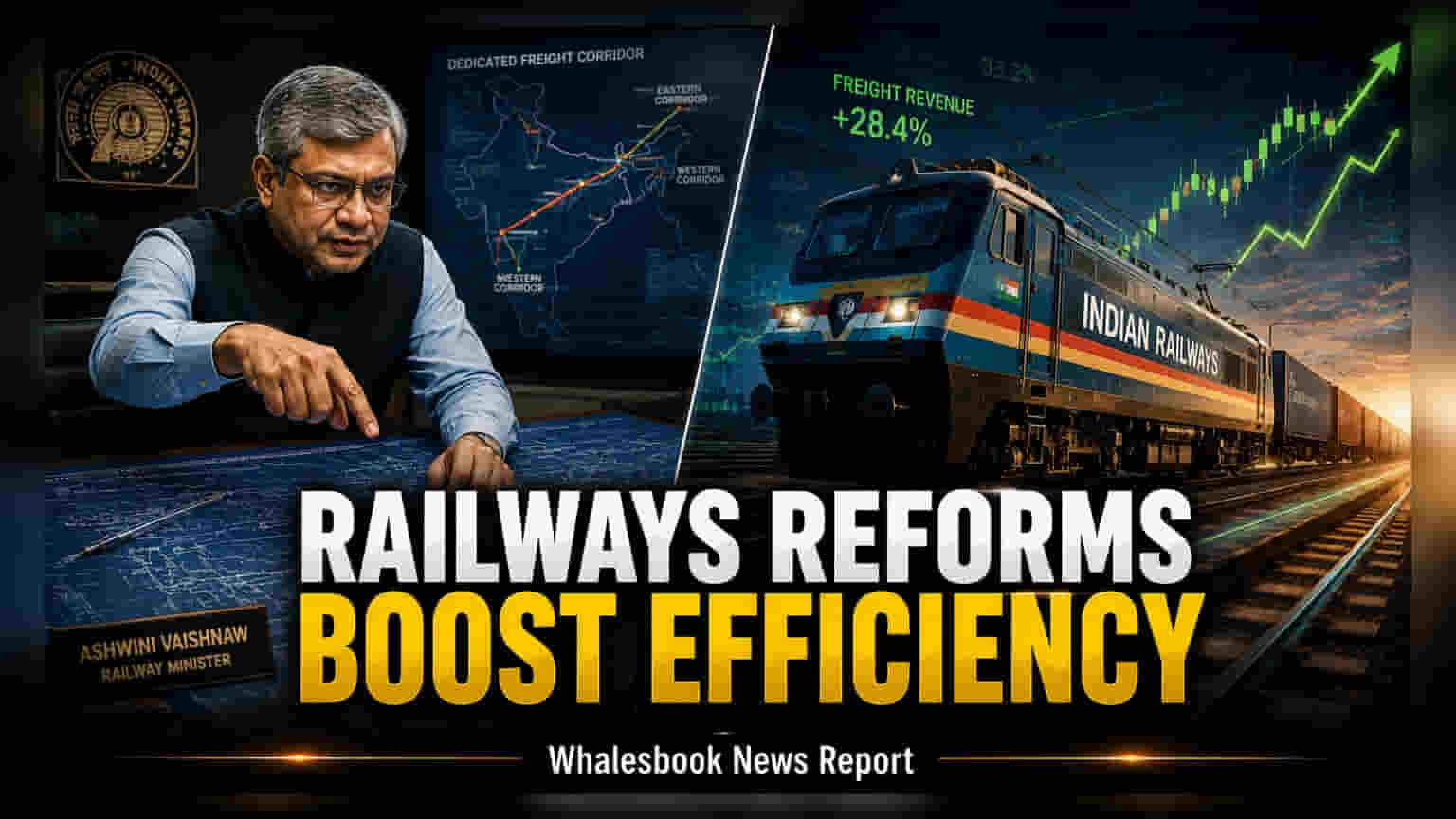
Indian Railways has launched a new reform agenda aimed at accelerating infrastructure projects and improving freight logistics. The plan introduces stricter rules for contractors and invites private companies to design specialized freight wagons. These measures are designed to reduce litigation and lower transportation costs across the rail network.
The Ministry of Railways has introduced a sweeping set of changes aimed at modernizing project management and freight operations. Announced on Tuesday, these reforms are part of a target to implement 52 systemic improvements within the current year. For investors and industry participants, the focus is on creating a more disciplined environment for infrastructure development and logistics efficiency.
Stricter Rules for Contractors
To improve the quality and speed of construction, the ministry is tightening the requirements for contractors bidding on railway projects. A primary change is the requirement for a 10% upfront performance security, moving away from the previous method of deductions from running bills. This shift is intended to ensure that only serious and financially stable players participate in major infrastructure works.
Furthermore, the government is introducing barriers for contractors already involved in heavy legal disputes. Bidders with pending litigation exceeding half their net worth will be ineligible for new tenders. Additionally, the mandate for professional indemnity and all-risk insurance aims to shift the burden of project risks away from the public exchequer and toward the contractors, helping to discourage a reliance on arbitration to resolve project delays.
Focus on Freight and Innovation
Indian Railways is also attempting to move toward a more specialized freight model by allowing private sector innovation in wagon design. Under the new framework, companies can propose custom wagon designs tailored for specific commodities. These designs will be vetted by the Research Designs and Standards Organisation (RDSO) and must pass rigorous safety and prototype testing before they can be used on the network.
This initiative includes a push for containerized transport for products like fly ash, petroleum, fertilizers, and agricultural goods. By moving away from loose bulk transport, the railways aim to reduce cargo contamination and lower logistics costs. Currently, only a small portion of India’s 340 million metric tonnes of annual fly ash production is transported via rail, highlighting a potential opportunity for growth if containerization is adopted widely.
Regulatory Simplification
Operational rules for container train operators have been streamlined through a new unified all-India license system. The registration fee is now set at a flat ₹2.5 crore for all routes, with the removal of renewal fees after 20 years of operation. Additionally, the ministry’s Rail Bhoomi portal is expected to help reduce land acquisition timelines by 30-40%. These administrative changes are meant to lower the barrier to entry for private logistics players and help the railways compete more effectively with road transport. Investors will now watch for the execution of these policies and whether the new contractor norms lead to a measurable decline in project delays and cost overruns.