

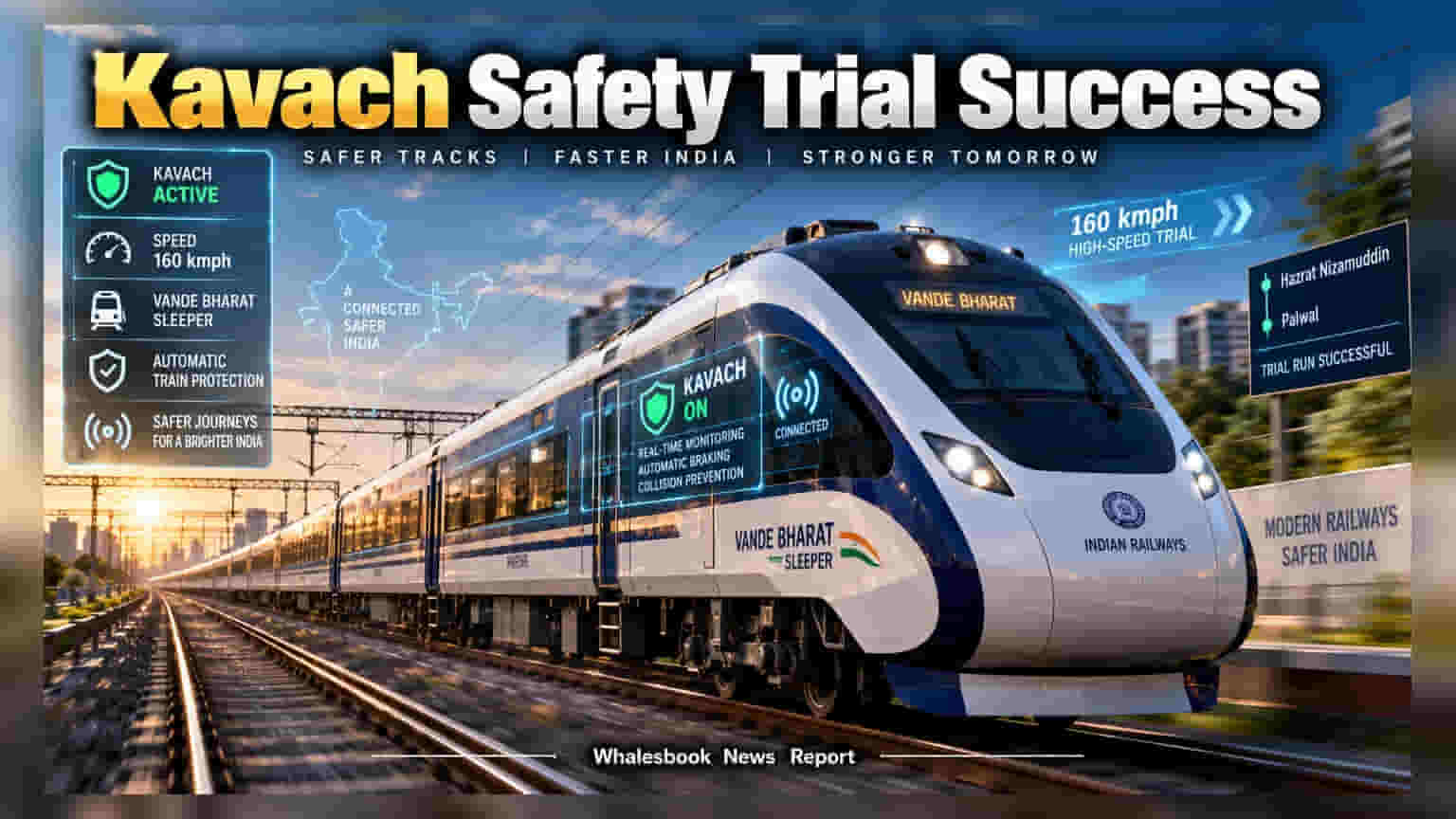
Indian Railways has successfully tested its indigenous Kavach collision-avoidance system on a 16-coach Vande Bharat sleeper train at 160 kmph. This milestone confirms the system's readiness for high-speed travel, supporting broader rail modernization goals. Investors may monitor the pace of the nationwide rollout and the execution of manufacturing orders for new trainsets by companies like BEML and its peers.
Indian Railways successfully conducted a high-speed trial of its indigenous Kavach system on a 16-coach Vande Bharat sleeper train on September 8, 2026. The test, carried out on the Hazrat Nizamuddin-Palwal corridor, saw the train operate at speeds of 160 kmph. This trial served as a key validation of the signaling and braking technology when integrated with the newest generation of long-distance, high-speed passenger coaches.
Kavach acts as an automatic train protection system, designed to prevent accidents by overriding manual controls. If the system detects a potential collision or a failure to respond to safety signals, it automatically engages the brakes. The successful integration with the Vande Bharat sleeper unit is significant because it proves the technology can reliably handle the faster operational speeds and complex technical requirements of these modern trains.
This development comes as the government accelerates its push to upgrade rail safety and infrastructure. The rollout of Kavach across the national network is a major capital spending priority. As the rail network shifts toward higher-speed operations, the capability to automate safety protocols becomes essential for managing the increased traffic density and velocity of passenger trains.
From a business perspective, this technology integration is closely tied to the massive manufacturing mandates for Vande Bharat sleeper trainsets. Major players in the railway manufacturing sector, such as BEML Limited, the BHEL-Titagarh consortium, and Kinet Railway Solutions—a joint venture involving RVNL—are currently tasked with fulfilling large-scale orders for these trainsets. For instance, BEML recently disclosed an additional order worth approximately ₹180.60 crore from the Integral Coach Factory on September 2, 2026, to support this production pipeline.
However, investors should be aware of the operational and execution risks inherent in such large-scale infrastructure projects. While the order books for railway-linked companies remain strong, the ability of manufacturers to meet strict delivery schedules and technical standards is critical. Delays in the supply chain, complex integration requirements between existing tracks and new rolling stock, and the cyclical nature of infrastructure policy can impact the performance of these companies. The sector also remains sensitive to changes in government budgetary allocations and broader economic conditions.
The next important steps for market observers will be the timeline for the nationwide implementation of the Kavach system and the progress of the manufacturing companies in executing their existing order books. Tracking the delivery milestones and the financial impact of these projects on the margins of railway suppliers will provide a clearer picture of the sector's long-term sustainability.