

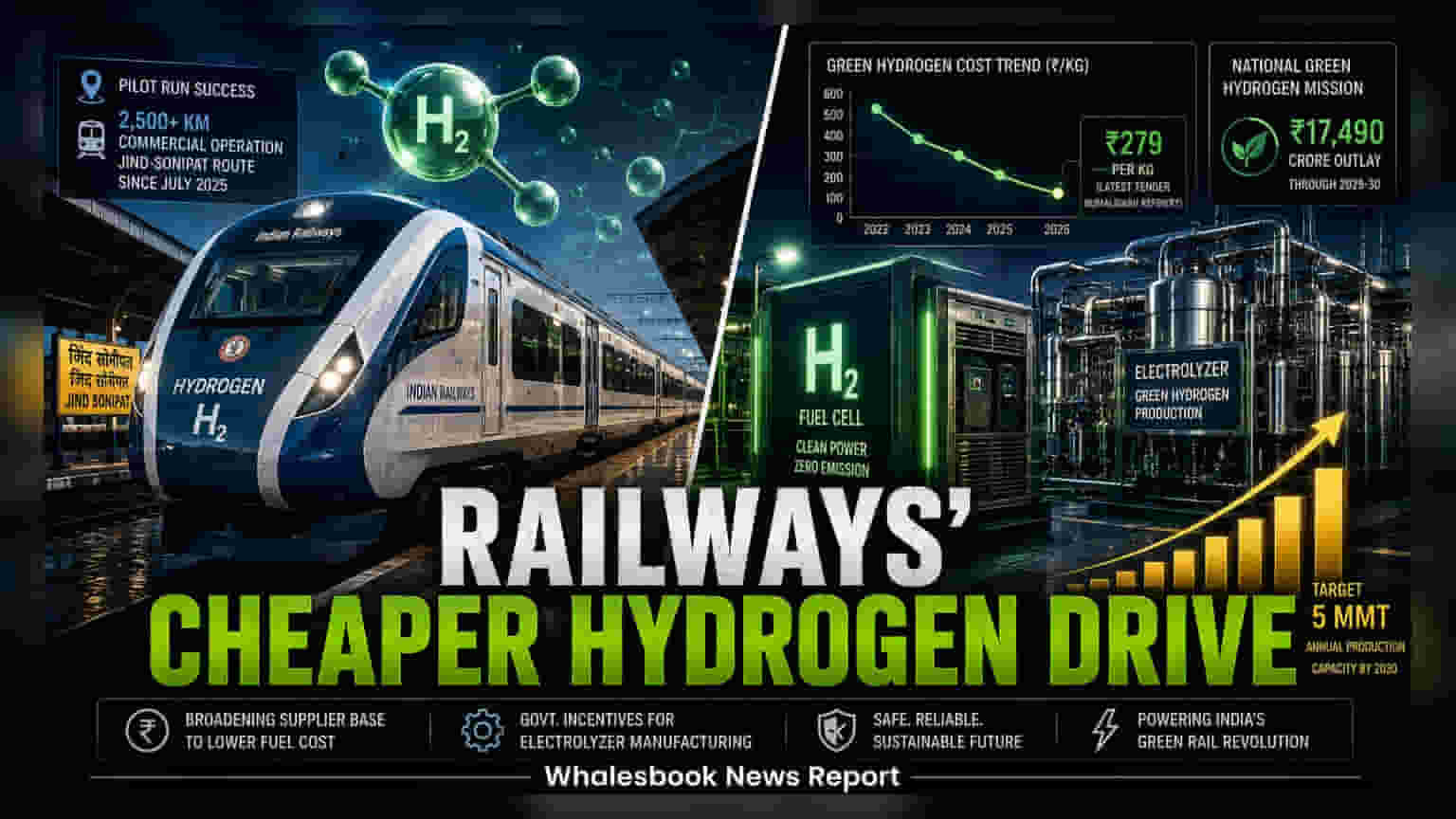
Indian Railways is working to lower the cost of green hydrogen to scale up its hydrogen-powered train fleet. Following a successful pilot that logged over 2,500 kilometers of commercial service, the focus is now on improving fuel supply economics. This initiative aligns with the national goal of boosting clean energy production while addressing the high operational costs associated with this early-stage technology.
Indian Railways is pushing to bring down the cost of green hydrogen, aiming to transition its pilot hydrogen-powered trains from experimental runs to wider commercial use. This initiative follows the successful performance of its fleet, which has logged more than 2,500 kilometers of commercial operation on the Jind-Sonipat route since its launch in mid-July. The primary objective is to broaden the supplier network, which will help reduce the overall cost of fuel and make hydrogen-powered rail travel more economically viable.
While the early results are encouraging, the long-term success of these trains depends heavily on fuel pricing. To support this, the government is utilizing the National Green Hydrogen Mission, which is backed by a ₹17,490 crore outlay through 2029-30. The mission focuses on scaling up production and providing incentives for manufacturing electrolyzers—the essential equipment used to produce green hydrogen. Recent government tenders, such as the one for the Numaligarh Refinery, have helped uncover more competitive prices, with rates reaching ₹279 per kilogram. This suggests that the cost gap is slowly narrowing.
However, the adoption of hydrogen technology in the rail sector faces significant hurdles. India already possesses a highly mature and cost-effective direct electrification network. For hydrogen trains to gain traction, they must prove that they are a practical solution for routes where traditional electricity is difficult to supply. Investors and market participants should note that the infrastructure required for hydrogen—including storage, refueling, and transportation—involves high capital spending compared to conventional rail fuels.
Additionally, the complexity of handling high-pressure hydrogen requires strict safety standards and specialized engineering, which adds to the operational cost. Because the technology is still in its early stages in India, supply chain stability and maintenance requirements are also critical areas that need to be tested over time. The ultimate viability of this technology will depend on whether manufacturers can sustain lower pricing as production volumes increase.
The next important monitorable will be the outcome of future government tenders for hydrogen supply. As India works toward a target of 5 million metric tonnes of annual production capacity by 2030, the industry will watch how companies manage the transition from pilot projects to full-scale operations, especially in the context of India's established electrical infrastructure.