

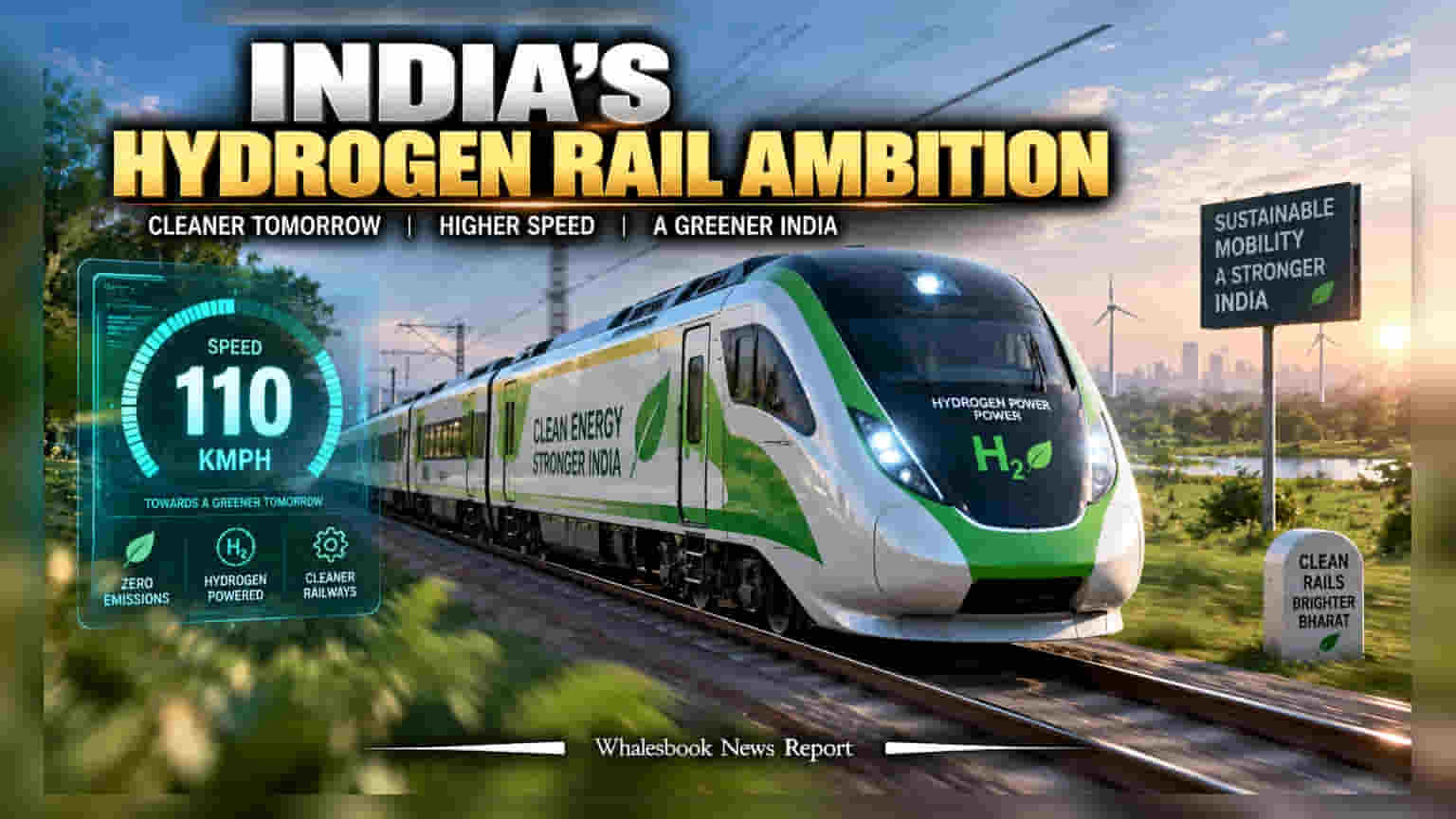
Indian Railways aims to increase the commercial speed of its hydrogen-powered train fleet to 110 kmph following successful 120 kmph trials. While the rail network is a government organization, the initiative highlights the potential for private manufacturers and technology partners involved in the supply chain, though high project costs and infrastructure challenges remain key monitorables.
Indian Railways is moving to upgrade the speed potential of its hydrogen-powered trainsets. Following successful high-speed trials where these trains reached 120 kmph, the national operator is now aiming for a sustained commercial speed of 110 kmph. This is a significant step up from the 75 kmph operational speed currently maintained during pilot runs on the Jind-Sonipat route.
Unlike traditional electric or diesel locomotives, these trainsets generate power through an onboard chemical reaction between hydrogen and oxygen, producing water as the only exhaust. This technology is a cornerstone of the broader National Green Hydrogen Mission, aimed at reducing the carbon footprint of the national rail network.
While Indian Railways is a government-managed organization and not listed on stock exchanges, its modernization projects create significant activity for private sector partners. Several companies are integrated into the railway supply chain to support these initiatives. For example, Hyderabad-based Medha Servo Drives has been a key partner for propulsion technology, while Jindal Stainless has supplied approximately 40% of the stainless steel used for the coach bodies. Investors in the railway sector often track these projects to understand the order pipelines for engineering and manufacturing firms that provide components for both hydrogen and traditional train fleets like the Vande Bharat.
Despite the progress, the adoption of hydrogen technology faces material hurdles. The primary challenge is the high upfront cost of fuel cell technology and the development of necessary fueling infrastructure. Currently, India lacks a widespread network of hydrogen refilling stations, which is essential for scaling these operations beyond localized pilot routes. Additionally, the energy efficiency of the full hydrogen lifecycle—from production to usage—remains a point of analysis for policy planners and industry experts.
For investors monitoring the railway infrastructure sector, the financial viability of such projects is largely dependent on government capital spending and the ability of private vendors to execute orders efficiently. Delays in infrastructure development or cost overruns in the R&D phase can affect the project timeline. As the Railways continues to integrate new technology, the market will monitor the transition from pilot projects to wider commercial rollouts, the availability of fuel supply chains, and the ability of the private manufacturing sector to scale production to meet the requirements of the national network.