

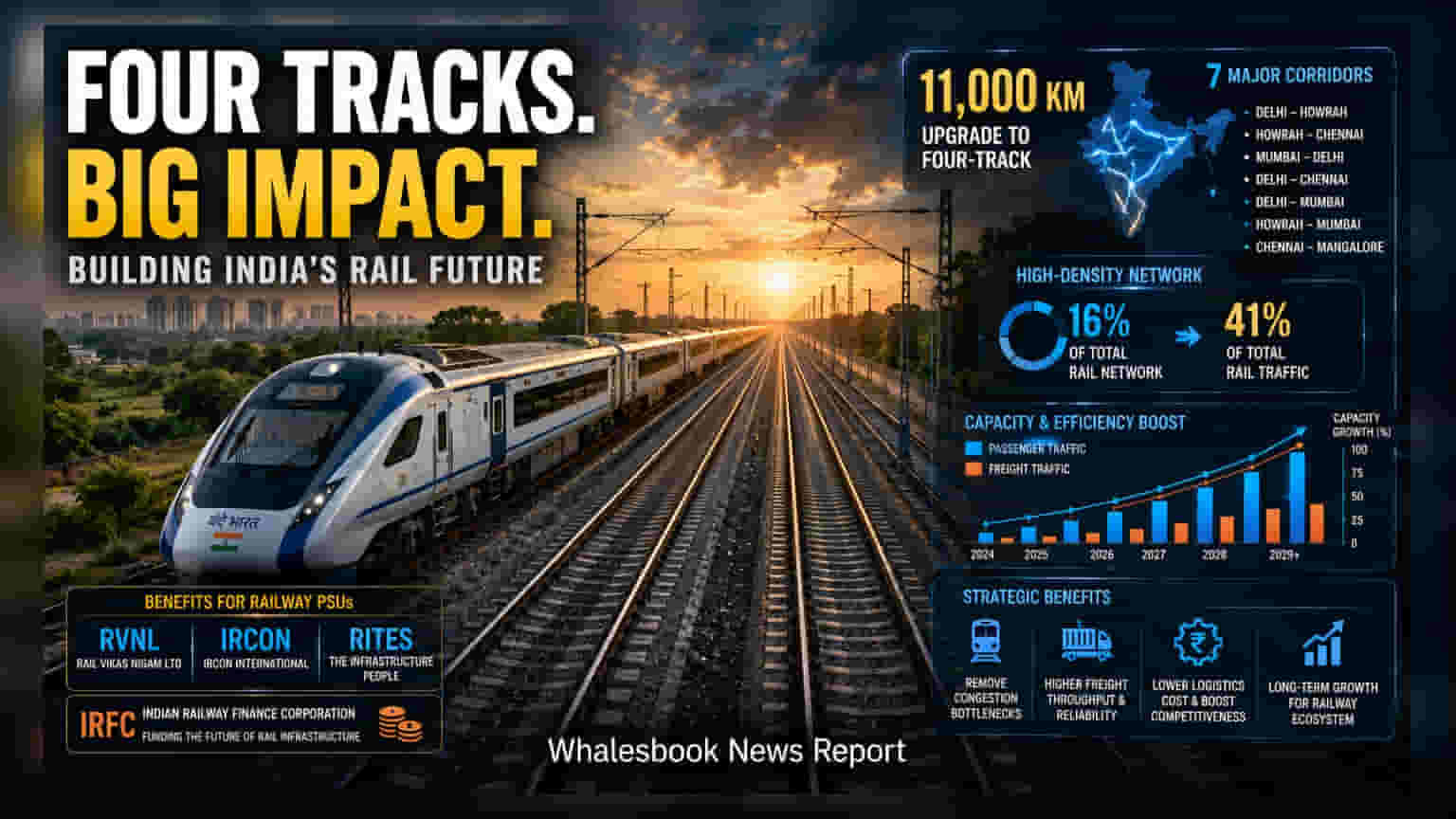
The Ministry of Railways is expanding 11,000 kilometers of high-density tracks into four-lane networks across seven major corridors. This project targets the busiest routes, which handle 41% of national rail traffic, to improve freight efficiency. For investors, this long-term strategy points to potential order book growth for listed railway infrastructure and financing companies.
The Ministry of Railways has announced a large-scale infrastructure initiative to upgrade 11,000 kilometers of the country’s high-density rail network into a four-track system. This project covers seven major corridors, including vital links such as Delhi-Howrah, Howrah-Chennai, and Mumbai-Delhi. Although these routes represent only 16 percent of the total rail network, they currently manage 41 percent of all rail traffic. The expansion is designed to remove long-standing congestion bottlenecks, allowing for smoother movement of both passenger trains and industrial freight.
Strategic Impact on Railway PSUs
While Indian Railways is a government department and not a listed company, this infrastructure push directly impacts the business outlook for several publicly traded railway Public Sector Undertakings (PSUs). Engineering and construction firms such as Rail Vikas Nigam Ltd (RVNL), IRCON International, and RITES are often tasked with the execution of such large-scale rail infrastructure projects.
For these companies, a long-term plan of this magnitude suggests a sustained pipeline of orders. Furthermore, the Indian Railway Finance Corporation (IRFC) acts as the primary funding arm for these railway assets, meaning sustained expansion typically requires ongoing capital support from such financing entities. Investors tracking these stocks often monitor government project announcements as indicators of future revenue visibility.
Logistics and Economic Efficiency
The broader goal of this initiative is to reduce the national logistics cost, which remains a key focus for the government to help improve the competitiveness of Indian manufacturing. By creating a higher-capacity network, the railways aim to provide a more reliable and faster alternative to road transport. If executed successfully, increased rail capacity can lead to higher freight throughput, which generally benefits the broader economy and the railway ecosystem.
Execution and Funding Risks
Investors should keep in mind that infrastructure projects of this scale carry inherent risks. The timeline for completion can be affected by factors such as land acquisition, environmental clearances, and operational hurdles during construction. Additionally, since these projects rely on long-term budgetary allocations and government funding, any shifts in national spending priorities could impact project momentum.
Monitoring future quarterly filings and management commentary from listed railway entities will be important. Investors may look for details regarding new order wins, the speed of project execution, and any updates on funding disbursements to gauge how effectively these companies are benefiting from the expansion strategy.