

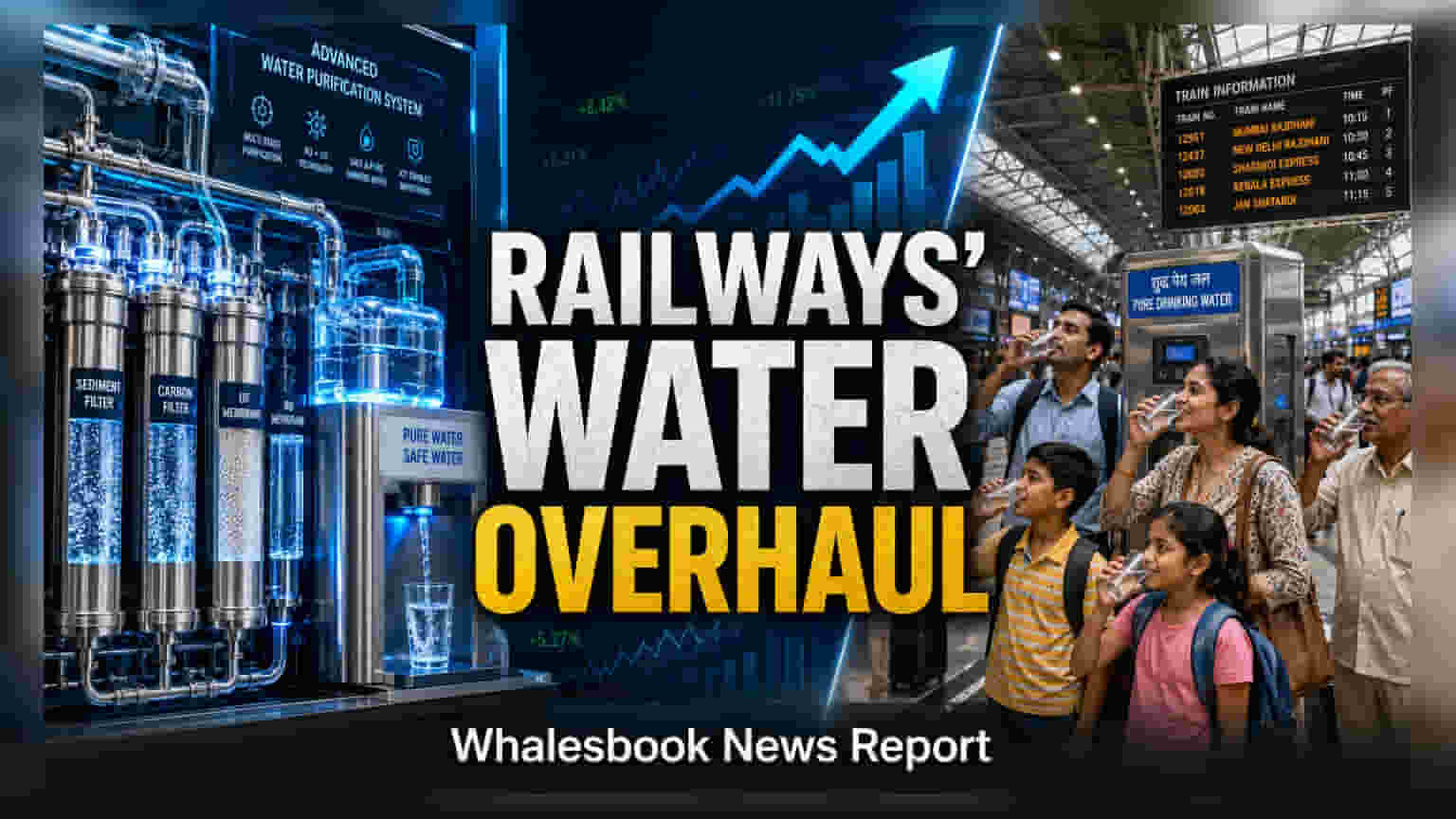
Indian Railways is upgrading its drinking water infrastructure across 20,000 locations following a critical Comptroller and Auditor General (CAG) report. The "Tank to Tap" project aims to fix issues like bacterial contamination and missing passenger amenities identified in an audit released on August 12, 2026. Investors should track how the organization manages the execution of this large-scale infrastructure push.
Indian Railways has initiated a nationwide, large-scale overhaul of its drinking water infrastructure, targeting approximately 20,000 locations across its vast network. This corrective action follows a critical report released on August 12, 2026, by the Comptroller and Auditor General (CAG) of India, which flagged serious concerns regarding the quality of water and basic passenger amenities.
The audit, which inspected 512 non-suburban railway stations, revealed that nearly 90% were deficient in one or more Minimum Essential Amenities. More concerningly, the report highlighted the presence of E. coli and total coliform bacteria in water samples collected from multiple railway zones. These findings raised immediate alarms regarding passenger safety and the effectiveness of existing maintenance protocols.
To address these gaps, the organization has launched the "Tank to Tap" program. This initiative involves a comprehensive replacement of aging storage tanks, the installation of new water filtration systems, and the implementation of strict, centralized water quality testing. The project is currently being treated as a top-tier priority, with direct oversight from the Railway Board to ensure that accountability is maintained across all zones.
From an operational perspective, this project represents a massive logistics and infrastructure challenge. For the organization, the key financial and execution hurdle will be to ensure that the designated funds are utilized effectively. The CAG report had previously noted instances of unspent passenger amenity budgets, which suggests that the challenge lies not just in fund allocation, but in the actual implementation and monitoring of these projects on the ground.
There are clear execution risks associated with such a geographically dispersed overhaul. Maintaining consistent water testing and infrastructure maintenance standards at high-traffic hubs as well as remote, less-connected stations remains a significant difficulty. If the new systems fail to eliminate contamination effectively, the organization may face sustained reputational pressure regarding public health and hygiene.
The most important monitorable for stakeholders will be the pace of implementation and the transparency of the monitoring process. The organization has committed to publishing periodic progress reports and water quality data. Investors and public observers may watch for the speed at which these new filtration systems are commissioned and whether subsequent internal audits can confirm a reduction in the quality failures flagged in the August report.