

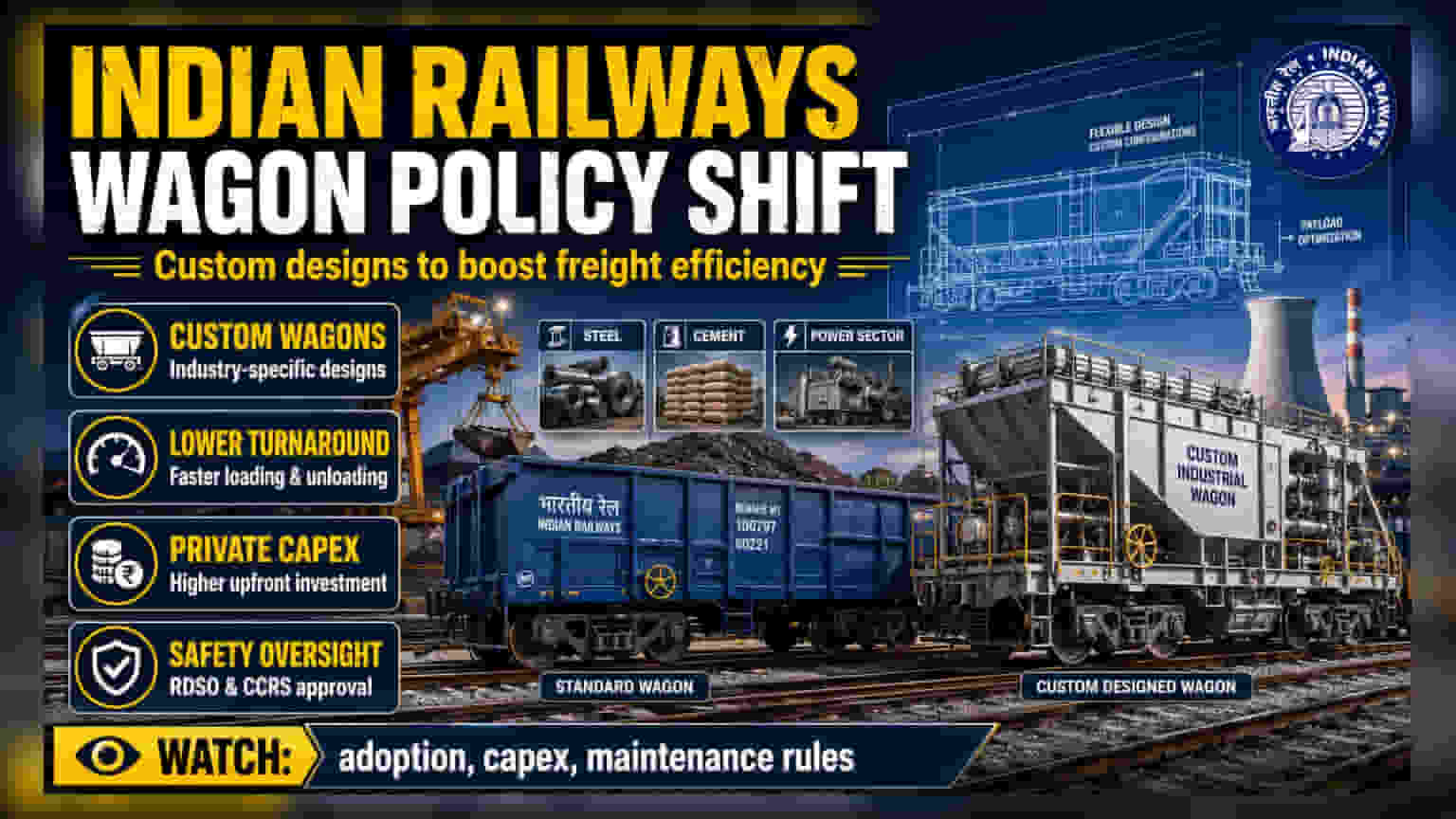
Indian Railways will soon launch a policy allowing industries to customize wagon designs for specific goods to improve transport efficiency. This framework permits private companies to modify or build wagons tailored to their operational needs, aiming to reduce logistics costs for heavy industries like cement and steel.
What Happened
Indian Railways is set to launch a liberalized wagon design policy within the next two weeks. This new framework allows private industries to move away from standardized, rigid wagon designs. Instead, businesses will be able to customize wagons to better fit their specific loading, unloading, and transportation needs. This is a significant shift in how rail freight is handled, moving toward a system that adapts to the needs of the cargo rather than forcing cargo to adapt to the limitations of standard railway wagons.
Impact On Logistics And Heavy Industries
Companies in sectors such as cement, steel, and power, which rely heavily on rail transport, stand to benefit from these changes. Previously, industries often faced logistical challenges because standard wagons were not optimized for specific commodities. By designing wagons that allow for faster loading and unloading, companies can potentially reduce turnaround times. This increase in efficiency is critical for moving large volumes of raw materials and finished goods, which could lower overall logistics costs for major manufacturers in the long run.
The Cost And Maintenance Factor
While the freedom to design wagons offers operational benefits, it comes with a financial trade-off for private companies. Businesses will need to invest in purchasing or modifying these wagons, which increases initial capital spending. Additionally, Indian Railways is exploring the possibility of allowing private entities to manage the maintenance of their own wagons. While this could lead to better uptime and reduced reliance on railway infrastructure for servicing, it also shifts the maintenance responsibility and costs directly onto the companies. Investors should note this change in the cost structure.
Safety And Regulatory Oversight
Despite the move toward flexibility, safety remains a priority. Indian Railways has clarified that the design freedom does not mean a relaxation of safety protocols. The Research Designs and Standards Organisation (RDSO) and the Chief Commissioner of Railway Safety (CCRS) will retain control over certifying and approving all designs. This dual oversight is intended to ensure that while innovation in wagon design is encouraged, the overall safety of the rail network is not compromised.
What Investors Should Track
Investors should monitor how quickly major logistics and heavy manufacturing companies adopt this policy. The key monitorable will be the amount of capital expenditure planned by these companies to build or acquire specialized wagons. Additionally, watch for clear timelines and specific rules regarding the potential private maintenance policy, as this will determine the long-term operational impact on private wagon owners. Finally, tracking the performance and cost-benefit analysis of these new wagon designs for early adopters in the cement and steel sectors will provide insight into whether this policy truly improves the bottom line.