

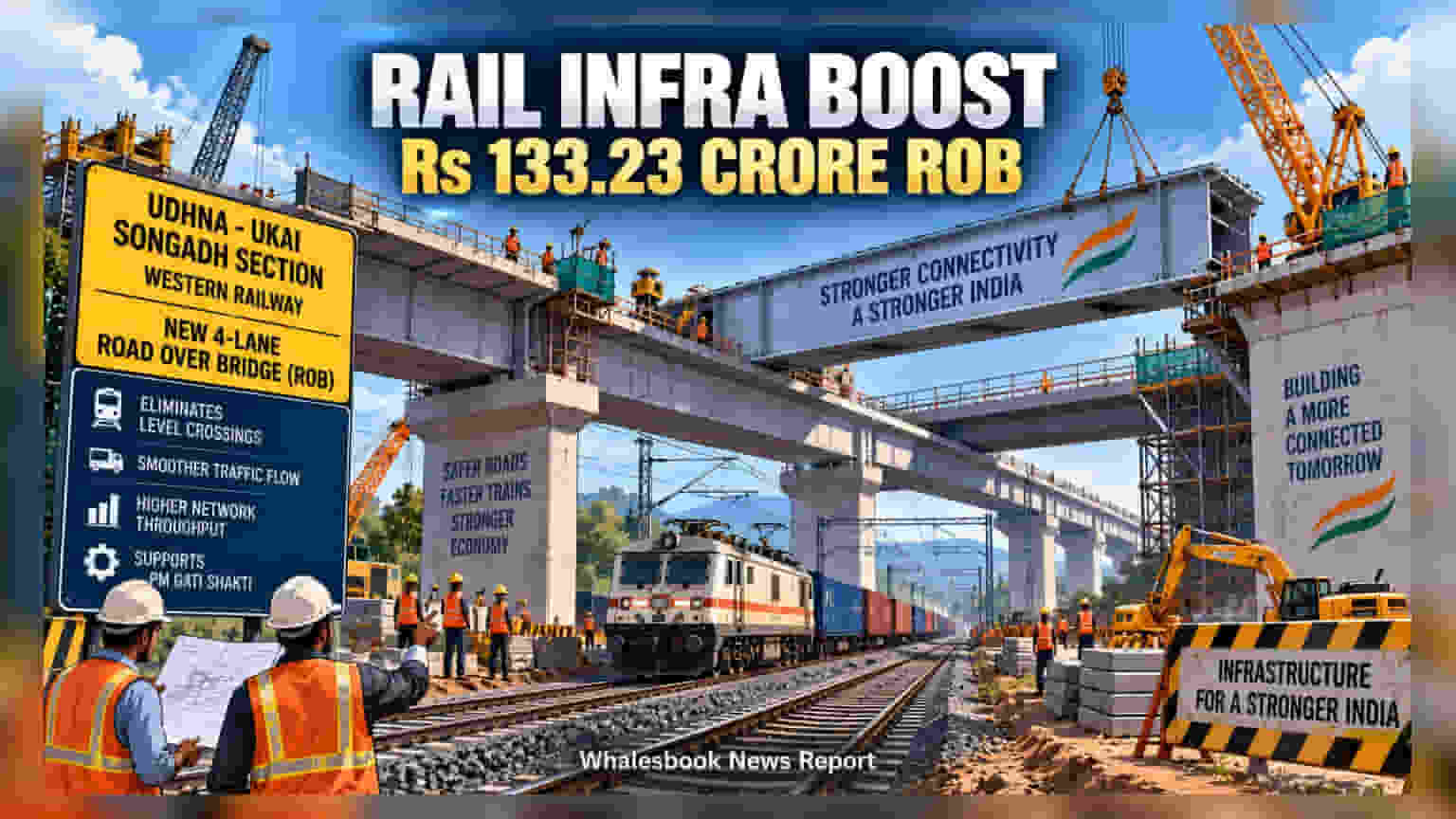
Indian Railways has sanctioned a Rs 133.23 crore four-lane Road Over Bridge on the Udhna-Ukai Songadh section. This project, funded equally with the state government, aims to eliminate traffic bottlenecks and improve rail operational efficiency. The development is part of a national effort to enhance logistics capacity and speed up freight movement across high-density corridors.
The Indian Railways has sanctioned a new four-lane Road Over Bridge (ROB) on the Udhna-Ukai Songadh section of the Western Railway, with a project cost of Rs 133.23 crore. The initiative, funded through a 50:50 split between the railway ministry and the state government, aims to eliminate railway level crossings to facilitate smoother traffic flow. For the domestic logistics sector, this move is part of the ongoing effort to remove bottlenecks that hinder the speed and efficiency of freight and passenger rail operations.
This ROB project is designed to replace traditional grade-level crossings. For investors, the primary takeaway is the focus on improving network throughput. Level crossings often create operational bottlenecks, forcing trains to slow down or wait, which increases the turnaround time for freight. By physically separating road and rail traffic, the railway aims to boost the speed of movement in this high-density corridor, which is essential for maximizing asset utilization.
The initiative sits within the framework of the PM Gati Shakti National Master Plan, which focuses on coordinated, multi-modal connectivity. The central government has been consistently increasing its capital budget for railway infrastructure, aiming to modernize the network to support higher freight volumes. This bridge approval follows the recent authorization of three major multitracking projects valued at Rs 10,783 crore, which are expected to add 656 kilometers of track across several states including West Bengal, Odisha, and Madhya Pradesh by 2029-30.
For the infrastructure and construction sector, these recurring project approvals signal continued demand for civil engineering works. However, investors should monitor the execution timeline closely. Railway infrastructure projects in India often face risks related to land acquisition, local regulatory approvals, and site-specific structural challenges, all of which can lead to cost overruns or delays. Tracking the actual progress of such projects against their projected completion dates remains a key factor in assessing the long-term benefit of capital allocation in the railway sector.