

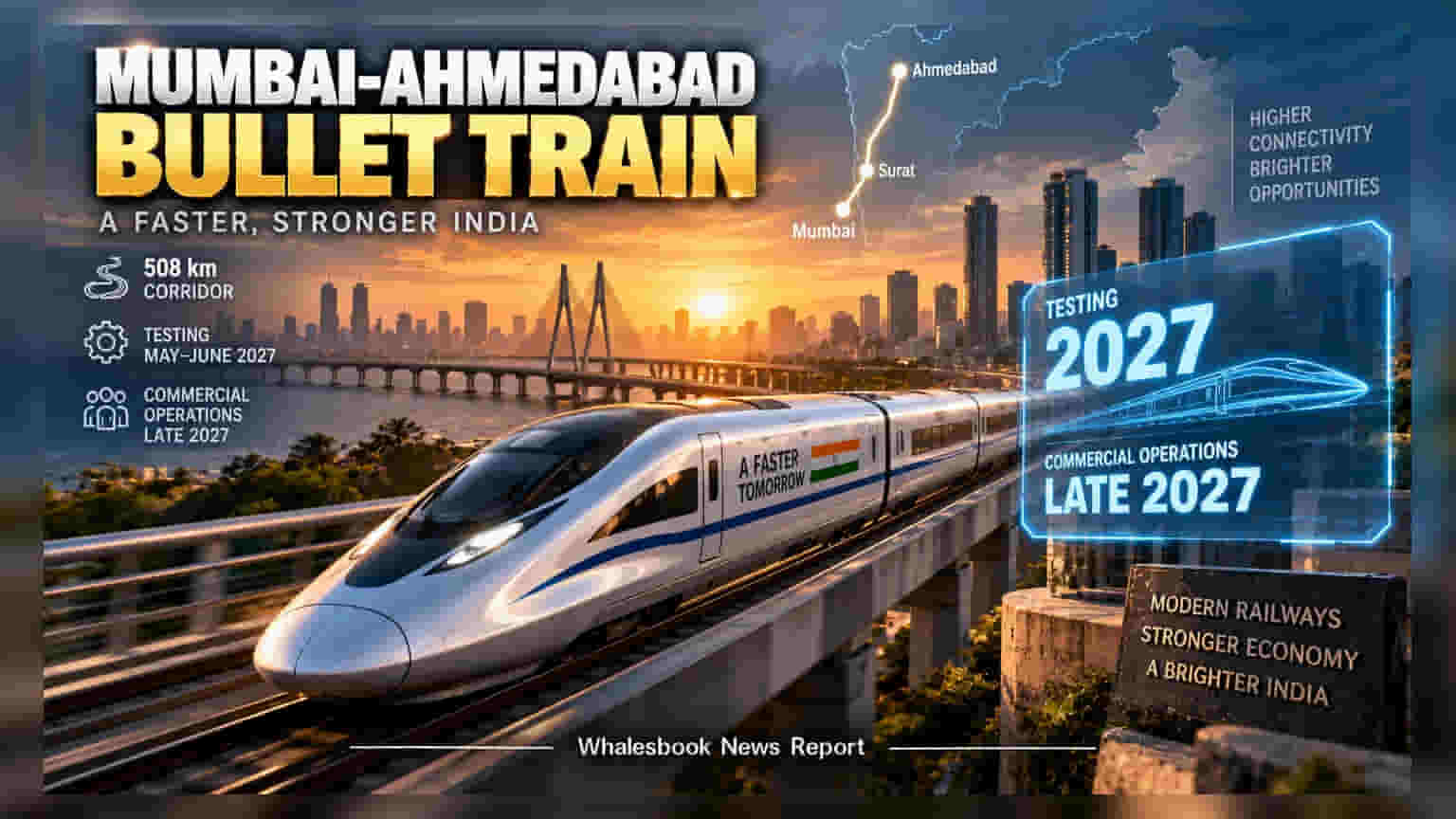
The Mumbai-Ahmedabad High-Speed Rail corridor is set for commercial operations by late 2027, with test runs starting in mid-2027. This milestone highlights a major infrastructure push, with potential implications for railway-linked engineering and construction stocks. Investors are also watching the sector’s broader expansion plans, as the government has proposed seven additional high-speed rail corridors following the 2026 Union Budget.
The Mumbai-Ahmedabad High-Speed Rail (MAHSR) project has reached a definitive phase, with the Ministry of Railways confirming a target for commercial operations to commence by late 2027. Railway Minister Ashwini Vaishnaw stated that testing for India's first high-speed train is scheduled to begin between May and June 2027. This testing period will be followed by a two-to-four-month trial phase before the service is officially opened to the public.
Project Milestones and Indigenous Focus
The National High Speed Rail Corporation Limited (NHSRCL), which manages the 508-km corridor, is focusing its initial operational efforts on the Surat-Bilimora section. This segment serves as the pilot for the broader project. A significant development in the project's timeline is the recent dispatch of the first indigenous bullet train body frame for structural squeeze testing. This shift toward domestic manufacturing is a key strategy to manage long-term project costs and reduce reliance on international supply chains, although the project continues to integrate high-end Japanese Shinkansen technology.
Impact on Railway Infrastructure Stocks
For stock market participants, the bullet train progress is part of a larger theme surrounding the Indian railway infrastructure sector. Companies involved in the railway supply chain—such as Rail Vikas Nigam Limited (RVNL), Indian Railway Finance Corporation (IRFC), and Titagarh Rail Systems—often experience volatility based on updates regarding infrastructure tenders and project timelines. The Union Budget 2026 has provided further visibility for these entities by announcing plans for seven additional high-speed rail corridors, with a total projected outlay of ₹16 trillion. Investors often monitor these developments as indicators of long-term demand for rolling stock, signaling equipment, and heavy engineering services.
Risks and Execution Challenges
While the 2027 timeline provides a clear goal, the project carries risks that shareholders in related infrastructure companies should consider. Historically, the MAHSR project has faced significant execution delays and budget revisions, which have raised concerns about cost overruns. Any failure to meet the 2027 operational target could lead to renewed scrutiny regarding fiscal discipline and the financial burden on the national exchequer. Furthermore, the complexity of implementing Shinkansen technology requires strict adherence to international safety and technical standards. Delays in certification or technical integration could potentially slow down the pace of subsequent high-speed rail projects, which are vital for the long-term order books of major railway engineering firms. The primary monitorables for investors remain the speed of civil work completion, the successful commissioning of the Surat-Bilimora testing segment, and any further government updates regarding the funding and timelines for the seven additional proposed corridors.