

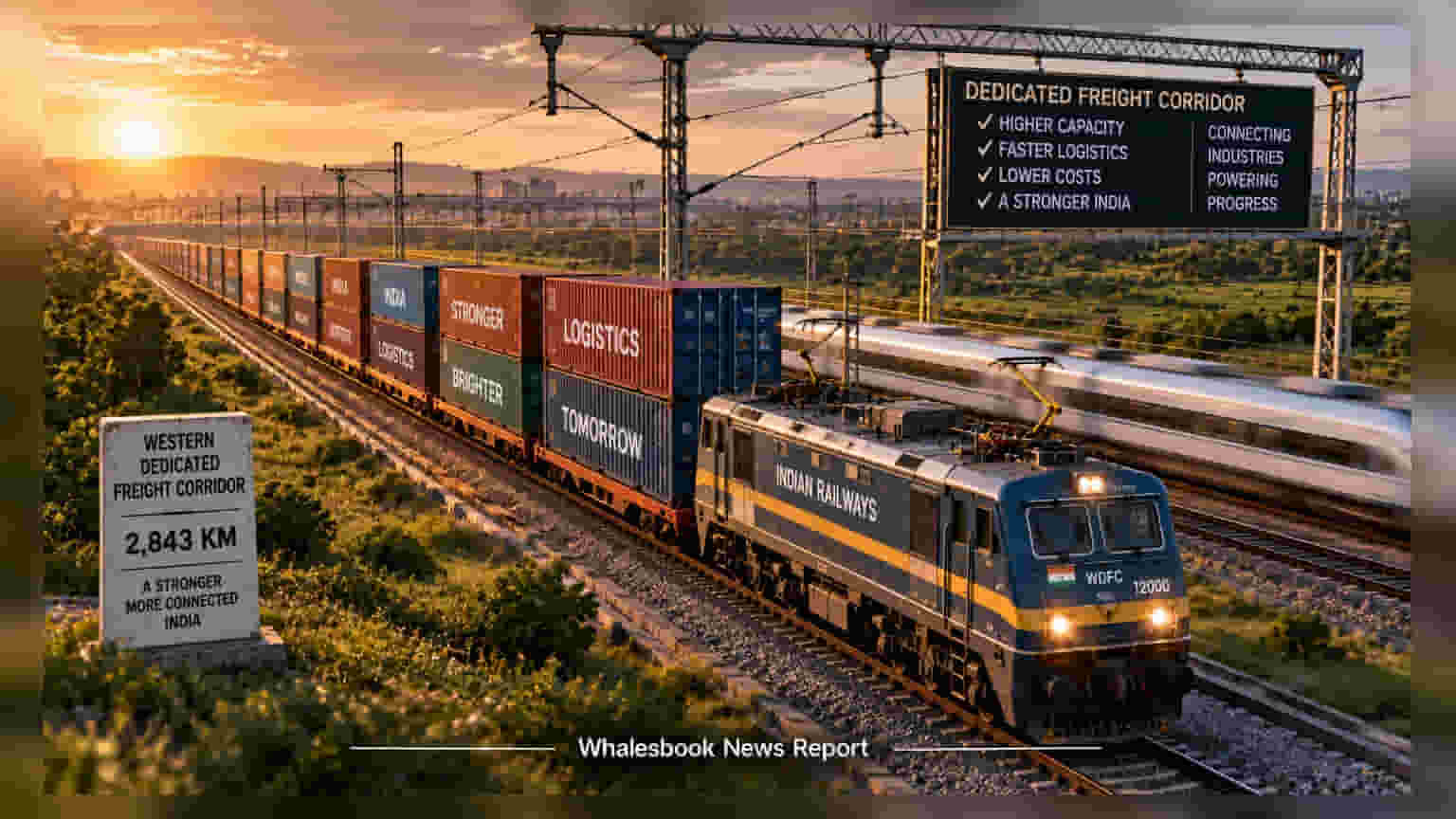
Prime Minister Narendra Modi has inaugurated the final sections of the Western Dedicated Freight Corridor, completing India's 2,843-km dedicated rail network. This milestone makes India the first country to operate electrified, double-stack container freight trains at scale. While the operating company, DFCCIL, is state-owned and not listed, the project is a major attempt to lower logistics costs for India's industrial sectors.
The landscape of Indian logistics has shifted with the inauguration of the final sections of the Western Dedicated Freight Corridor (WDFC). This event completes a massive 2,843-kilometer dedicated rail network, integrating the Western and Eastern corridors into a single, high-speed logistics artery. Developed by the Dedicated Freight Corridor Corporation of India Limited (DFCCIL), this network is designed to bypass the congestion of the legacy passenger rail system.
At the core of this project is a unique engineering feat: the ability to run double-stack container trains powered by electricity. While other nations use double-stack freight, they typically rely on diesel power. India has addressed height constraints by installing high-rise overhead electrification equipment. This allows the country to use powerful 12,000-horsepower electric locomotives that carry two containers at once. This capacity increase is expected to sharply improve the commercial transit time for goods, with trains moving at up to 100 kilometers per hour, significantly faster than the historical average of 25 kilometers per hour on mixed-use routes.
For the Indian economy, the significance lies in logistics efficiency. India’s logistics costs have historically been higher than global averages, often attributed to the reliance on road transport and congested rail lines. By shifting bulk cargo like coal, iron ore, steel, and cement from road to rail, this corridor could help lower the total cost of transport for manufacturers. Industries that rely heavily on moving raw materials and finished goods—such as cement, steel, and FMCG—may see long-term benefits in their profit margins due to faster and cheaper delivery cycles.
While this network is a major positive for the country’s infrastructure, investors should note that DFCCIL is a government-owned special purpose vehicle and does not trade on the stock exchanges. Therefore, there is no direct way to invest in the corporation itself. Instead, the market focus will likely be on how successfully companies across the cement, steel, and logistics sectors can leverage this infrastructure to reduce their operational expenses.
It is also important to consider the financial and operational risks associated with such large-scale projects. The completion of the final sections involved an investment of over ₹20,700 crore, and the project has faced significant hurdles in the past, including land acquisition delays and substantial cost overruns. Furthermore, while the network is now operational, its success depends on its ability to generate enough traffic. The project carries significant debt, and its financial viability relies on the Indian Railways’ traffic projections and the continued competitiveness of rail freight tariffs against road transport.
Moving forward, the primary monitorable will be the ramp-up in freight volume and whether the promised reductions in logistics costs materialize for India's industrial sector. As the network stabilizes, market participants will likely watch for data on freight movement, port connectivity efficiency, and any future announcements regarding further corridor expansions.