

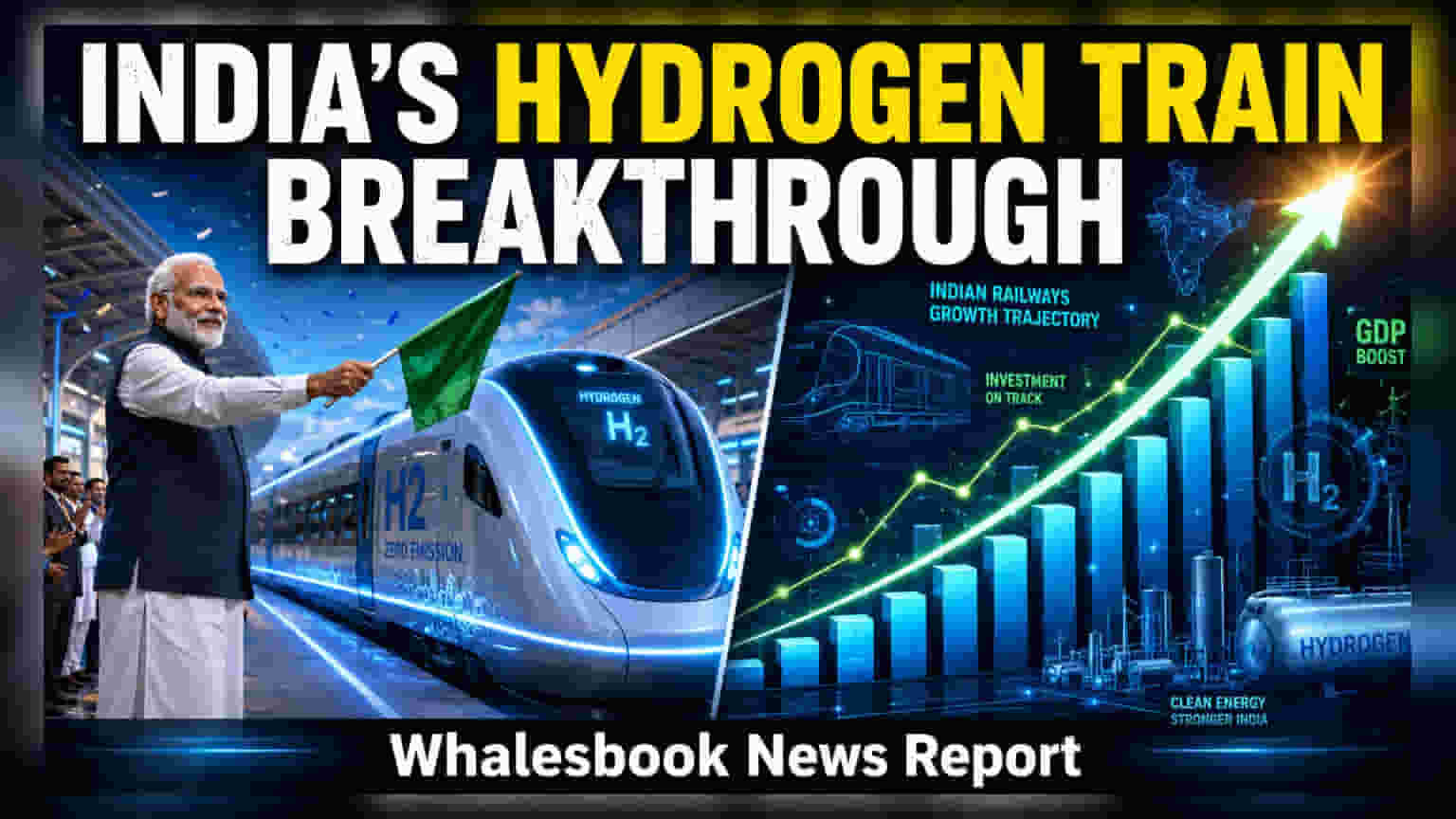
Prime Minister Narendra Modi has inaugurated India's first 3,200 horsepower hydrogen-powered train, operating between Jind and Sonipat in Haryana. While this marks a major technological milestone for Indian Railways, large-scale commercial rollout remains subject to future cost and efficiency testing. Investors should track how the government balances these operational costs against infrastructure expansion plans.
On Friday, Prime Minister Narendra Modi officially launched India’s first hydrogen-powered train, marking a significant entry for the country into sustainable rail technology. The train, which operates on the 90-km route between Jind and Sonipat in Haryana, is powered by a 3,200 horsepower system. This launch highlights India’s focus on adopting greener energy alternatives in the public transport sector, aiming to reduce dependence on traditional diesel-powered engines.
Technology and Operational Context
Hydrogen-based rail technology is currently in a nascent stage globally. While several countries are experimenting with similar platforms, the Indian government has positioned this specific model as a leader in power capacity. The project is part of a broader push to modernize the Indian railway network. However, the move toward hydrogen power presents unique challenges compared to traditional electrification. Unlike standard electric trains that draw power from overhead lines, hydrogen trains require localized fuel storage and specialized refueling infrastructure, which can involve higher initial capital spending compared to conventional rail projects.
Financial and Strategic Considerations
The Prime Minister noted that while this launch is a milestone, the government plans to conduct further research into the operational costs and efficiency of these trains before committing to a country-wide rollout. For the Indian rail industry, the primary monitorable is whether hydrogen can become cost-competitive with existing electric and diesel rail services. Historically, the transition of large transport networks to new fuels depends heavily on the scale of production for hydrogen fuel cells and the development of a robust supply chain to keep operational costs manageable.
Industry Trends and Future Outlook
The shift toward hydrogen is part of a larger, long-term government strategy to reduce the carbon footprint of the transport sector. Investors monitoring the railway and green energy sectors should track upcoming updates on the feasibility reports, fuel costs, and potential partnerships with private technology providers. The pace of this rollout will likely be guided by how effectively the government can scale up the necessary infrastructure. Because the project is in its early stages, the financial impact on railway-linked companies remains indirect and will depend on future tender allocations and the speed of national implementation.