

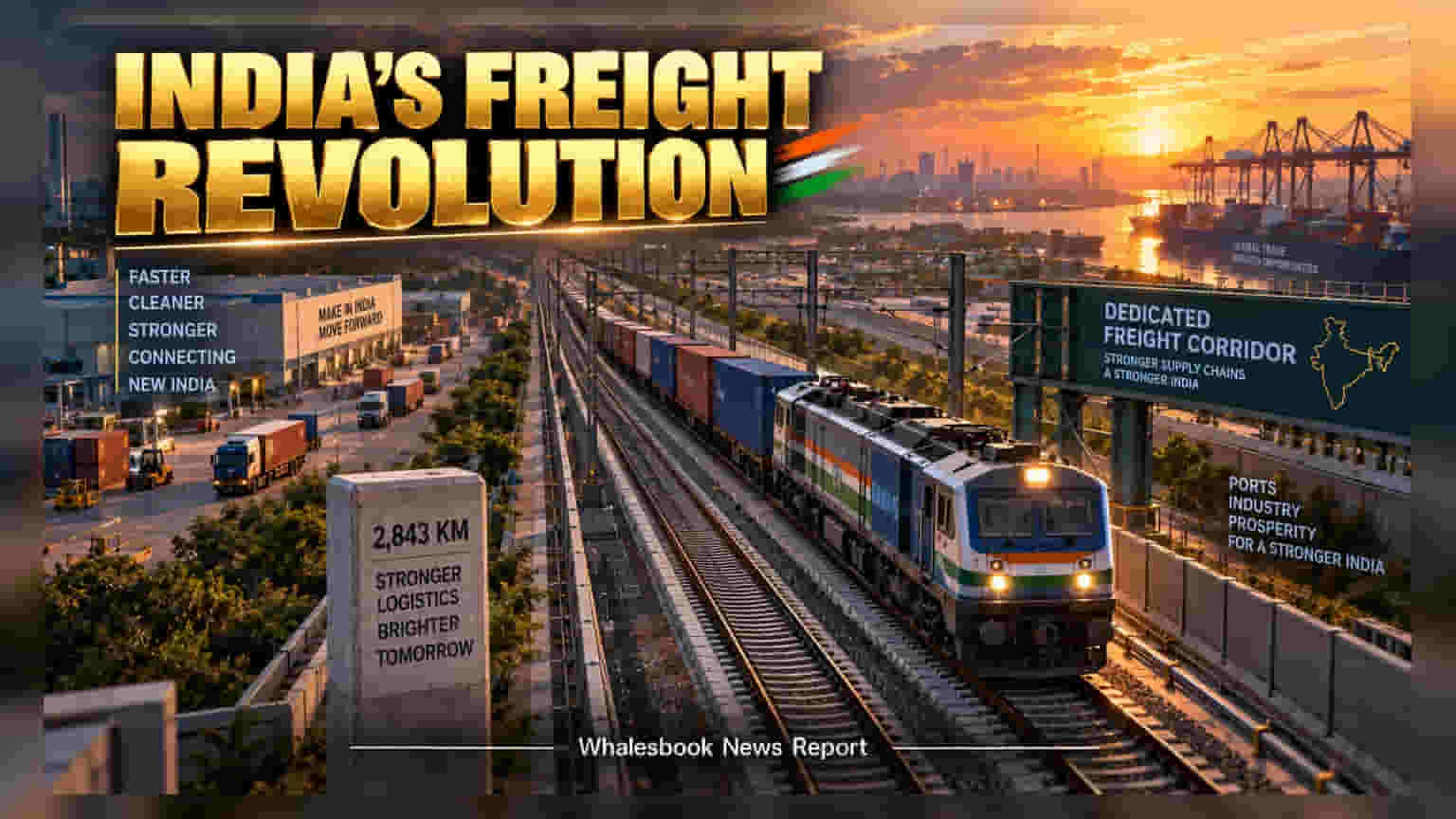
Prime Minister Narendra Modi inaugurated the final sections of the Western Dedicated Freight Corridor today, marking the full operationalization of India’s 2,843-km rail network. The project, costing over Rs 20,700 crore for the final stretches, aims to speed up cargo movement and cut logistics costs. For investors, the focus now shifts to how logistics companies like Container Corporation of India use these high-speed routes to improve their operating margins.
India has reached a significant milestone in its logistics infrastructure as the government fully operationalized the Dedicated Freight Corridor (DFC) network on September 8, 2026. The inauguration of the final 326-kilometer stretches of the Western Dedicated Freight Corridor completes a vast 2,843-kilometer web designed to transform how goods move across the country.
Strategic Shift to Dedicated Tracks
The core purpose of the DFC is to separate freight trains from passenger trains. Historically, cargo trains in India were often delayed by heavy passenger traffic on shared tracks, which increased transit times and unpredictability. By moving freight to its own dedicated, high-capacity lines, the rail network can now support faster and more reliable cargo transport. This separation is intended to clear bottlenecks on traditional lines, potentially allowing for more frequent passenger services as well.
The final inaugurated segments—connecting New Sanand to New JNPT—are critical for export-import operations. These routes provide a direct, high-speed connection between industrial centers and key Western ports, which is essential for reducing the time it takes to move goods from factories to ships.
Impact on Logistics Companies
The completion of this network provides a direct operating advantage for rail-focused logistics firms. Companies like the Container Corporation of India (CONCOR) have already begun adapting to this infrastructure. For instance, the company recently awarded a contract worth Rs 89.09 crore for specialized wagons designed to run on the DFC tracks.
Investors are watching to see if this shift leads to improved operating margins for logistics players. By using higher-capacity wagons on these faster routes, companies aim to handle more volume with lower operational friction. However, the true benefit will depend on how efficiently companies can handle the 'first-and-last-mile' connectivity—the short distances from the freight terminal to the final factory or warehouse. If these links remain slow or expensive, the benefits of the high-speed rail corridor may not fully reach the company's bottom line.
Risks and Market Monitorables
While the project is a major upgrade, it comes with specific risks that investors should track. The integration of new infrastructure of this scale often involves a settling-in period where operational efficiency may be tested. Furthermore, the financial success of the DFC-linked logistics model is heavily tied to global trade. Any significant slowdown in global manufacturing or geopolitical tension can hit export-import volumes, which would reduce the demand for the very freight services that this corridor is built to support.
Additionally, while the Dedicated Freight Corridor Corporation of India (DFCCIL) holds a stable 'IND AAA' credit rating, the project itself has required massive capital spending. Investors should watch the upcoming quarterly results of logistics companies to see if the promised efficiency gains actually translate into improved profit margins or if the cost of adapting to the new system pressures their financial results in the short term.