

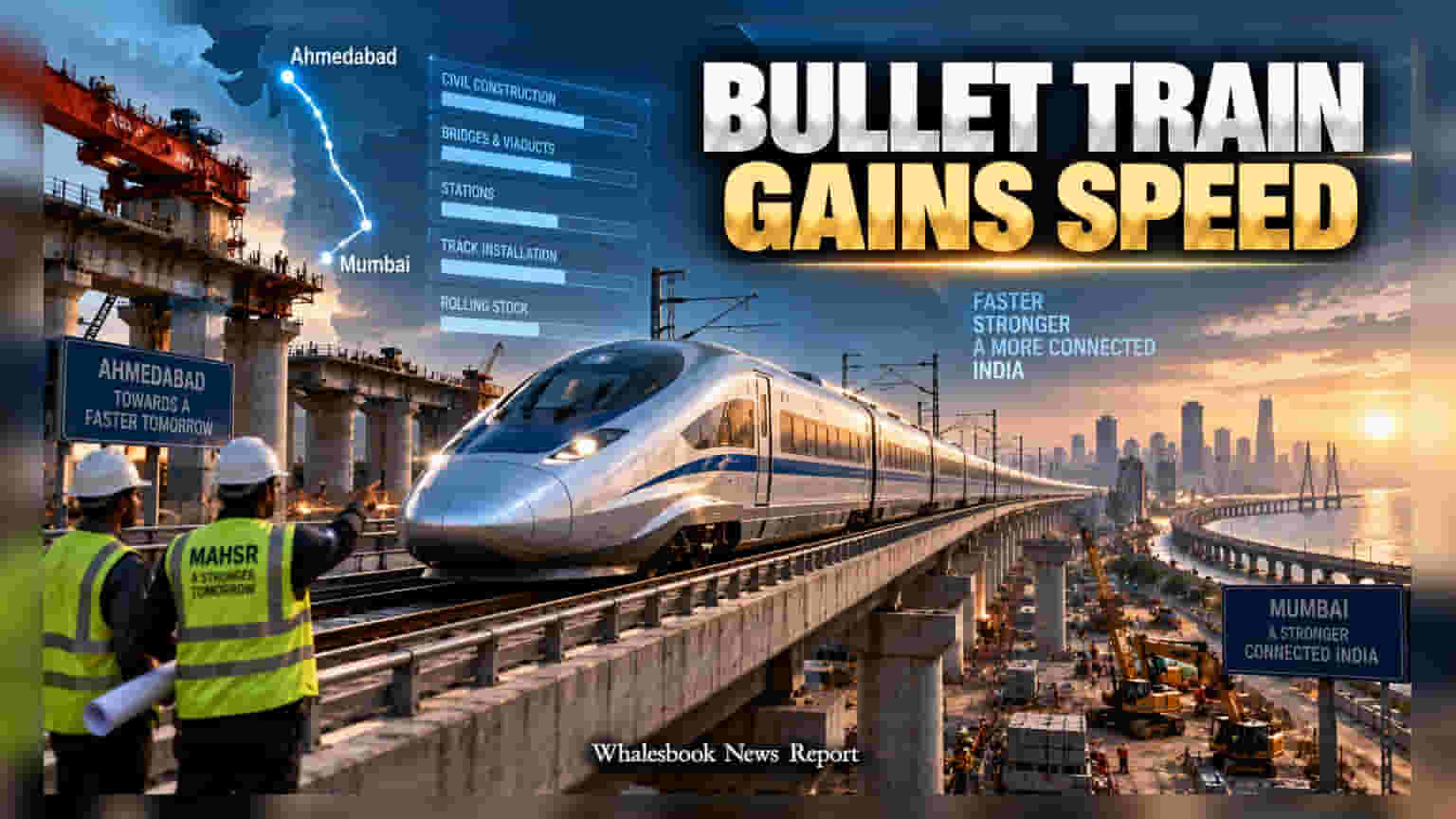
India’s Mumbai-Ahmedabad bullet train project has reached a key stage with the manufacturing of its first test coach. Civil works on the Vapi-Surat section are on track for completion by December 2026, with the full corridor launch targeted for August 2027. This milestone highlights continued momentum in the country’s massive infrastructure and railway supply chain development.
The Mumbai-Ahmedabad High-Speed Rail (MAHSR) project, India's first foray into high-speed travel, has achieved a significant technical milestone. The first test coach specifically designed for the corridor has been manufactured, marking a shift from pure civil construction to the readiness of rolling stock. This development comes as the National High-Speed Rail Corporation Limited (NHSRCL) works to meet strict timelines for the 508-kilometre project.
Progress on the ground remains the primary focus. Civil construction work on the Vapi-Surat section is currently moving toward a targeted completion date of December 2026. Following this, the Surat-Bilimora stretch is scheduled for commissioning next year, creating an essential operational segment ahead of the broader launch. The government has set August 2027 as the target for the inaugural high-speed rail service across the entire corridor, which spans Maharashtra, Gujarat, and Dadra & Nagar Haveli.
For the Indian market, this project represents one of the largest infrastructure undertakings currently in progress. While the NHSRCL is the primary entity overseeing implementation, the project creates a massive demand ripple for the broader railway ecosystem. This includes companies involved in civil engineering, steel manufacturing, cement supply, electrical systems, and rolling stock components. Investors often view such large-scale government infrastructure projects as indicators of sustained demand for companies operating within the railway and construction supply chains. The project is funded with support from the Japan International Cooperation Agency (JICA), which adds a layer of international technical collaboration to the effort.
Despite the clear progress, the project faces the typical challenges associated with large-scale, complex infrastructure developments. Historically, major rail projects of this scale have encountered risks related to cost escalation and technical integration. Managing such a complex engineering feat requires strict adherence to safety certifications and testing schedules. Any delay in the commissioning of the initial sections or the final August 2027 launch could weigh on the project’s financial viability and operational efficiency. Furthermore, the massive upfront capital spending required for high-speed rail means that the long-term financial management of such corridors remains a critical area for stakeholders to monitor.
As the project transitions into its testing phase, the next important updates for investors and the public will be the actual completion of the Vapi-Surat civil works and the subsequent commissioning of the Surat-Bilimora section. Monitoring these operational milestones will be more telling of the project’s eventual success than initial targets alone.